

TEHRAN: Iran has said it has no plans to hold a new round of negotiations with the United States in New York, creating fresh uncertainty over Iran US talks despite recent diplomatic efforts.
Iran’s state-run IRNA news agency reported the development on Monday, September 28. It cited an unnamed source close to the Iranian delegation attending the United Nations General Assembly in New York.
According to the source, the Iranian delegation has not scheduled any new negotiations with US officials during its stay in New York.
Instead, Tehran says it has already communicated its position to Washington through Qatar and now wants an official US response.
The statement comes after US President Donald Trump said he expected further Iran US talks during the week.
Trump told Axios on Sunday that he believed negotiations would continue, although major differences remained between Washington and Tehran.
Therefore, the latest Iranian statement has highlighted a clear difference between the public positions of the two sides.
While Trump expects further negotiations, Iranian state media says the delegation currently has no new meeting with US officials on its agenda.
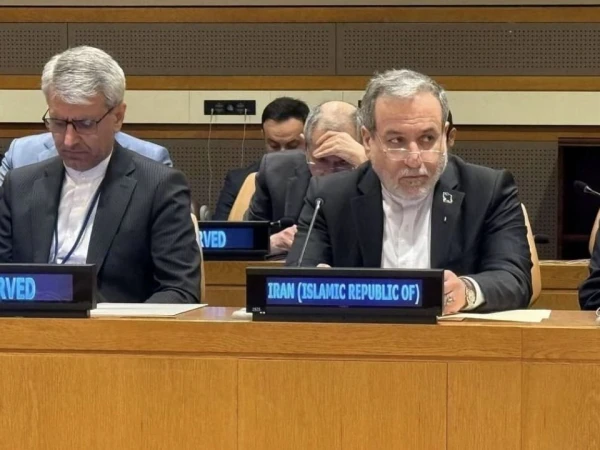
Iranian Foreign Minister Abbas Araghchi has also said Tehran continues to support a diplomatic solution.
However, he said Iran first wants to receive Washington’s formal response through the mediators before deciding on its next move.
Qatar has played an important role in the latest diplomatic contacts.
According to Axios, Qatari officials recently passed messages between Iranian officials and US envoys during indirect discussions on the sidelines of the UN General Assembly.
US envoys Steve Witkoff and Jared Kushner took part in those indirect contacts with Araghchi.
However, the two sides did not hold traditional face-to-face negotiations. Qatari officials instead helped carry messages between Washington and Tehran.
The diplomatic discussions have focused heavily on the Strait of Hormuz, regional fighting and Iran’s nuclear programme.
Iran has pushed for changes linked to the US naval blockade and sanctions. Meanwhile, Washington has continued to seek nuclear concessions from Tehran.
The Strait of Hormuz remains one of the biggest issues in the dispute.
Iran recently proposed reopening the strategic waterway within seven days as part of a broader arrangement with the United States.
Under the proposal reported by Axios, Tehran wanted the United States to lift its naval blockade, ease restrictions on Iranian oil sales and support a wider ceasefire.
However, Trump rejected Iran’s latest proposal.
He confirmed on Saturday that Tehran had submitted an offer but said he did not accept its terms.
Despite that rejection, Trump later said he expected more negotiations with Iran.
He told Axios that Tehran wanted an agreement, although he argued that the proposal did not meet the terms his administration wanted.
As a result, the future of Iran US talks remains uncertain.
Regional mediators continue their diplomatic efforts, but Washington and Tehran still disagree over some of the most important conditions for a broader settlement.
Qatar and other regional countries have tried to keep communication channels open.
Axios reported that Qatari mediators continued exchanging proposals with both sides even after Trump rejected Iran’s latest plan.
Earlier diplomatic contacts also showed that both governments remained willing to communicate indirectly.
Reuters reported on September 23 that Iran and the United States remained far apart on a possible settlement, although Iranian officials said diplomacy should continue.
Iranian President Masoud Pezeshkian has also publicly supported diplomacy.
During his address to the UN General Assembly, he said Iran remained open to diplomatic efforts to end the conflict, while also rejecting pressure from Washington.
Meanwhile, the United States has also sent mixed signals about direct negotiations.
US Secretary of State Marco Rubio said earlier during the UN gathering that Washington remained open to a meeting with Iranian representatives if talks could produce meaningful results. At that time, however, officials had not scheduled a meeting.
These different statements have added to uncertainty surrounding Iran US talks.
Both sides continue to express some support for diplomacy, but they remain divided over the conditions required to move negotiations forward.
Iran wants Washington to respond formally to proposals delivered through regional mediators.
According to Iranian state media, Tehran sees no reason to arrange another round of negotiations in New York until it receives that response.
The Iranian source also said Foreign Minister Araghchi plans to leave New York after completing his scheduled engagements.
That timetable could further limit the chances of a new meeting during the current UN visit.
However, indirect communication could continue even after the Iranian delegation leaves New York.
Qatar has already acted as a communication channel between the two governments and could continue that role as both sides consider their next steps.
The dispute over the Strait of Hormuz remains particularly important because the waterway plays a major role in global energy supplies.
Before the current conflict disrupted shipping, around one-fifth of global oil supply moved through the strait, according to Reuters.
Therefore, developments in Iran US talks can also influence international energy markets.
Oil prices rose sharply on Monday as markets reacted to the continued diplomatic deadlock and uncertainty over the Strait of Hormuz.
The nuclear issue remains another major obstacle.
Washington wants Iran to make concessions related to its nuclear programme, while Tehran wants talks to focus more heavily on sanctions, the naval blockade and regional security arrangements.
For now, neither side has announced a new direct meeting.
Iran says no fresh negotiations appear on its delegation’s New York schedule, while Trump continues to suggest that further discussions could take place.
Therefore, the next development may depend on the response delivered through regional mediators.
If Washington and Tehran can narrow their differences, indirect diplomacy could continue. However, the latest statements show that both governments still hold significantly different positions on the terms of any broader agreement.
The situation remains fluid as Qatar and other regional mediators continue diplomatic contacts.
For now, Iran US talks remain in an uncertain phase, with Tehran waiting for an official response and Washington continuing to push for different terms in any future agreement.