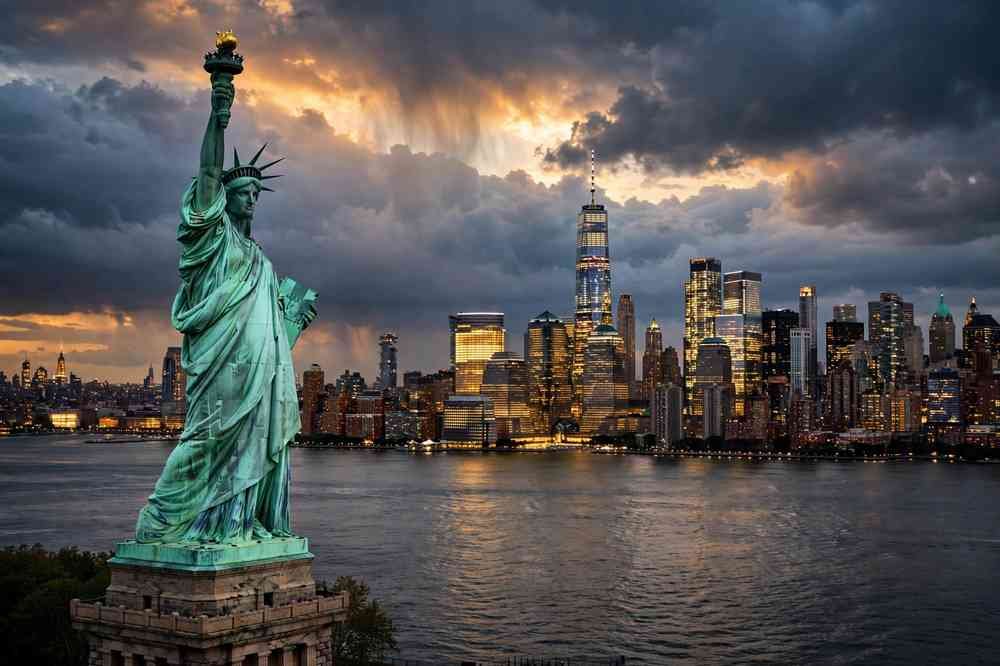
New York City has been ranked the world’s number one city in Oxford Economics’ 2026 Global Cities Index, a milestone that has landed squarely in the first year of Zohran Mamdani’s tenure as mayor of the United States’ largest city.
The index, one of the most comprehensive city rankings published anywhere in the world, places New York ahead of London, Paris, Seattle and San Francisco after evaluating 1,000 of the planet’s largest cities across five categories: economics, human capital, quality of life, environment and governance.
New York scored 100 in the overall index — a perfect score in the Economics category, 89.5 in Human Capital, 80.8 in Quality of Life, 72.8 in Environment and 75.7 in Governance.
For supporters of the 34-year-old mayor, the timing of the announcement has been impossible to ignore. Mamdani was sworn in as New York City’s 112th mayor on 1 January 2026, becoming the city’s first Muslim mayor and the first member of the Democratic Socialists of America to hold the office. His election was accompanied by loud warnings from critics that his progressive policies would damage the city’s economy and accelerate its decline.
The Oxford Economics ranking, released in October 2026, tells a different story: the city he leads is, by this measure, the best-performing major city on earth.
What the 2026 Global Cities Index Measures
Oxford Economics’ Global Cities Index is designed to capture both a city’s current standing and its longer-term direction. Rather than relying on reputation or surveys alone, it evaluates structural factors: the size and stability of the economy, employment and labour markets, the depth of human capital, quality of life, environmental conditions and governance.
The index ranks the world’s 1,000 largest cities, making it one of the broadest city comparisons available. New York and London, the firm noted, remain at the top largely because of the size of their economies and the strength of their labour markets.
Oxford Economics also observed that the established strengths of the leading global cities reflect structural advantages built up over several years — a point that adds important context to the celebration in New York. The ranking measures deep, long-term factors rather than the performance of any single administration.
Still, that nuance has done little to dampen the mood among Mamdani’s supporters, who see the top ranking as validation of a city that critics had written off.
A First Year Under the Microscope
Zohran Mamdani’s path to City Hall was one of the most closely watched political stories in recent American history. A state assemblyman of South Asian heritage, he defeated former New York governor Andrew Cuomo in the Democratic primary in June 2025 before winning the mayoral election in November.
From the moment he emerged as a frontrunner, Mamdani faced intense scrutiny. Opponents argued that his proposals — centred on affordability, including action on housing costs, childcare and public housing — would burden the city’s finances and drive businesses and wealthy residents away. Some commentators predicted a period of decline for the city under his leadership.
Ten months into his first year, the world’s most prominent city ranking places New York at the very top. The contrast with the gloomy predictions has not gone unnoticed. Across social media, supporters have framed the result as a direct answer to the critics who said the city would falter.
The Affordability Agenda
Mamdani’s political identity has been built around a single word: affordability. During his campaign and in his first months in office, he has argued that the struggles of working-class New Yorkers — housing, childcare, the cost of living — are the same struggles facing working-class Americans across the country.
In interviews, he has said the Democratic Party lost sight of the issues that matter to voters and that candidates who focus on affordability can connect with voters well beyond New York. “There’s only one majority in this country; it’s the working class,” he has said, pointing to housing, childcare and public housing as concerns that extend far beyond any one city.
He has also struck a notably pragmatic tone in office, saying he is ready to work even with political opponents — including the Trump administration — where it benefits New York City, while continuing to advocate for his own policies.
Whether the affordability agenda can be sustained over a full term remains an open question. But the Global Cities Index result gives the young mayor a powerful piece of evidence that the city is thriving on his watch.
New York’s Economic Engine
The perfect Economics score at the heart of New York’s number-one ranking reflects the sheer scale of the city’s economy. New York remains the world’s premier financial centre, and the index’s economics category captures the depth of its labour market, corporate headquarters, financial services and overall output.
Oxford Economics’ assessment suggests that New York’s position rests on foundations that took years to build — the concentration of talent, capital and institutions that no single policy cycle creates or destroys. London’s continued presence near the top of the ranking tells a similar story about the durability of great global cities.
For Mamdani’s administration, the challenge now is to keep that engine running while delivering on promises to make the city more affordable for the people who power it: the teachers, nurses, transit workers and small business owners whose daily lives the mayor has made the centrepiece of his politics.
What the Ranking Does and Does Not Prove
It is worth being precise about what the Oxford Economics ranking actually says. The index does not attribute New York’s position to any individual mayor or administration. It evaluates broader structural factors — economic size and stability, employment, human capital, quality of life, environmental conditions and governance — and explicitly notes that leading cities’ strengths reflect advantages built up over several years.
That honesty matters. A single year in office does not build a labour market or a financial centre. But it is equally true that rankings like this one shape how the world sees a city — and right now, the world sees New York, under its youngest and most unconventional mayor in generations, at the very top.
For a city that spent much of the past year being told it was in decline, that is an achievement worth marking.
The Bottom Line
New York City is the world’s number one city in 2026, according to Oxford Economics’ Global Cities Index — ahead of London, Paris, Seattle and San Francisco, with a perfect economics score and world-leading human capital.
The ranking arrived in Zohran Mamdani’s first year as mayor, ten months after he took office amid predictions of economic trouble. His supporters are calling it vindication. His critics will note, fairly, that great cities are built over decades, not months.
Both things can be true. What cannot be disputed is the headline: in 2026, the greatest city in the world — by the most comprehensive measure available — is New York City.