An nhs health check is a free health review offered to adults in England. It helps spot early signs of conditions such as heart disease, diabetes, and stroke. Many people who feel perfectly well still take part, and that is exactly the point.
The check is quick, simple, and painless. A health professional looks at your blood pressure, cholesterol, weight, and lifestyle. You then get clear advice on how to lower your risk of serious illness in the years ahead.
This guide explains what an NHS Health Check is, who can have one, what is tested, and what your results mean. Read on to learn how to book one and how to make the most of it.
What Is an NHS Health Check?
An NHS Health Check is a free health assessment for adults in England. It is designed to find the early warning signs of common but serious conditions. These include heart disease, stroke, kidney disease, and type 2 diabetes.
The programme focuses on prevention. Many of these conditions develop quietly over years and often cause no symptoms at first. By the time symptoms appear, the damage may already be done. A health check aims to catch risk early, when simple changes can make the biggest difference.
Think of it as a health MOT. Just as a car runs better with regular checks, your body benefits from a periodic review. The check looks at the main risk factors linked to cardiovascular disease and related conditions. It then gives you a personal picture of your health and practical steps to protect it.
Note that an NHS Health Check is not a full medical examination. It does not diagnose cancer, and it does not replace screening programmes such as bowel or breast screening. Instead, it targets the specific risk factors that lead to heart disease and diabetes.
Why the Programme Exists
Heart disease and diabetes affect millions of people across the UK and are leading causes of early death. However, much of this suffering is preventable. The biggest risk factors are well known: high blood pressure, high cholesterol, excess weight, smoking, and heavy drinking.
The problem is that these risk factors often go unnoticed. High blood pressure is called the “silent killer” because it has no symptoms. High cholesterol cannot be felt either. Many people walk around with risks they know nothing about.
Therefore, the NHS created a simple, free check to find these hidden risks. The goal is to help people act before problems develop. Even small changes, such as moving more or eating less salt, can lower risk significantly when started early.
Who Qualifies for an NHS Health Check?
An NHS Health Check is generally available to adults aged 40 to 74 in England who do not already have certain diagnosed conditions. For example, people who already have heart disease, stroke, diabetes, or kidney disease usually receive regular reviews through their GP instead. In that case, a separate health check is not needed.
Age matters because risk rises as we get older. The 40 to 74 range covers the years when heart disease and diabetes risk climbs most steeply. Therefore, the programme targets this group for the greatest benefit.
Eligibility rules can change over time. For the latest and exact criteria, check the official NHS website or ask your GP surgery. This guide gives general information, not a personal eligibility decision.
What Is Tested During the Check?
An NHS Health Check usually takes 20 to 30 minutes. A healthcare assistant, nurse, or pharmacist carries it out. You will answer questions and have a few simple measurements and a blood test.
Blood Pressure
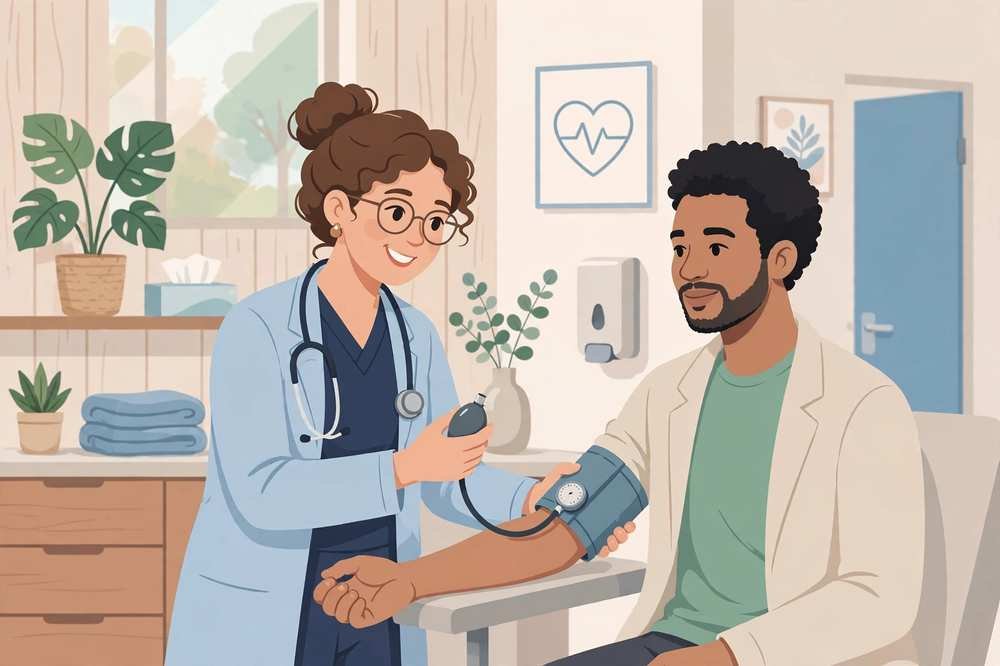
Your blood pressure is measured with a cuff around your upper arm. It shows how hard your heart is working to pump blood around your body. High blood pressure strains the heart, arteries, and kidneys, and greatly raises the risk of heart attack and stroke.
Cholesterol and Blood Sugar
A small blood sample is taken, usually from a vein in your arm. It is tested for cholesterol and, in many checks, for blood sugar or HbA1c. High cholesterol can clog arteries and lead to heart disease. The blood sugar test shows your risk of type 2 diabetes.
Body Mass Index (BMI)
Your height and weight are measured, and your BMI is calculated. It gives a rough guide to whether your weight is in a healthy range. Being overweight raises the risk of heart disease, diabetes, and several other conditions. Your waist may be measured too, since fat around the middle is linked to higher risk.
Lifestyle Questions
You will be asked about your daily habits: smoking, alcohol, diet, and physical activity. You will also be asked about family history and any current health issues. Be honest. The answers help build an accurate picture of your risk and let the advice fit your real life.
How to Get Invited and Book
In most areas, GP surgeries invite eligible patients by letter, text, or phone call. Invitations usually go out every five years. You do not need to be registered with a GP to be invited, but it helps, because the system works through GP records.
If you think you are eligible but have not been invited, do not wait. Contact your GP surgery and ask about the NHS Health Check. They can tell you whether you qualify and arrange an appointment. Some pharmacies and community clinics also offer the check, though availability varies by area.
How to Prepare for Your Appointment
There is no strict preparation, but a few simple steps help you get the most from your visit.
- Wear loose clothing. The blood pressure cuff goes around your upper arm, so a short sleeve helps.
- Ask about fasting. Some blood tests are more accurate if you have not eaten for a few hours. Your invitation or GP surgery will tell you whether this applies.
- Bring a list of medicines. If you take regular medication, bring the names and doses.
- Think about your habits. Having a rough idea of your smoking, drinking, diet, and exercise patterns makes the discussion more useful.
- Write down questions. The check is your time. If anything about your health worries you, bring it up.
What Happens at the Appointment
Knowing what to expect removes any nerves. The visit usually follows a simple pattern.
First, the health professional welcomes you and explains what will happen. You answer questions about your lifestyle and medical history. Next, your height, weight, and possibly waist are measured for the BMI calculation.
Then your blood pressure is checked. A cuff is wrapped around your upper arm and inflated briefly. You will feel a squeeze for a few seconds, then it releases. The process is painless.
After that, a small blood sample is taken for cholesterol and blood sugar testing. Most people feel only a brief scratch. Finally, the health professional puts your results together and explains your cardiovascular risk score in plain language. You discuss what the results mean and agree on next steps.
Understanding Your Results and Risk Score
The key number from your check is your cardiovascular disease (CVD) risk score. It estimates your risk of having a heart attack or stroke in the next ten years, expressed as a percentage. The score combines your age, blood pressure, cholesterol, smoking status, diabetes risk, and other factors.
A lower score means lower estimated risk, and a higher score means the opposite. There is no single “pass” or “fail”. Instead, the score guides what happens next. A low score usually means your current habits are working well. A higher score means action is worthwhile. It does not mean you will definitely become ill. It means your chances are higher, and steps taken now can bring them down.
Remember that the score is an estimate for people like you, not a prediction about you personally. Treat it as a helpful guide, not a verdict.
What Individual Results Mean
Beyond the overall score, each measurement tells its own story. High blood pressure may lead to advice on salt, weight, and exercise, or to medication. High cholesterol may prompt dietary changes or a discussion about statins. A high diabetes risk may lead to a referral to a prevention programme. Ask questions until you understand. It is your health, and the numbers only matter if you know what they mean.
What Happens After the Check
If your results look healthy, you will get advice on staying that way. This usually covers eating well, staying active, drinking sensibly, and not smoking. You will then be invited again in about five years.
If a result needs attention, the health professional will arrange follow-up. This might mean a repeat blood pressure check, a GP appointment, or a referral to a service such as stop-smoking support or a diabetes prevention programme. Nothing happens without your agreement.
In some cases, medication is discussed. For example, people with very high blood pressure or cholesterol may be offered tablets to lower their risk. The health professional will explain the benefits and any side effects. The final decision is always yours.
You should receive a written summary of your results. Keep it somewhere safe. It is useful to compare with your next check, so you can see how your health is changing.
Frequently Asked Questions
Is the NHS Health Check really free?
Yes. The NHS Health Check is free for eligible adults in England. There is no charge for the appointment, the blood tests, or the advice you receive. Any follow-up arranged through the NHS is also free at the point of use.
Do I need to fast before the blood test?
It depends on the type of test your area uses. Some cholesterol and blood sugar tests need a fasting sample, while others do not. Your invitation letter or GP surgery will tell you what to do. If in doubt, ask when you book.
Will the check hurt?
No. The measurements are painless. The blood pressure cuff squeezes briefly, which feels odd but not painful. The blood test involves a small needle scratch or a finger prick. Most people find the whole visit comfortable and relaxed.
Can I have a health check if I already take blood pressure tablets?
Usually not through this programme. If you are already on treatment for blood pressure, diabetes, or heart disease, you should be getting regular reviews with your GP or nurse. Those reviews cover the same ground as the health check. Ask your surgery if you are unsure.
Is the NHS Health Check available outside England?
The NHS Health Check as described here is an English programme. Scotland, Wales, and Northern Ireland have their own health services and different arrangements. If you live outside England, ask your GP what preventive checks are available to you.
What should I do between checks?
Keep up the healthy habits discussed at your appointment. Eat a balanced diet, stay active, keep alcohol within sensible limits, and do not smoke. If you notice new symptoms or your health changes, do not wait five years. See your GP whenever you have concerns.
Conclusion: A Small Appointment With Big Benefits
An nhs health check takes less than half an hour. It costs nothing. It can reveal hidden risks years before they cause harm. For many people, it is the nudge that leads to lasting healthy changes.
Here are the key takeaways:
- It is free and quick. Most checks take 20 to 30 minutes and involve simple, painless tests.
- It targets adults aged 40 to 74 in England who do not already have certain diagnosed conditions.
- It measures blood pressure, cholesterol, blood sugar, and BMI, alongside lifestyle questions.
- You get a personal risk score and clear, practical advice on lowering it.
- It repeats about every five years, with follow-up sooner if any result needs attention.
If you are eligible and have been invited, book your NHS Health Check. If you think you qualify but have not heard anything, contact your GP surgery. Half an hour today could protect your health for years to come.
This article is for general information only and is not medical advice. If you have concerns about your health, please consult your GP or another qualified healthcare professional.