Introduction
The world will celebrate World Teachers’ Day 2026 on Monday, 5 October, a day dedicated to honouring the teachers who educate more than a billion children and young people across the globe. In Pakistan, where classrooms stretch from crowded city schools to one-room village schools, the day gives millions of students a chance to say thank you to the teachers who guide them every single day.
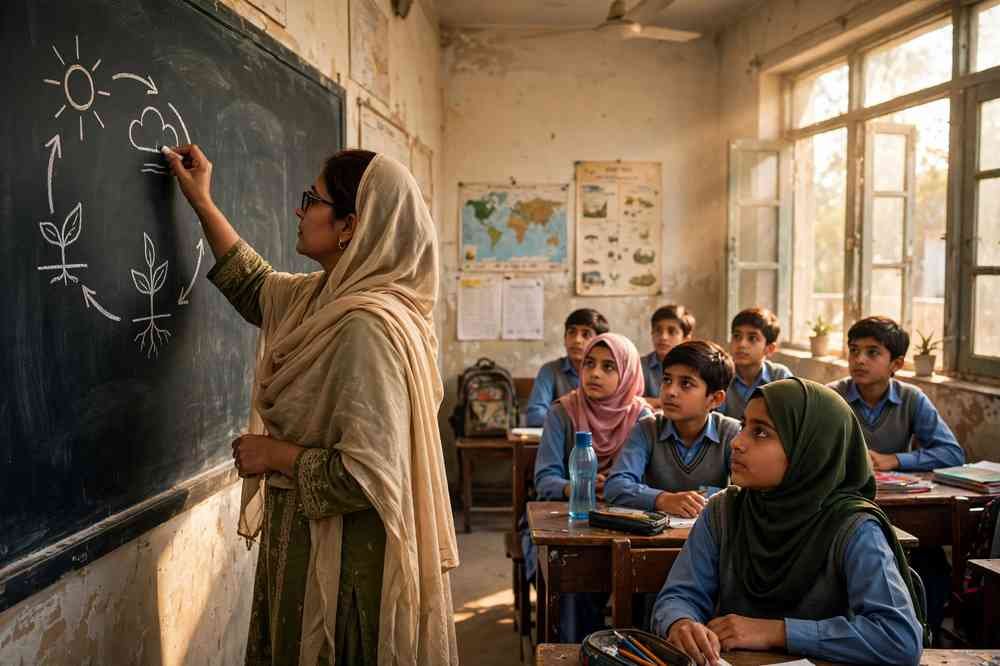
World Teachers’ Day is observed in more than 100 countries every year. It is not a public holiday in Pakistan. Schools, colleges and universities remain open, and that is part of its charm. The celebrations happen inside classrooms, in morning assemblies and across school corridors, in the very places where teachers spend their working lives.
This year’s observance is especially significant. It marks the 60th anniversary of the 1966 international agreement that first set out the rights and responsibilities of teachers, and UNESCO has built its 2026 theme around that milestone. For Pakistan, a country working hard to enrol every out-of-school child and raise learning standards, the day is also a moment to reflect on the status of the teaching profession itself. The pay, the training, the respect and the working conditions of the people entrusted with the nation’s future all deserve honest attention.
Behind every doctor, engineer, journalist and civil servant stands a teacher who believed in them first. World Teachers’ Day 2026 is the world’s way of saying that this work matters, and that teachers deserve far more than one day of applause.
History of World Teachers’ Day
World Teachers’ Day began with a document. On 5 October 1966, an international conference organised by the International Labour Organization and UNESCO adopted the Recommendation concerning the Status of Teachers. It was the first international standard to define what teachers are entitled to and what is expected of them in return.
The Recommendation covered recruitment and training, salaries, working conditions, professional freedom and the role teachers should play in shaping education policy. For the first time, the world had a shared benchmark for how the teaching profession should be treated.
The 1966 Recommendation concerning the Status of Teachers
The 1966 Recommendation was a landmark because it treated teaching as a profession, not just a job. It said teachers should be properly trained, fairly paid and given a voice in decisions affecting their work, while also setting out their responsibilities, including high professional standards and ongoing professional development.
A later Recommendation, adopted in 1997, extended similar protections to teaching personnel in higher education. Together, the two texts remain the foundation of international thinking about teachers’ rights. Sixty years on, the 1966 Recommendation is currently being revised, so that it speaks to the realities of today’s classrooms, including digital learning, teacher shortages and changing working conditions.
UNESCO Establishes the Day in 1994
In 1994, UNESCO proclaimed 5 October as World Teachers’ Day to commemorate the anniversary of the 1966 Recommendation and to draw attention, every year, to the contribution teachers make to society. The day has since become a fixture of the global education calendar.
Each year the celebrations are co-convened by UNESCO with the International Labour Organization, UNICEF and Education International, the global federation of teachers’ unions, and each edition carries a theme highlighting a pressing issue in education.
The World Teachers’ Day 2026 Theme
The official UNESCO theme for World Teachers’ Day 2026 is “Standing with teachers: 60 years of protecting the profession, advancing its status and shaping our futures.” It both celebrates sixty years of the 1966 Recommendation, which first gave the teaching profession international protection, and insists the job is not finished, because the status of teachers is under pressure in many parts of the world.
The theme focuses on teacher status in three dimensions: symbolic status, professional status and material status. Together, they describe what it really means to value a teacher.
Symbolic Status: Recognition and Respect
Symbolic status is about how society sees teachers. In many countries, teaching is not sufficiently recognised or valued. Teachers are praised in speeches on 5 October and then forgotten for the rest of the year. The 2026 theme calls for something deeper than praise. It asks societies, including Pakistan, to genuinely honour the contribution of teachers and to treat their work as central to national progress.
Professional Status: Autonomy and Voice
Professional status is about how teachers are treated as professionals. In too many education systems, teachers have limited autonomy in their classrooms, limited support for their professional growth and limited voice in the policies that shape their work. The 2026 theme argues that teachers should be trusted as experts, supported with quality training and included in education policymaking at every level, from the school to the ministry.
Material Status: Pay and Working Conditions
Material status is about the practical realities of a teacher’s life: salaries, workloads and working environments. Low pay, overcrowded classrooms and long hours drive talented people away from teaching and leave those who stay exhausted. No theme, speech or card can substitute for decent pay and humane working conditions. The 2026 theme puts this plainly. If societies want the best people to become teachers and to stay teachers, they must invest in the profession.
For Pakistan, where teachers in public and low-cost private schools often work with large classes and limited resources, these three dimensions will sound familiar. Read more about the inspiring role of teachers in Pakistan and the daily realities they face.
Why It Matters: The World Needs 44 Million More Teachers
UNESCO estimates that the world needs 44 million more teachers by 2030 to achieve universal primary and secondary education. It is one of the starkest figures in global education. Millions of children are taught by untrained or under-qualified teachers, or sit in classrooms so crowded that real learning is nearly impossible, simply because there are not enough teachers to go around.
The shortage is not only about numbers. It is about the profession itself. In many countries, teaching struggles to attract young graduates because the pay is low and the prestige is lower. Experienced teachers leave for better-paid work, and those who remain often face growing workloads, larger classes and pressure to adapt to digital tools without proper training or support.
Pakistan feels these pressures directly. The country has one of the world’s largest populations of young people, and bringing every child into school, and keeping them there, depends on having enough trained, motivated teachers. Rural schools struggle most, where a single teacher may handle several grades at once. Girls’ education, in particular, depends on the presence of female teachers, who remain in short supply in many areas.
This is why World Teachers’ Day is more than a celebration. It is a yearly reminder to governments that classrooms cannot run on goodwill alone. Teachers need training, fair salaries, manageable workloads and respect. The 44 million figure is a warning. Without serious investment in the profession, the world’s education goals for 2030 will remain out of reach, and Pakistan’s own ambitions for its children will be harder to achieve.
Global Celebrations: Paris Takes Centre Stage
The global celebration of World Teachers’ Day 2026 will take place at UNESCO Headquarters in Paris on 5 October 2026. The event is co-convened with the International Labour Organization, UNICEF and Education International, bringing together teachers, policymakers, union leaders and education experts from around the world.
A highlight of the Paris programme is the award ceremony for the UNESCO-Hamdan Prize for Teacher Development, which recognises outstanding projects that improve the quality of teaching and learning. The prize honours initiatives that strengthen teacher training, support teachers in challenging environments and raise the standing of the profession.
Around the world, education ministries, teacher unions, schools and civil society groups will hold their own events on and around 5 October. The Paris celebration sets the tone, but the day belongs to teachers everywhere, including the hundreds of thousands across Pakistan who will mark it in their own schools.
How Pakistan Celebrates Teachers’ Day
Pakistan observes Teachers’ Day on 5 October, aligned with World Teachers’ Day. There is no separate national date, and the celebrations are woven into the life of the country’s schools, colleges and universities.
Schools: Cards, Flowers and Assemblies
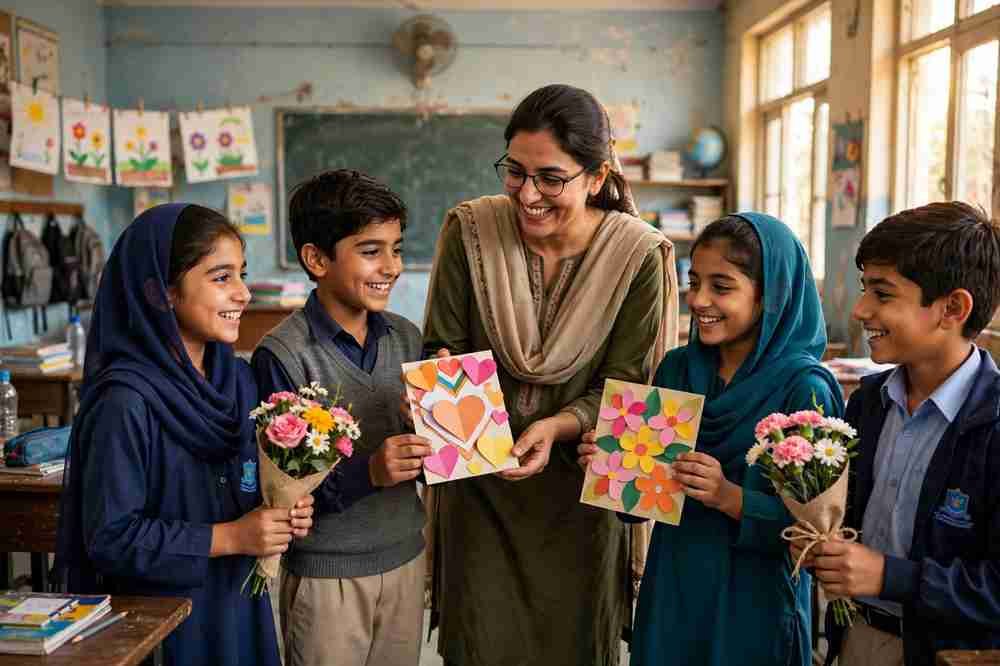
In schools across the country, from Karachi to Khyber, students mark the day by presenting hand-written cards and flowers to their teachers. Many children spend the evening of 4 October carefully decorating cards with messages of thanks, and the morning of 5 October begins with shy smiles as the cards are handed over in class.
Schools hold special morning assemblies on the day, with speeches by students and principals about the importance of teachers. Many schools organise performances in which students present skits, songs, poems and tableaus dedicated to their teachers. In some schools, senior students take over teaching for a day, standing at the blackboard to experience, briefly, what their teachers do every day. Classrooms are often decorated for the occasion. If you need ideas for your own tribute, see our collection of Happy Teachers’ Day messages, quotes and speech ideas.
Colleges and Universities: Seminars and Awards
Colleges and universities mark the day in a more formal style. Many institutions hold seminars, debates and panel discussions on the role of teachers in nation-building. Student societies organise events honouring their professors, and vice-chancellors, rectors and principals address gatherings to pay tribute to their faculty.
Award ceremonies are a common feature at the higher education level, where outstanding teachers are recognised for their teaching, research and service. Departments often invite retired professors as guests of honour, giving current students a chance to meet the teachers who shaped their institution’s history.
Government Messages and Official Tributes
The federal and provincial governments traditionally mark the day with official messages. Education ministers and senior officials issue statements paying tribute to teachers and reaffirming the government’s commitment to improving education. In some provinces, ceremonies are held to honour teachers with awards and certificates of appreciation.
Teacher associations and unions also use the day to raise their voice, reminding policymakers of the challenges teachers face, from salaries and pensions to training and classroom facilities. In this way, 5 October in Pakistan is both a celebration and a moment of advocacy, echoing the spirit of the UNESCO theme.
Social Media Tributes
On social media, 5 October brings a wave of tributes. Students post photographs with their teachers, alumni write emotional notes thanking the mentors who changed their lives, and hashtags dedicated to teachers trend through the day. News channels and newspapers run special segments and articles, while schools share glimpses of their celebrations online.
How You Can Take Part
You do not need an official event to honour a teacher. Here are simple ways to mark World Teachers’ Day 2026 on Monday, 5 October:
- Write a hand-written card or letter to a current or former teacher and tell them what their teaching meant to you.
- Give flowers or a small gift to your child’s teachers, or to the teachers at your old school.
- Visit a retired teacher, or call one you have lost touch with, and thank them in person.
- Post a tribute on social media naming the teacher who made the biggest difference in your life.
- Ask your school or college how it is marking the day, and offer to help organise the celebrations.
- If you are a parent, attend your child’s school event and show the teachers that their work is valued by families too.
Small gestures carry great weight. Teachers rarely hear, years later, how much their efforts mattered. A few honest words on 5 October can stay with a teacher for the rest of their career.
A Day to Say Thank You
World Teachers’ Day 2026 arrives with a powerful message. Sixty years after the world first agreed on the rights and status of teachers, the profession still needs defending, supporting and celebrating. The 44 million teachers the world still needs will not appear by accident. They will come when teaching is respected, properly paid and given a real voice.
On Monday, 5 October, Pakistan will do what it does best: its students will fill cards with careful handwriting, carry flowers into classrooms and stand a little taller as they thank the people who teach them. Join them. Find a teacher, past or present, and say the words every teacher deserves to hear. Thank you.
Read More
Continue exploring Teachers’ Day with us: read The Inspiring Role of Teachers in Pakistan and Happy Teachers’ Day: Messages, Quotes and Speech Ideas.