PTI Warns It Will Quit Assemblies if Governor's Rule Imposed in K-P
PTI Warns It Will Quit Assemblies if Governor’s Rule Imposed in K-P
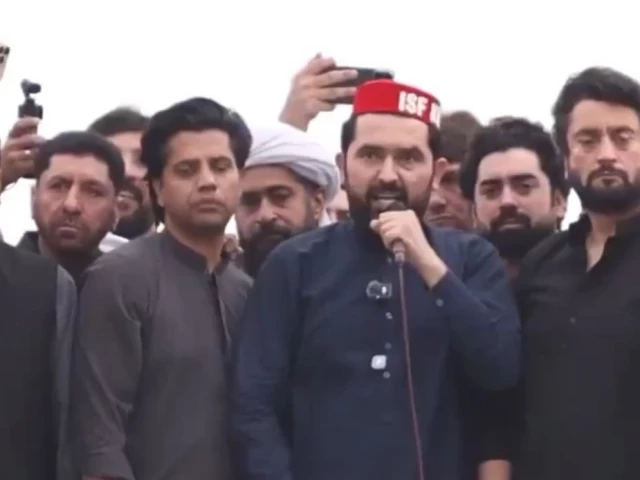
PTI’s Khyber-Pakhtunkhwa president Junaid Akbar Khan warned on Tuesday that the party would walk out of the national and provincial assemblies if the federal government imposed governor’s rule in K-P or declared an emergency in the province.
Speaking in an interview with a private news channel, Akbar said the party had decided it could no longer remain part of the current system, even if Chief Minister Sohail Afridi was disqualified. “Our people are being disqualified every day, and we will no longer play this game of assemblies,” he said.
‘Verbal firing’ from the Centre
Akbar dismissed the Centre’s warnings as “verbal firing”, arguing the federal government did not have the courage to impose governor’s rule. He went further, saying the party would welcome such a move.
“We want them to impose an emergency so that we can go to the people, and such a decision will benefit us because it will make things easier,” he said.
He stressed that the PTI had not been handed the K-P government as a favour — “we protected our vote” to secure it — and said the party had tried to find a political middle ground, only for the government and state institutions to construe “our desire for reconciliation as a sign of weakness”.
Why PTI took to the streets
The PTI leader listed the party’s grievances: denial of political space, disqualification of its members, removal of PTI speeches from the assembly record, and courts failing to deliver justice. He said the party leadership had joined the long march under pressure from workers demanding relief for Imran Khan. “Imran Khan is our priority because we saw peace in Khyber-Pakhtunkhwa during his leadership,” Akbar said, adding: “If we reach Swabi, we might not be able to control the long march.”
Government hits back
Parliamentary Affairs Minister Tariq Fazal Chaudhry countered that the PTI had resigned from assemblies in the past only to regret it later, and claimed “on the record” that 36 PTI MNAs would refuse to submit their resignations if the party walked out.
Akbar was unmoved: “Whether 36, 56 or 70 PTI MNAs decide not to resign, we want those party workers who cannot uphold Imran’s narrative and stance to leave the party.”
How the governor’s rule in K-P debate began
The standoff has been building for weeks. On September 21, Interior Minister Mohsin Naqvi said the government was consulting the law ministry on legal options for K-P, including governor’s rule, if the PTI went ahead with its long march. Two days later, Information Minister Attaullah Tarar ruled out any such plan, saying the federal government had “no intention” of removing the PTI administration.
Since then, several federal ministers have kept the option on the table. Kashmir Affairs Minister Amir Muqam said consultations were under way on the “constitutional and legal option” of governor’s rule, while Law Minister Azam Nazeer Tarar said it could be implemented if the constitutional conditions were met. K-P Governor Faisal Karim Kundi has separately warned the provincial government against creating conditions that could force the Centre’s hand, while Chief Minister Afridi has warned the PTI would “rebel” if needed.
What happens next
The warning raises the stakes in an already tense standoff. Reports have also surfaced of a possible no-confidence motion against the chief minister under Article 136, which needs signatures of 20 per cent of the assembly’s members and a vote within three to seven days.
Frequently asked questions
What is governor’s rule?
A constitutional provision letting the federal government assume direct control of a province’s administration through the governor, usually in an emergency or breakdown of constitutional machinery.
Has PTI resigned from assemblies before?
Yes. The party resigned from the National Assembly and dissolved the Punjab and K-P assemblies in 2022-23. The government says the PTI later regretted those decisions.
What is a no-confidence motion against a chief minister?
Under Article 136, it needs the signatures of 20 per cent of the assembly’s members, followed by a secret ballot within three to seven days.
Can the governor remove the chief minister directly?
Under Article 130(7), the governor can ask the chief minister to seek a vote of confidence if the governor believes the majority’s support is lost.