ISLAMABAD: The Securities and Exchange Commission of Pakistan has issued a new guidebook against terrorist financing. The SECP terror financing guidebook directs the regulator’s supervised firms to strengthen checks against terrorist financing and other illegal financial activities.
The move tightens the compliance burden on banks, brokers, insurers, and other firms overseen by the corporate regulator.
SECP terror financing guidebook: what firms must do
The guidebook explains how financial firms should screen existing and potential customers, as well as the real people behind them — the beneficial owners — against relevant sanctions lists.
When a possible match turns up, firms must assess it carefully. If the match is genuine, they must freeze the funds and assets of the designated individual or entity without delay.
They must then report the case to the relevant authorities within the prescribed time.
The SECP has also stressed regular screening, clear internal procedures, and proper record-keeping. Firms need trained staff and working compliance systems, not paper policies that sit on a shelf.
The commission has encouraged regulated entities to review their current procedures and improve their safeguards using the guidebook as a reference.
Built on sessions with the counterterrorism authority
The document follows awareness sessions that the SECP held with the National Counter Terrorism Authority. Those sessions helped regulated entities understand the rules around targeted financial sanctions.
Targeted financial sanctions are the legal tool that lets countries freeze the assets of people and groups linked to terrorism, without waiting for a criminal conviction.
The initiative supports Pakistan’s wider framework for fighting money laundering, cutting off terrorist funding, and stopping the financing of weapons proliferation.
The SECP was careful to note that the guidebook is a practical reference. It does not replace existing laws, regulations, or other regulatory requirements.
Why the guidebook matters now
Pakistan has strong reasons to keep its financial defences credible. The country exited the Financial Action Task Force grey list in October 2022 after years of work, and staying off it requires constant vigilance.
The enforcement side of the equation is also in the news. The federal government has just claimed it holds “credible evidence” of contacts between the PTI and the TTP, and vowed to present proof soon. Freezing the assets of designated terrorists and their facilitators is exactly the kind of action the new guidebook is designed to make routine.
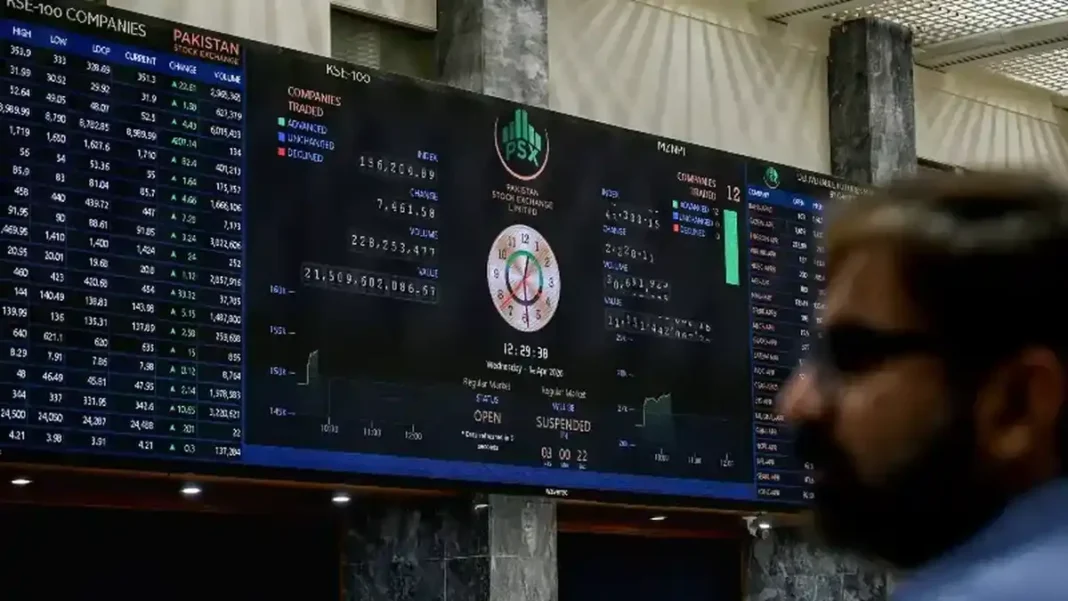
The timing also matters for markets. The Pakistan Stock Exchange has been volatile, with the KSE-100 index falling 1,964 points on October 12. The same week, the IMF raised Pakistan’s inflation forecast to 9.9 per cent and warned developing countries to cut spending as the Iran war energy shock bites. Investors watch regulatory credibility closely, and a regulator that enforces sanctions properly inspires more confidence than one that does not.
For ordinary customers, the practical effect should be limited. Banks already ask for identity documents and the source of large deposits. The guidebook mainly pushes firms to do that screening properly and repeatedly, rather than treating it as a one-time formality.
What happens next
Regulated entities are expected to align their internal manuals with the guidebook. The SECP will likely follow up with inspections to check whether firms have actually put the new procedures in place, as first reported by ProPakistani.
Firms that fail to screen clients or report suspicious cases face penalties under existing anti-money-laundering laws. The guidebook removes any excuse that the rules were unclear.
FAQs
What is the SECP terror financing guidebook?
It is a practical guidebook issued by the Securities and Exchange Commission of Pakistan telling regulated financial firms how to screen customers against sanctions lists, freeze the assets of designated persons, and report cases to the authorities.
Who does the guidebook apply to?
It applies to entities regulated by the SECP, including banks, brokerage houses, insurance companies, and other financial firms under its supervision.
Does the guidebook replace existing laws?
No. The SECP has said the guidebook is a practical reference and does not replace existing laws, regulations, or other regulatory requirements.