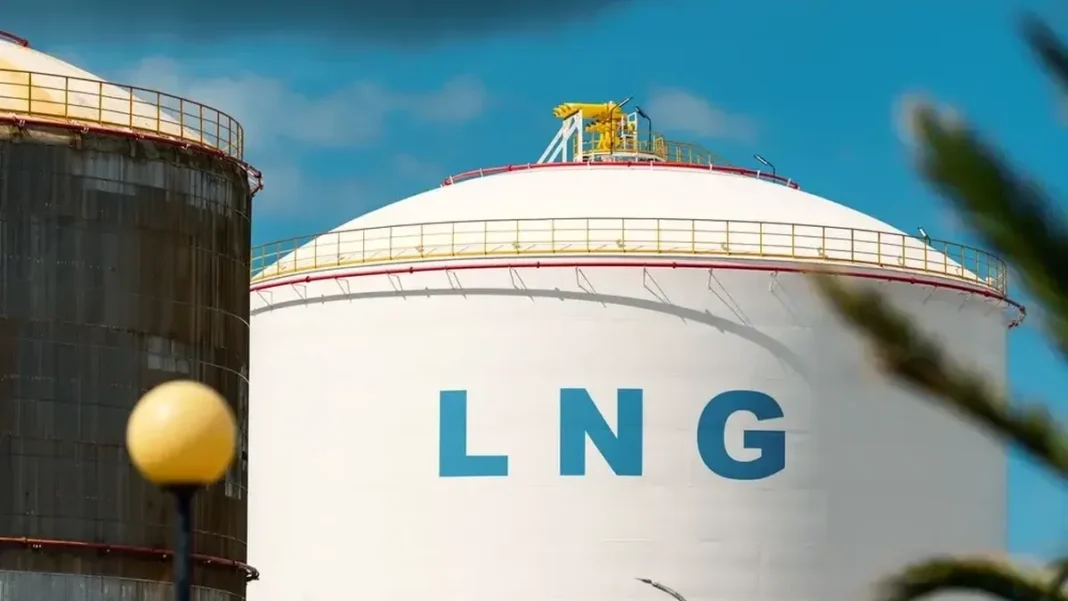
ISLAMABAD: Pakistan expects to spend about $1.29 billion on liquefied natural gas (LNG) imports to meet domestic gas demand during the November 2026 to February 2027 winter season. Disruptions to Qatari supplies have forced 10 of 22 planned cargoes onto the international spot market at nearly double the long-term contract price.
The Pakistan winter LNG imports bill averages $322.5 million a month across the four-month period, according to estimates discussed at a recent energy task force meeting and reported by Bloom Pakistan.
At the latest quoted spot price of $26.30 per million British thermal units (MMBtu), each spot cargo costs about $86.3 million. The 10 spot cargoes will therefore cost around $863 million, while the 12 cargoes under long-term contracts with Qatar and Eni will cost about $429.83 million.
Pakistan winter LNG imports: the cargo and cost breakdown
| Supply type | Cargoes | Estimated cost |
|---|---|---|
| Long-term contracts (Qatar, Eni) | 12 | $429.83 million |
| Spot market purchases | 10 | $863 million |
| Total | 22 | ~$1.29 billion |
Public-sector planning covers roughly half of the winter requirement through existing long-term agreements. The overall estimate includes one Eni cargo worth $78.42 million in January.
Demand will peak in January 2027, when Pakistan plans to import eight cargoes at an estimated cost of $437.32 million. December follows with projected costs of around $369 million.
Why Qatar’s supplies were disrupted
The cost surge traces back to the US-Israel-Iran conflict, which disrupted LNG supplies from Qatar through the Strait of Hormuz. QatarEnergy declared force majeure in March after attacks on its facilities during the conflict, and last month extended the suspension until 5 November.
Pakistan is heavily exposed to Qatari disruptions. Last winter the country imported 36 LNG cargoes, of which 35 came from Qatar, according to official data.
The Ministry of Petroleum has asked Pakistan LNG Limited to explore alternative supplies from the US, the Middle East and Azerbaijan. The government has set a $27 per MMBtu threshold for spot purchases, but spot prices could rise to around $29 per MMBtu, officials told Arab News.
Islamabad is also using diplomatic channels with Qatar, Iran and the US to secure passage for Qatari shipments through the Strait of Hormuz.
Pakistan has two long-term LNG supply agreements with QatarEnergy through Pakistan State Oil (PSO). The first runs 15 years from 2016 to 2031, while the second runs 10 years from 2021 to 2031, delivering 6.75 million tonnes a year, equal to 108 cargoes. PSO and QatarEnergy have now issued notices to review both agreements ahead of their 2031 expiry.
The second contract, signed during the PTI government, drew controversy because domestic demand did not justify the extra supply at the time. In 2026, PSO and QatarEnergy agreed to divert 24 cargoes elsewhere as demand stayed low, only for the Middle East conflict to reverse the situation within months.
What the bill means for Pakistan
The government is preparing winter gas load management, with curtailment of supplies to selected sectors if demand exceeds supply. Prime Minister Shehbaz Sharif has directed that domestic consumers get priority for locally produced gas, while re-gasified LNG will be prioritised for power generation and industry.
A public awareness campaign will push households towards alternative energy sources, and bank financing for electric water and space heating appliances is under consideration.
The expensive import bill adds to energy cost pressure at a time when the IMF has raised Pakistan’s inflation forecast to 9.9 per cent. Fuel costs are already biting households, with petrol prices revised this week.
On the industry side, Energy Minister Ali Pervaiz Malik recently discussed energy cooperation with Saudi Arabia in Riyadh, while the government has set a Rs2.2 trillion SME financing target for 2028 to cushion businesses.
FAQs
How much will Pakistan pay for winter LNG?
Pakistan projects an LNG import bill of about $1.29 billion for November 2026 to February 2027, averaging $322.5 million a month across 22 cargoes.
Why is Pakistan buying spot LNG?
QatarEnergy’s force majeure, extended to 5 November, disrupted long-term Qatari supplies. With winter demand rising, Pakistan must buy 10 of its 22 cargoes on the spot market at roughly double the contract price.
What happened to Qatar’s LNG supplies?
QatarEnergy halted production and declared force majeure in March after its facilities were attacked during the US-Israel-Iran conflict. Deliveries to Pakistan face disruption through the Strait of Hormuz.
Will there be gas shortages this winter?
The government is preparing load management and curtailment plans for selected sectors if demand exceeds supply. Domestic consumers will get priority for locally produced gas, while RLNG goes to power generation and industry.
What are the two Qatar contracts?
PSO has two long-term agreements with QatarEnergy: a 15-year deal running 2016-2031 and a 10-year deal running 2021-2031, together delivering 6.75 million tonnes a year. Both now face review and expire in 2031.