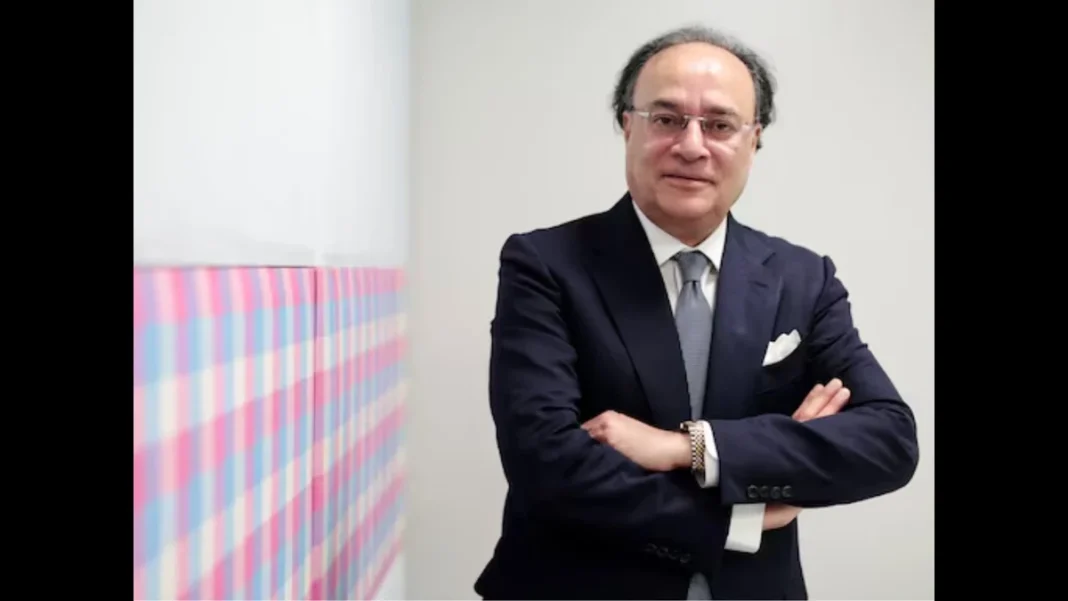
Federal Finance Minister Senator Muhammad Aurangzeb has accepted the chairmanship of the Governing Council of the Borrowers’ Platform on behalf of Pakistan. The government announced the decision on Monday, while the minister was in Bangkok for the 2026 Annual Meetings of the International Monetary Fund and the World Bank.
Aurangzeb acknowledged Egypt’s leadership of the Platform and the role of member countries and the Secretariat in making it operational.
What Pakistan has taken on
The chairmanship puts Pakistan at the head of the Platform’s Governing Council for its first annual cycle. Aurangzeb said the Platform should promote mutual learning and technical cooperation among borrowing countries, rather than serve as a collective-bargaining or crisis-management mechanism.
He stressed that debt should remain “an instrument for development rather than a constraint” on it. For Pakistan’s 2026-27 term, he set three priorities: strengthening debt-management practices, sharing reform experiences with other borrowers, and exploring innovative instruments for development financing.
What the Borrowers’ Platform Council is
The Platform is a new forum for developing countries that borrow on international markets. It was launched in April 2026 to give borrowing nations a collective voice in global debt discussions, which have long been dominated by creditor countries and institutions.
UN Trade and Development (UNCTAD) serves as the Platform’s operational backbone and Secretariat. Egypt’s finance minister, Ahmed Kouchouk, served as interim chair during the establishment phase, and Pakistan served as vice-chair of the working group that drafted the Platform’s modalities, alongside Egypt, Colombia, Honduras, Maldives, Nepal and Zambia.
The structure includes a Governing Council of finance ministers, central bank governors or equivalent officials, and a steering committee of senior technical officials. Membership is voluntary and open to developing countries that are UN member states and net borrowers. Thirty-one developing countries have formally joined so far. The first Governing Council meeting took place in Bangkok on October 12, on the sidelines of the IMF-World Bank meetings, where delegates adopted a communique setting the Platform’s strategic priorities.
Notably, the Platform is designed as a space for peer learning, technical assistance and data transparency, not for collective debt restructuring or bargaining. That matches the line Aurangzeb took in accepting the chair.
Pakistan’s pitch in Bangkok
The chairmanship was one engagement in a packed Bangkok schedule. In a meeting with IMF First Deputy Managing Director Dan Katz, Aurangzeb discussed Pakistan’s macroeconomic stabilisation, progress under the IMF-supported programme and structural reforms. Both sides welcomed the staff-level agreement on the $1.2 billion tranche and noted improvements in fiscal performance, foreign exchange reserves, inflation and the external sector. The delegation also included the newly appointed adviser to Pakistan’s IMF executive director.
The minister pointed to improved investor confidence, sovereign credit rating upgrades and renewed access to international capital markets — the stabilisation story that underpins the government’s economic plans. The talks also covered the impact of the Middle East conflict on energy prices and inflation.
At the 17th V20 Ministerial Dialogue, Aurangzeb appreciated the group’s support for Pakistan’s Climate Prosperity Plan and referred to Pakistan’s inaugural green Panda bond. He cautioned that initiatives must not remain unimplemented, citing the Loss and Damage Fund.
He also met UN Under-Secretary-General and ESCAP Executive Secretary Armida Salsiah Alisjahbana, identifying climate change and population growth as key challenges and seeking technical support for disaster preparedness and bankable climate projects.
Frequently asked questions
What is the Borrowers’ Platform?
It is a forum of developing borrower countries, launched in April 2026 with UNCTAD as Secretariat, for mutual learning and technical cooperation on sovereign debt, not for collective bargaining with creditors.
Who led the Platform before Pakistan?
Egypt’s finance minister Ahmed Kouchouk served as interim chair during the establishment phase; Pakistan served as vice-chair of the working group that set up the Platform.
What are Pakistan’s priorities for 2026-27?
Strengthening debt-management practices, sharing reform experiences with other borrowing countries, and exploring innovative development-financing instruments.
What did Aurangzeb discuss with the IMF?
With First Deputy Managing Director Dan Katz, he discussed Pakistan’s stabilisation, structural reforms and progress under the IMF-supported programme; both sides welcomed the staff-level agreement and noted gains in fiscal performance, reserves and inflation.
Sources: Tribune report · Reuters on the Platform’s launch