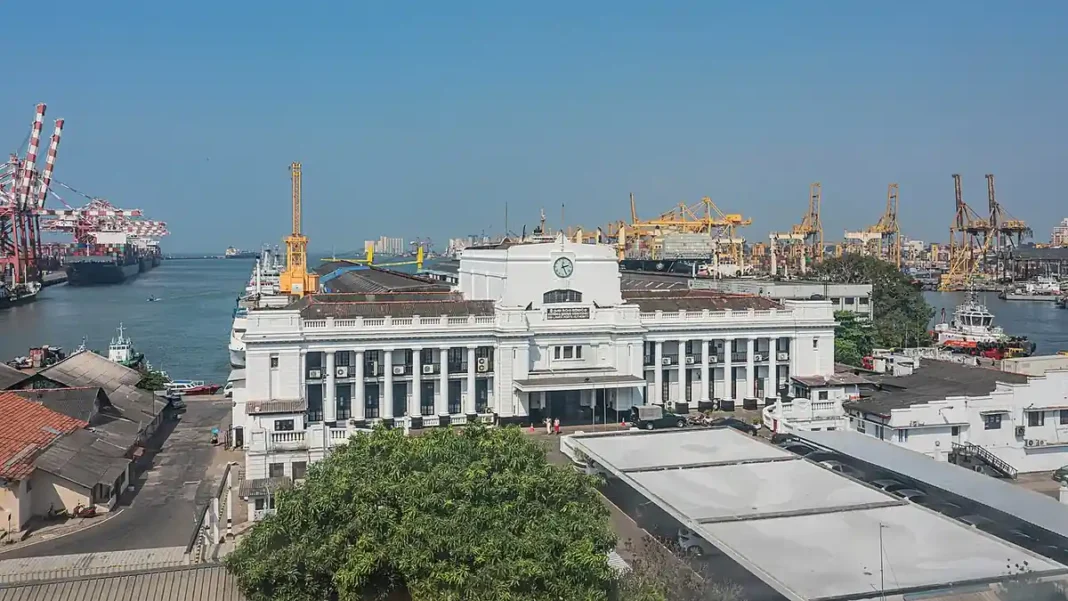
The China Sri Lanka port partnership has suffered a setback, with state-owned China Merchants Port Holdings withdrawing from a $392 million joint venture to develop a major logistics hub at Colombo Port, the key local partner said on Monday.
The Sri Lanka Ports Authority said China Merchants Port Holdings had decided not to proceed with the collaboration announced in 2023, but the project would continue under a new investor.
“Following an assessment of the prevailing external circumstances, commercial considerations and the interests of the respective shareholders, a decision was reached not to proceed with the proposed joint venture,” the authority said in a statement.
China Sri Lanka port deal unwinds
China Merchants was to hold 70 per cent of the proposed South Asia Commercial and Logistics Hub through its subsidiary Fortune Centre Group, while the ports authority and Sri Lanka’s Access Engineering PLC were each to hold 15 per cent.
The company confirmed the termination in a filing to the Hong Kong Stock Exchange on October 15, saying “terminating the project would be in the best interests of the parties”.
The project was billed as the largest commercial and logistics complex in South Asia: an eight-floor building with 530,000 cubic metres of storage, developed under a 50-year build-operate-transfer arrangement in the centre of Colombo Port. It received Strategic Development Project status in December 2023, carrying exemptions from corporate income tax and dividend taxes for 15 years.
The three shareholders had invested a combined $37.14 million, including $26 million from the Chinese subsidiary. Under the settlement, the ports authority will pay $21.905 million to the project company within 30 days, with the remaining cash distributed among shareholders.
China Merchants’ stake, agreed in April 2023, was the first major foreign investment announced after Sri Lanka’s economy collapsed in April 2022. Maritime publication Lloyd’s List reported the project also faced land and regulatory hurdles.
Within Colombo Port, China Merchants already operates a $500 million deep-water container terminal. The company also manages the deep-water port complex at Hambantota on Sri Lanka’s southern coast, widely regarded as one of the white-elephant projects launched by former president Mahinda Rajapaksa.
Second big investor exit
The withdrawal is the second instance of a major investor exiting an agreed project in Sri Lanka. In February 2025, Adani Green withdrew from a controversial $442 million renewable energy project in the north after the government sought to renegotiate the power-purchasing tariff.
The exits raise questions about the investment climate in Colombo, even as the island economy stabilises after its 2022 default.
For Pakistan, the episode is worth watching. Chinese firms signed 34 memorandums of understanding with Sindh in Shanghai this month, and Pakistan and China continue to deepen military and economic cooperation. The Colombo pullout shows Beijing’s state firms are reassessing overseas commercial exposure on strict commercial grounds, a calculus that also applies to projects in Pakistan.
Beijing’s shifting commercial posture was visible earlier this month when China suspended fuel exports, moving global oil prices.
Why did China Merchants pull out?
The company cited external circumstances, commercial considerations and shareholder interests. Reports also point to land and regulatory hurdles and implementation delays.
Will the project still go ahead?
The Sri Lanka Ports Authority says it will pursue the logistics hub through a public-private partnership model with competitive bidding for a new investor.
What does this mean for the region?
It is the second major investor exit from Sri Lanka in two years, after Adani Green’s February 2025 withdrawal, signalling tougher commercial scrutiny of large South Asian infrastructure bets.
*Sources: Dawn, The Hindu, Newswire.lk*