German Envoy Urges Deeper Pakistan Germany Trade, Investment Ties
FAISALABAD: Germany’s ambassador to Pakistan has called for a stronger Pakistan Germany trade and investment relationship, urging businesses to diversify trade, expand investment and deepen business-to-business cooperation.
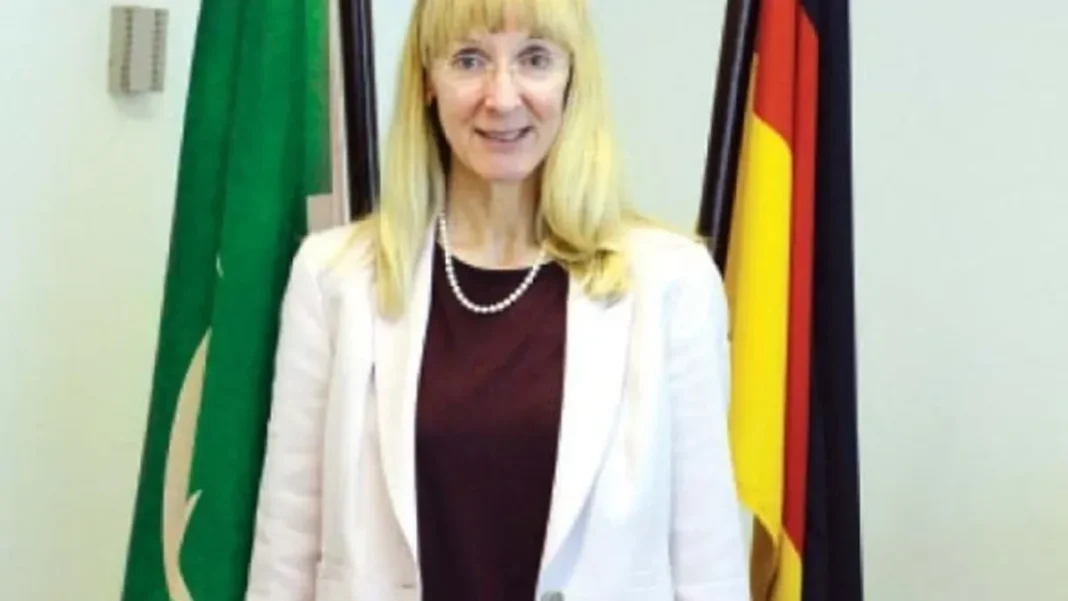
Speaking at the Pakistan Textile Exporters Association (PTEA) in Faisalabad on Monday, Ambassador Ina Lepel said German industry was actively looking to diversify its supply chains — a shift she described as a clear opening for Pakistani firms.
She acknowledged improvements in Pakistan’s infrastructure and energy supply but said structural challenges still held back trade and investment growth. She pointed to Germany’s technical assistance through GIZ, which is increasingly focused on sustainability, the circular economy and labour compliance.
A new Pakistan desk to connect businesses
Lepel announced that a dedicated Pakistan desk has been set up at the German-Emirati Joint Council for Commerce and Industry. The desk will connect German companies with trade and investment opportunities in Pakistan.
The announcement matters because German firms often enter Asian markets through Gulf hubs. A dedicated desk signals that Berlin now wants a more direct route into Pakistan.
Why the Pakistan Germany trade push matters
Germany is Pakistan’s largest trading partner in the European Union. Bilateral trade exceeded $4.23 billion last year, and textiles — Pakistan’s biggest export earner — sit at the centre of it.
That is why the setting matters. Pakistani textile companies have been winning praise from global buyers, and Faisalabad’s exporters are the natural first beneficiaries of any German supply-chain shift.
The envoy’s remarks also fit a wider push to sell Pakistan as an export economy. The federal government has been pressing export-led growth, and industries are being urged to build proper export strategies. An earlier Pakistan-Germany commercial deal showed the two governments already working in this direction.
For Faisalabad’s exporters, the practical questions are familiar ones: energy costs, compliance with European standards, and whether GIZ’s work on sustainability and labour practices can help factories meet the certification demands that German buyers insist on.
What exporters should watch next
Business-to-business contacts will decide whether the envoy’s visit turns into orders. Exporters should track whether the new Pakistan desk in the Gulf produces real matchmaking, and whether GIZ’s sustainability programmes open doors to German brands that currently buy from Bangladesh and Vietnam.
Pakistan’s edge is price and capacity in textiles. Its weakness is compliance paperwork. The envoy’s message was, in effect, that Germany is willing to buy more — if Pakistani firms can clear the bar.
FAQs
Who is Germany’s ambassador to Pakistan?
Ina Lepel is Germany’s ambassador to Pakistan. She made the remarks during a visit to the Pakistan Textile Exporters Association in Faisalabad.
How much does Pakistan Germany trade amount to?
Bilateral trade between Pakistan and Germany exceeded $4.23 billion last year. Germany is Pakistan’s largest trading partner in the European Union.
What did the envoy ask businesses to do?
She urged them to diversify trade, expand investment and deepen business-to-business cooperation, noting that German industry is actively seeking supply-chain diversification.
What is the new Pakistan desk?
A dedicated Pakistan desk has been opened at the German-Emirati Joint Council for Commerce and Industry to connect German firms with trade and investment opportunities in Pakistan.
What is GIZ focusing on in Pakistan?
Germany’s technical assistance agency GIZ is increasingly focused on sustainability, the circular economy and labour compliance.
Why was the speech given in Faisalabad?
Faisalabad is Pakistan’s textile hub, and textiles are at the centre of Pakistan’s exports to Germany, so the Pakistan Textile Exporters Association was a natural audience.