Pakistan, China Begin Karakoram-2026 Joint Exercise in Xinjiang
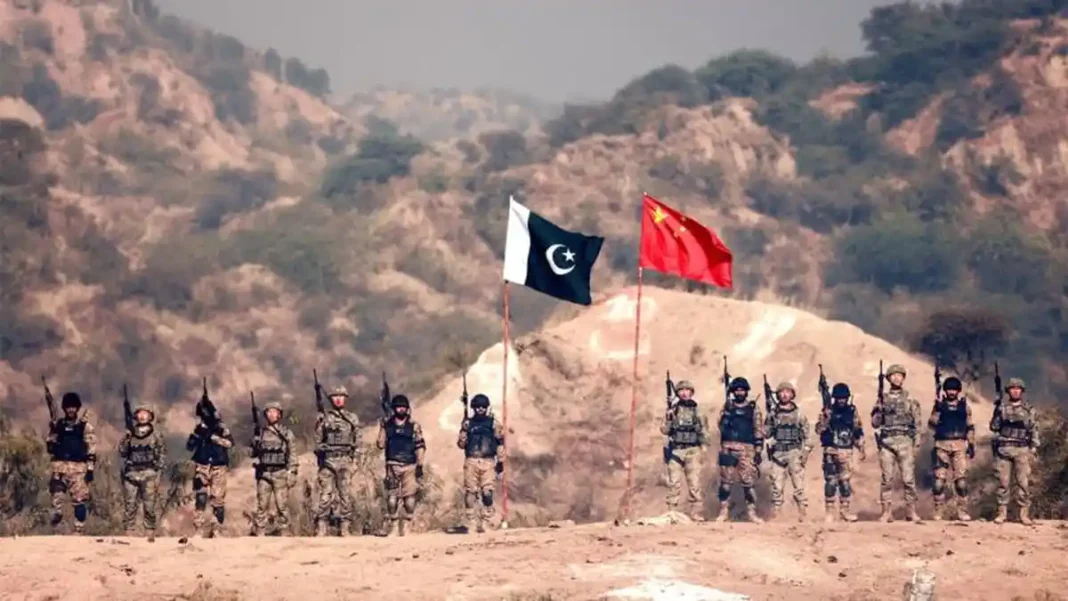
BEIJING: Pakistani and Chinese troops have begun a joint military exercise in China’s Xinjiang region, the first army-level drill of its kind between the two countries, China’s defence ministry announced.
The exercise, codenamed “Karakoram-2026”, is being held in the Korla region of the Xinjiang Uygur Autonomous Region in mid-to-late October. It focuses on joint counterterrorism operations in high-altitude areas, according to Chinese Ministry of National Defense spokesperson Colonel Chen Xi, who announced the drill on October 10.
What the exercise covers
The Pakistan China joint military exercise includes training in drone operations, search-and-target shooting, long-range sniping, joint command procedures and coordinated military operations. The high-altitude setting is deliberate: both countries face terrorist threats in mountainous border regions, and the drill is designed to build their ability to respond jointly.
Colonel Chen said the exercise would strengthen military exchanges and cooperation between the two countries and enhance their capacity to respond together to terrorist threats.
A first for the two armies
While Pakistan and China have a long history of joint military activity — the Warrior series of counterterrorism drills and the Shaheen series of air force exercises among them — Karakoram-2026 is the first joint exercise of this kind between the two armies, the Chinese defence ministry said.
The naming is symbolic. The Karakoram range straddles the Pakistan-China border, and the Karakoram Highway remains the physical backbone of the two countries’ connectivity. Holding the first army-level drill under that name signals how seriously both sides take the land border dimension of their security partnership.
The broader defence relationship
The exercise comes at a busy moment for Pakistan’s military diplomacy. The Pakistan Army recently won a silver medal at the Cambrian Patrol exercise in the UK, underscoring the armed forces’ packed training calendar, while Field Marshal Munir’s meetings with visiting dignitaries — including Russia’s interior minister this week — show how active the defence engagement calendar has become.
Pakistan and China describe each other as “all-weather friends”, and defence cooperation is the oldest pillar of the relationship — from the joint development of the JF-17 Thunder fighter aircraft to regular naval, air and now army exercises. Pakistan has also been demonstrating its conventional capabilities elsewhere, including the recent test-firing of the extended-range Fatah-2 missile, while managing an increasingly complex regional security picture that stretches from the Strait of Hormuz to the Afghan border. For China, the drill also serves its longstanding concern about militancy spilling over from the Afghan border region into Xinjiang. For Pakistan, it deepens interoperability with the region’s largest military at a time of heightened security challenges at home.
What happens next
The exercise runs through late October. Joint drills of this type typically conclude with a combined live-fire demonstration and a closing ceremony attended by senior officers from both sides. Defence observers will be watching for any announcements of follow-on exercises or new areas of cooperation once Karakoram-2026 wraps up, and for whether the “first of its kind” label leads to a regular army-level series alongside the existing air and naval engagements.
Tags: Pakistan China relations, Karakoram-2026, military exercise, Xinjiang, counterterrorism, Pakistan Army