Between elected governments, Pakistan is run by a caretaker prime minister — a neutral steward whose job is to keep the state working and deliver free elections. This is the full explainer: the constitutional machinery that creates the office, what the caretaker prime minister of Pakistan can and cannot do, and every person who has held the post.
Quick answer: The caretaker PM is appointed by the President on consensus between the outgoing PM and Opposition Leader (Articles 224/224-A); failing that, a parliamentary committee, then the ECP, decides. The office holds full day-to-day executive power but takes no major policy decisions. Eight people have held it since 1990, most recently Anwaar-ul-Haq Kakar (2023–24).
In this guide
The Constitutional Machinery
Articles 224 and 224-A of the Constitution of Pakistan lay down the procedure with unusual precision:
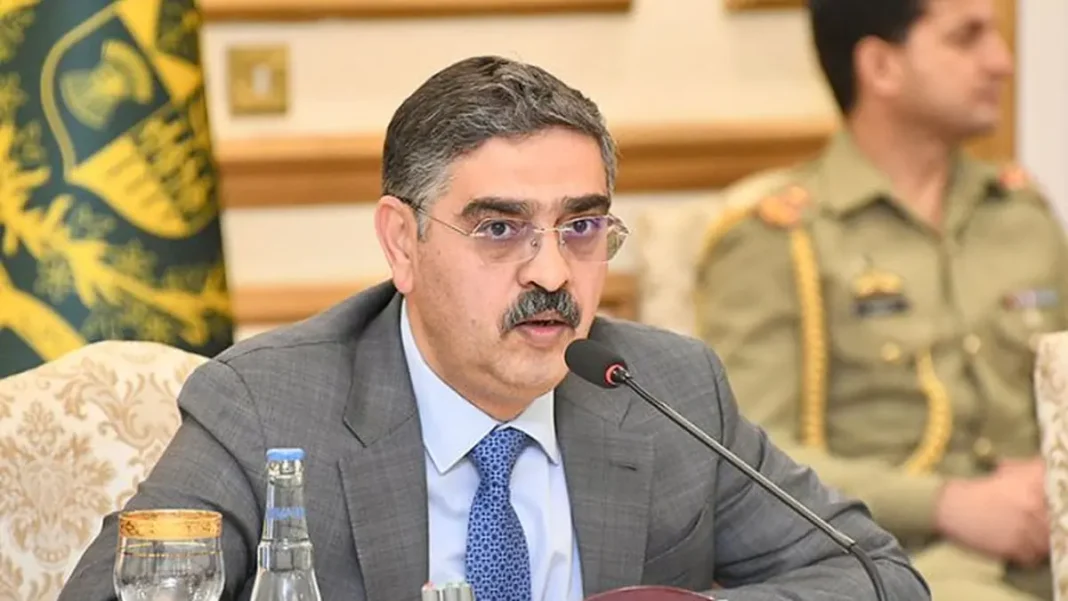
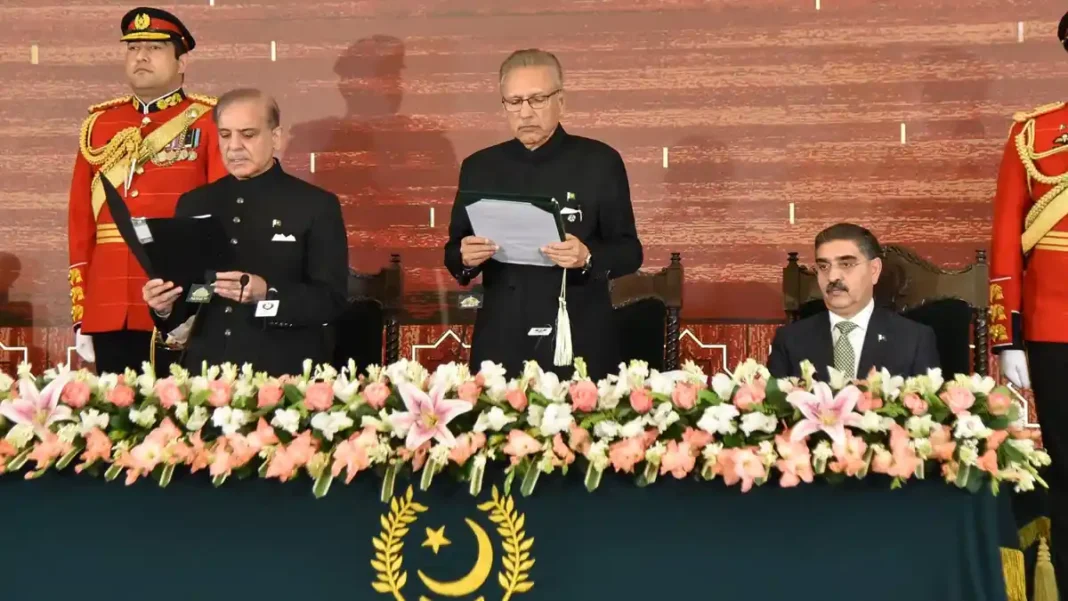
- Step 1 — Consensus. The outgoing prime minister consults the Leader of the Opposition; if they agree on a name, the President appoints that person. This produced Kakar in August 2023 (Shehbaz Sharif and Raja Riaz agreed).
- Step 2 — Parliamentary committee. If no agreement emerges in time, a committee of the National Assembly — government and opposition members in equal number — chooses from names put forward.
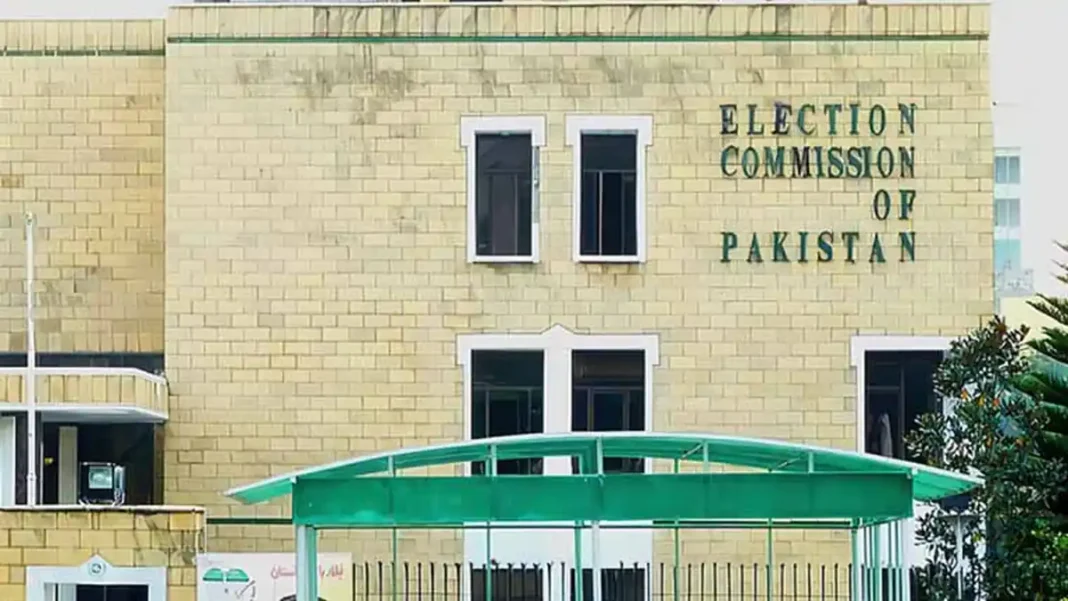
- Step 3 — The ECP. If the committee deadlocks too, the Election Commission of Pakistan makes the selection. The ladder guarantees the office is never left empty by political disagreement.
The appointee must be someone both sides can live with — in practice, retired judges, senators without strong party colour, or technocrats. Kakar resigned his Senate seat and his Balochistan Awami Party membership on taking the job, the standard ritual of de-partisanship.
Powers and Limits
A caretaker prime minister is not a figurehead. The office carries the full executive authority of the premiership: chairing the cabinet and the National Security Committee, directing ministries, conducting foreign policy, and managing the economy’s daily business. Kakar’s government, for instance, handled IMF programme engagements and represented Pakistan at the UN General Assembly.
But the mandate has a hard boundary, set by constitutional convention: no major policy decisions except on urgent matters. A caretaker government should not launch reforms, sign away long-term commitments, or reshape institutions — those choices belong to the government the voters are about to elect. The shorter the tenure, the tighter the leash; Kakar’s unusually long 203-day stint (elections were delayed past the 90-day window by post-census delimitation) tested these limits more than any previous caretaker setup.
The Full List of Caretaker PMs
- Ghulam Mustafa Jatoi (Aug–Nov 1990) — the first caretaker PM; oversaw the 1990 elections.
- Balakh Sher Mazari (Apr–May 1993) — brief transitional tenure.
- Moeenuddin Ahmad Qureshi (Jul–Oct 1993) — the former World Bank economist; oversaw the 1993 elections.
- Malik Meraj Khalid (Nov 1996–Feb 1997) — oversaw the 1997 elections.
- Muhammad Mian Soomro (Nov 2007–Mar 2008) — oversaw the 2008 elections after the emergency period.
- Mir Hazar Khan Khoso (Mar–Jun 2013) — the retired judge; oversaw the landmark 2013 elections.
- Muhammad Nasirul Mulk (Jun–Aug 2018) — the former chief justice; oversaw the 2018 elections.
- Anwaar-ul-Haq Kakar (14 Aug 2023–4 Mar 2024) — the longest-serving; oversaw the 8 February 2024 elections.
Why Neutrality Is the Whole Point
Strip away the procedure and one principle remains: the referee cannot be a player. Every feature of the office — the consensus appointment, the de-partisanship ritual, the bar on major decisions, the 90-day horizon — exists so that the coming election is fought on a level field. When the system works, the handover is unremarkable: the caretaker holds the vote, counts it, and hands power to the winner, as Kakar did to Shehbaz Sharif on 4 March 2024. When it doesn’t — when tenures stretch, or neutrality is questioned — the controversy is precisely about that principle. For what “nigran” means in the first place, see our nigran PM guide, and for the present position, who holds the office now.
Frequently asked questions
Who appoints the caretaker prime minister of Pakistan?
The President of Pakistan, acting on the consensus of the outgoing prime minister and the Leader of the Opposition. If they disagree, a parliamentary committee decides; failing that, the Election Commission of Pakistan.
Can a caretaker prime minister take major decisions?
By constitutional convention, no — only day-to-day administration and urgent matters. Major policy decisions are left for the incoming elected government.
How many caretaker prime ministers has Pakistan had?
Eight, from Ghulam Mustafa Jatoi (1990) to Anwaar-ul-Haq Kakar (2023–24).