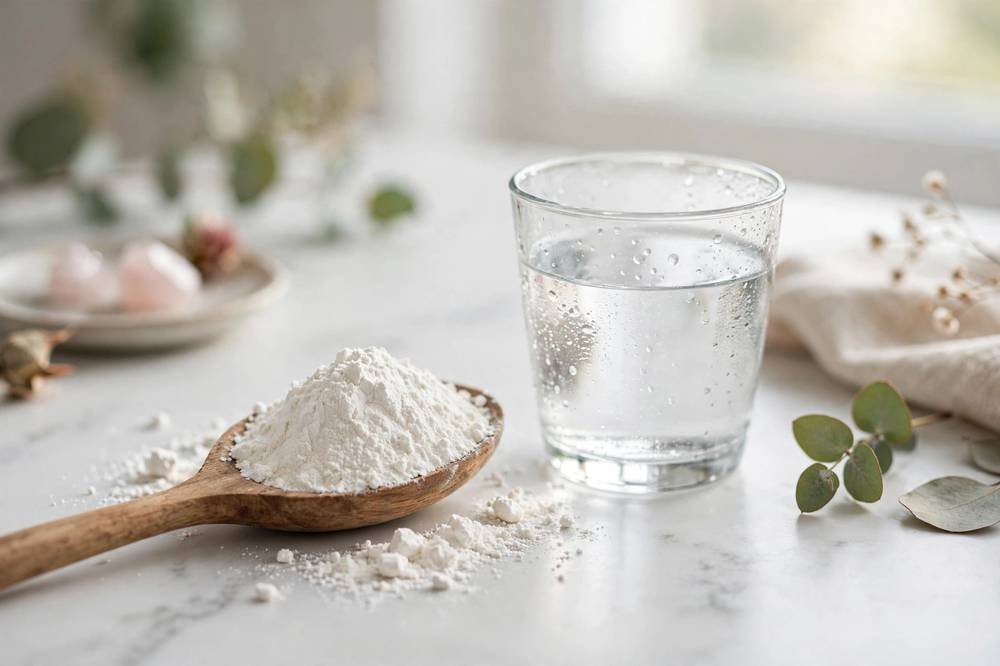
Collagen powder is everywhere. It is stirred into morning coffee, blended into smoothies and sold with promises of younger skin, stronger hair and pain-free joints. Search it online and you will find glowing reviews — and people calling it an expensive placebo. So what is the truth? This honest review covers what collagen powder actually is, what clinical studies really show, where the evidence is strong, weak or missing, and how to use it safely. No sales pitch.
What Is Collagen and Why Does It Decline?
Collagen is the most abundant protein in the human body. It acts like scaffolding: it keeps skin firm and elastic, holds joints and tendons together, and supports bones. Your body produces it naturally, but production starts to decline from around your mid-20s — by some estimates, by about 1% per year. Sun exposure, smoking, stress and poor diet speed up the loss.
That decline is behind familiar signs of ageing: fine lines, sagging skin, weaker nails and stiffer joints. The logic of collagen powder is simple — if your body makes less collagen, perhaps topping it up from outside can help.
What Collagen Powder Actually Is
Collagen powder is not raw collagen. Most products contain hydrolysed collagen (also called collagen peptides or collagen hydrolysate) — collagen that has been broken down with heat and enzymes into smaller protein fragments called peptides, which dissolve in hot or cold liquids.
Products are usually made from one of three sources:
- Bovine collagen (from cow hides or bones) — the most common and cheapest; mainly types I and III, the kinds found in skin.
- Marine collagen (from fish skin and scales) — marketed as more easily absorbed; mainly type I; more expensive.
- Chicken or eggshell collagen — often used for type II collagen, which is the kind found in joint cartilage.
A standard serving is one scoop, typically giving 10 to 20 grams of protein with almost no taste. It is not a drug — it is sold as a food supplement, which means it is not held to the same strict quality and testing standards as medicines in most countries.
How It Supposedly Works in the Body
The biggest criticism is a fair one: when you eat protein, your stomach breaks it down into amino acids — so how could “collagen” reach your skin? The honest answer is nuanced. Research shows that some small collagen fragments — particularly a dipeptide called proline-hydroxyproline (Pro-Hyp) — survive digestion, enter the bloodstream, and can be detected in skin tissue after supplementation. These fragments appear to signal the body’s own collagen-making cells to get to work.
So collagen powder probably does not rebuild your skin directly like patching a wall. A better way to think of it: it may deliver building blocks and a signal that nudges your own collagen production. That mechanism is plausible and supported by laboratory evidence — but the real question is whether that translates into visible, meaningful results.
What the Science Really Says: Skin
Skin is where the evidence is strongest. Multiple systematic reviews and meta-analyses — the highest level of research evidence — have pooled the results of dozens of randomised controlled trials, most of them in middle-aged women.
The largest review analysed 26 trials with over 1,700 participants taking 2.5 to 10 grams per day. It found statistically significant improvements in skin hydration and skin elasticity, with effects growing stronger the longer people took it. Another review of 35 trials (over 2,500 people, mostly middle-aged women, doses from 500 mg to 10 g, durations of 4 to 16 weeks) found improvements in hydration, elasticity, reduced wrinkle appearance and skin smoothness.
Honest verdict on skin: there is genuine, moderate-quality evidence that collagen peptides can modestly improve skin hydration, elasticity and the appearance of fine lines over 8 to 12+ weeks. The effects are real but subtle — think “skin looks a bit better,” not “ten years younger.” The reviewers themselves flag weaknesses: results are weaker in the highest-quality studies, some trials were industry-funded, and data is insufficient to prove deeper “structural” anti-ageing changes to the skin.
What the Science Really Says: Joints
Several trials have tested collagen (particularly type II collagen and hydrolysed collagen) for joint comfort, mostly in people with osteoarthritis or activity-related joint discomfort. Results show modest reductions in joint pain and stiffness in some studies, typically with around 8 to 12 weeks of use.
Honest verdict on joints: some evidence of modest benefit for joint comfort, but the research base is smaller and less consistent than for skin. It is not a substitute for medical treatment of arthritis.
What the Science Really Says: Hair, Nails, Gut and Weight
Here the claims run far ahead of the evidence:
- Hair: There is no strong clinical evidence that collagen powder improves hair growth or thickness. Marketing usually relies on the logic that hair contains amino acids also found in collagen — but that is not proof.
- Nails: Evidence is limited to a handful of small trials suggesting collagen may reduce brittle nails in some people. Promising but weak.
- Gut health: Despite popular claims that collagen “heals the gut,” there is essentially no clinical evidence that oral collagen powder improves digestion, leaky gut or gut inflammation.
- Weight loss: No evidence that collagen powder burns fat or causes weight loss. As a protein it can add a little fullness to a meal, but that is true of any protein.
Honest verdict: if you are buying collagen powder mainly for hair growth, gut healing or weight loss, you are paying for hope rather than evidence.
Why Reviews Are So Mixed
The split between rave reviews and disappointed customers makes sense when you look closer:
- Placebo and expectation: people who pay for a supplement and take it daily often notice improvements that may partly come from believing it works — combined with better hydration or diet changes made at the same time.
- Dose and duration: studies used 2.5 to 10 grams daily for at least 8 to 12 weeks. Someone taking half a scoop for three weeks is unlikely to see anything.
- Product quality varies: commercial products differ widely in peptide content, additives and purity. Many also contain hyaluronic acid, vitamin C or biotin — so any benefit may not come from the collagen at all.
- Individual differences: age, diet, sun damage and genetics all affect how skin and joints respond.
How to Use It Properly If You Try It
If you decide to try collagen powder, these evidence-based rules give you the best chance of getting what the studies actually showed:
- Dose: Most clinical trials used 2.5 to 10 grams per day. A common practical range is 5 to 15 grams daily. There is no demonstrated extra benefit to megadosing above this range.
- Duration: Give it 8 to 12 weeks minimum. Improvements in the trials were duration-dependent — effects grew with longer use.
- Consistency: Take it daily. Sporadic use will not match the study conditions.
- Pair with vitamin C: Vitamin C is a required cofactor for the body’s own collagen production. Many dermatologists suggest taking collagen with a vitamin C–rich food or drink (like orange juice or amla) or choosing a product that includes vitamin C.
- Timing myths: Some influencers claim it must be taken on an empty stomach or before bed. There is no clinical evidence that timing matters — pick whatever time you will stick with.
What to Look for on the Label
Because supplements are loosely regulated, quality matters. Look for:
- “Hydrolysed collagen” or “collagen peptides” — not plain “collagen,” which is poorly absorbed.
- Protein content per serving — a good product lists 10 g or more of collagen peptides per scoop.
- Third-party testing — seals from independent testers (such as NSF, USP or Informed-Sport) are the best assurance the product contains what the label claims and is free of contaminants.
- Short ingredient list — avoid products loaded with added sugar, artificial flavours and sweeteners.
- Source clearly stated — bovine, marine or chicken, so you know what you are getting.
Side Effects and Safety
Collagen powder is generally well tolerated, which is one of its few genuinely strong points. But it is not risk-free:
- Digestive issues: The most common complaints are bloating, nausea, a heavy feeling in the stomach, or mild diarrhoea — usually mild and dose-related.
- Allergies: People with fish or shellfish allergies should avoid marine collagen; those with egg allergies should be cautious with chicken/eggshell sources.
- Heavy metals: Cheap marine collagen products have occasionally been found contaminated with heavy metals from polluted waters — another reason to choose third-party-tested products.
- Kidney caution: Because it is extra protein, people with kidney disease should check with their doctor before adding a daily protein supplement.
Who Should Skip It
- Pregnant or breastfeeding women — there is not enough safety data on collagen supplements in pregnancy and lactation, so most doctors advise against them unless approved by your physician.
- People with kidney disease — check with a doctor first.
- Anyone with a fish, shellfish or egg allergy — choose the source carefully or skip it.
- Anyone expecting dramatic results — if you expect a supplement to replace sunscreen, a good diet or dermatological treatment, you will be disappointed.
Cost vs Benefit: The Honest Math
Collagen powder is not cheap — quality products often cost several thousand rupees per month. For that money, the honest summary is: a modest, gradual improvement in skin hydration and elasticity over a few months, possibly a little less joint stiffness — and little else proven.
Compare that with what the same money buys: consistent sunscreen use (the single best-proven anti-ageing step), a diet rich in protein and vitamin C, and — for joints — physiotherapy or prescribed treatment. Collagen powder is a reasonable addition to the basics, not a replacement for them.
Food Sources and Alternatives
You can support your body’s collagen production through food, often at lower cost:
- Protein-rich foods: meat, chicken, fish, eggs, dairy, lentils and beans supply the amino acids your body needs to make collagen.
- Vitamin C foods: citrus fruits, guava, amla, strawberries and bell peppers — vitamin C is essential for collagen synthesis.
- Bone broth / paya: traditional broths made by simmering bones release some collagen into the soup, though the peptide content is lower and less standardised than supplements.
- Copper and zinc: found in nuts, seeds and whole grains; both minerals support collagen formation.
- Sun protection: no supplement can outwork daily UV damage — sunscreen preserves the collagen you already have.
Frequently Asked Questions
Is collagen powder better than collagen capsules?
The research finds no meaningful difference between powder, capsules or drinks — what matters is the dose of hydrolysed peptides and regular use, not the format. Powder is simply the easiest way to get a full 5–10 gram dose, since capsules often contain far less per pill.
Does marine collagen work better than bovine?
Marketing says so, but meta-analyses found benefits were broadly similar regardless of whether collagen came from marine, bovine or porcine sources. What seems to matter more is the degree of hydrolysis and consistent, long-term use.
Can I take it with coffee or tea?
Yes. Hydrolysed collagen peptides dissolve in hot or cold liquids and heat does not destroy the peptides at normal drink temperatures.
How soon will I see results?
Be patient: the clinical trials that showed benefits ran for 8 to 16 weeks, with effects growing over time. Anything promising visible results in days is selling fantasy.
Is it safe for long-term use?
For healthy adults, long-term use at standard doses appears safe based on the available evidence. As with any supplement, buy a quality-tested product and stop if you notice side effects.
The Bottom Line
Taking collagen powder orally is neither a miracle nor a scam. The honest picture: there is real, moderate-quality evidence for modest improvements in skin hydration and elasticity over 8 to 12+ weeks at 2.5 to 10 grams a day, plus some evidence for joint comfort — and little to no evidence for the hair, gut and weight-loss claims that fill advertisements. If you try it, use a quality-tested product, take a full dose daily for at least three months, pair it with vitamin C, and keep your expectations realistic: it is a small supporting act in skin and joint health, not the star of the show.
Disclaimer: This article is for general information only and is not medical advice. Supplements affect everyone differently. Consult a qualified doctor or dietitian before starting collagen powder or any new supplement, especially if you are pregnant, breastfeeding, have a medical condition, or take regular medication.