

Pakistani troops have served in Saudi Arabia 'for decades', says DG ISPR
Pakistani troops have served in Saudi Arabia ‘for decades’, says DG ISPR
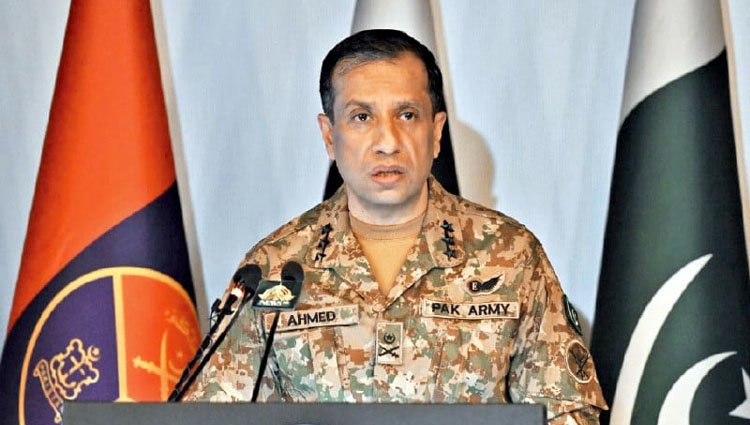
RAWALPINDI: Pakistani troops in Saudi Arabia have been stationed in the kingdom “for decades” across multiple domains, the military’s spokesperson said on Wednesday, underlining the depth of a defence relationship now formalised under the Makkah pact. Director General Inter-Services Public Relations Lt Gen Ahmed Sharif Chaudhry said the trilateral Makkah Defence Alliance between Pakistan, Saudi Arabia and Turkiye did not come about in a “vacuum”.
The statement is the military’s clearest public acknowledgement of the scale and longevity of Pakistan’s military footprint in the kingdom. It comes as the three allies move to put their new defence pact into operation, after agreeing on rapid force deployment inside Saudi Arabia.
What the military spokesperson said
Lt Gen Chaudhry said the presence of Pakistani troops in Saudi Arabia stretches back decades and spans multiple domains, a footprint rooted in bilateral agreements going back to the 1960s. He framed the Makkah Defence Alliance as the natural outcome of that history rather than a sudden reaction to the region’s wars.
The remarks carry weight because the exact size and role of Pakistan’s deployment in the kingdom has rarely been spelled out in public. Previous official statements have described the presence as a training and advisory mission under bilateral security cooperation.
The Makkah pact takes shape
Pakistan, Saudi Arabia and Turkiye signed the Makkah Joint Defence Agreement on August 7, 2026, pledging collective defence: an armed attack on one member is treated as an attack on all three. The pact held its first meeting in Istanbul on August 31, where the three sides agreed to deepen defence cooperation, joint activities and defence-industry collaboration. Pakistan was given initial charge of the alliance’s secretariat for three years.
Last month, the military spokesperson told Arab News that Pakistan would go to “any extent” to defend Saudi Arabia, stressing that the commitment covered the holy cities of Makkah and Madinah. “We are present there to protect Haramain Sharifain,” he said at the time.
The pact has gained urgency as Houthi missile and drone attacks have repeatedly targeted the kingdom. Saudi air defences intercepted a drone headed toward Makkah, and strikes hit airports in Jizan and Najran earlier this week, injuring three people.
Pakistani troops in Saudi Arabia: a partnership going back to 1967
Military cooperation between Pakistan and Saudi Arabia began with a security cooperation agreement in 1967, under which Pakistan provided advisers and pilots to the kingdom. Pakistani forces helped end the 1979 siege of the Grand Mosque in Makkah, and a division-sized deployment followed a 1982 bilateral agreement. Tens of thousands of Pakistani soldiers served in the kingdom during the 1991 Gulf War, and a fresh training contingent was announced in 2018.
Islamabad has historically drawn a line between defending Saudi territory and joining offensive wars in the region, notably declining to commit combat forces to the Yemen conflict.
Why it matters now
The spokesperson’s remarks land as the US-Iran war grinds through its seventh month, with Iranian retaliation striking targets across the Gulf and the Strait of Hormuz contested. For Riyadh, a formalised Pakistani commitment underwrites the kingdom’s defences. For Islamabad, the public acknowledgement signals that the Makkah pact is moving from paper to practice.
Frequently asked questions
How long have Pakistani troops been in Saudi Arabia?
According to the DG ISPR, Pakistani troops have been present in the kingdom for decades across multiple domains, under agreements dating back to 1967.
What is the Makkah Defence Alliance?
A trilateral defence pact signed on August 7, 2026 by Pakistan, Saudi Arabia and Turkiye, providing for collective defence against armed attack.
Will Pakistani troops fight in Yemen?
Pakistan has historically limited its role to defending Saudi territory and training, declining combat roles in offensive operations such as the Yemen war.