Erdogan: Makkah Pact Strengthened Ties With Pakistan
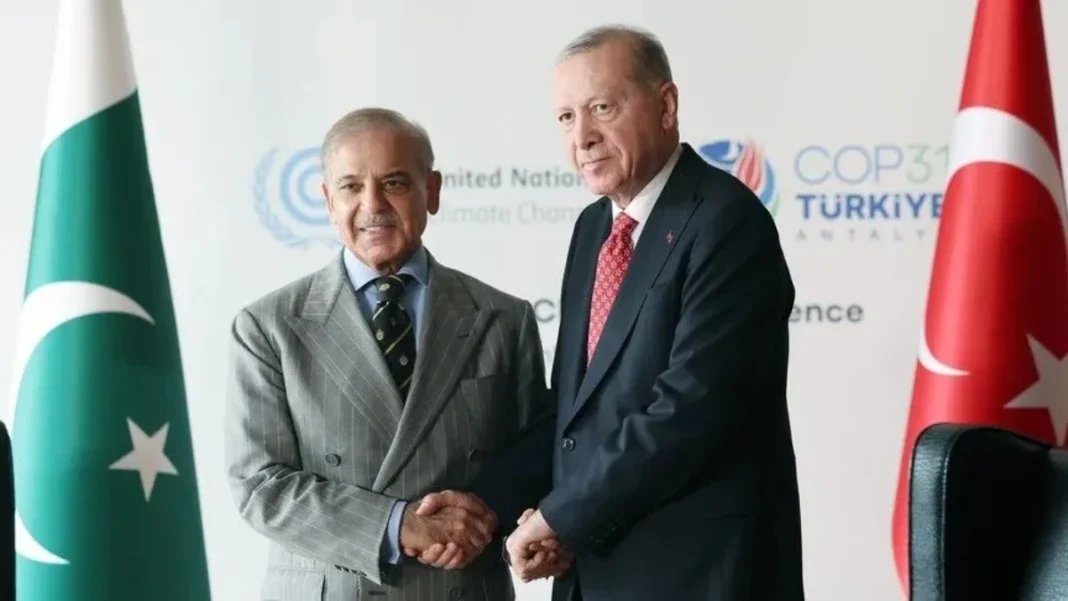
Turkish President Recep Tayyip Erdogan has told Prime Minister Shehbaz Sharif that the Makkah defence pact has strengthened solidarity with Pakistan, and that both countries will keep working together to end the conflict in Iran.
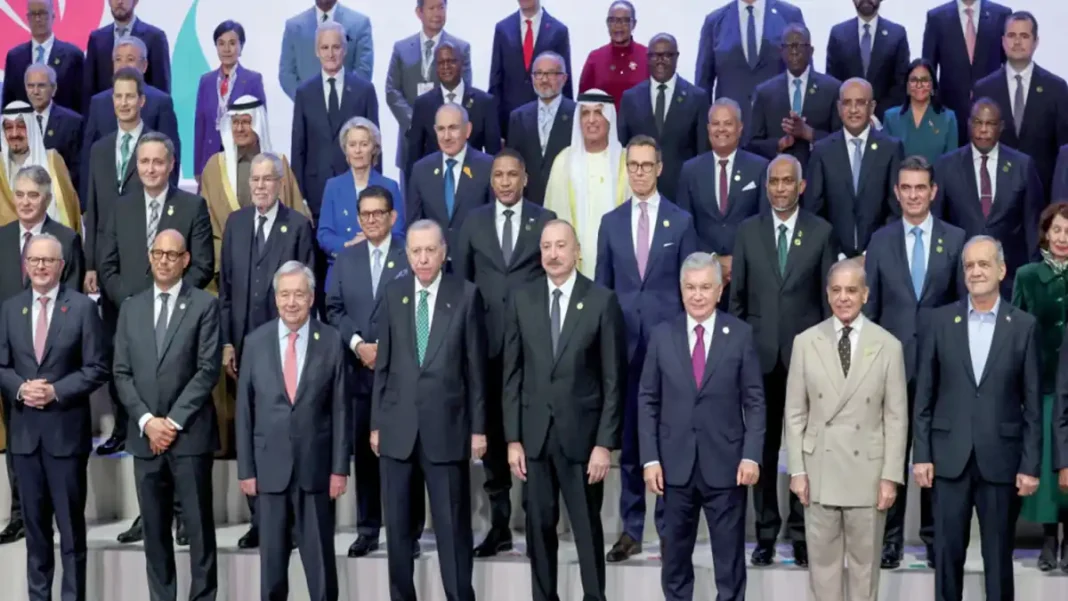
The two leaders met on Thursday on the sidelines of the COP31 Leaders Summit in Antalya, Turkiye. In a statement on X, the Prime Minister’s Office said President Erdogan appreciated Pakistan’s constructive role and mediation efforts, which led to the signing of the Islamabad Memorandum of Understanding.
Erdogan said Turkiye was ready to do everything possible through peaceful means to help address the challenges Pakistan faced in its region. The prime minister thanked him for his steadfast support and close coordination throughout Pakistan’s diplomatic effort.
What the Makkah defence pact meeting covered
The prime minister highlighted the efforts of regional countries, particularly members of the Makkah pact, to promote de-escalation and dialogue. Both leaders stressed that all parties must honour their commitments under the Islamabad MoU to ensure durable and lasting peace in the wider region.
The Prime Minister’s Office said the two leaders reaffirmed the deep-rooted, historic and brotherly ties between Pakistan and Turkiye, and expressed satisfaction at the positive direction of bilateral relations. Their talks covered trade and investment, defence collaboration, energy cooperation and connectivity, with an emphasis on speeding up ongoing initiatives and exploring new opportunities.
Both leaders also reaffirmed mutual support on matters of core national interest, and restated their commitment to strengthening the strategic partnership between the two countries.
How the Makkah defence pact took shape
Pakistan, Turkiye and Saudi Arabia signed the Makkah Joint Defence Agreement at a trilateral summit in Makkah on August 7, pledging to strengthen collective security, deepen defence cooperation and promote peace and stability in the region and beyond.
The Turkish parliament approved a bill ratifying the agreement on November 5, clearing the way for the trilateral security pact to take effect. Turkiye took the first step towards ratification when the pact’s opening article was approved, and the alliance is due to meet in Islamabad this month.
The pact has moved quickly from signature to implementation. Pakistan’s military spokesman has said the country will take all necessary defensive measures for Saudi Arabia under the alliance, after missile and drone attacks on Saudi territory.
The Erdogan-Shehbaz meeting is the latest sign that the three pact members are coordinating closely, not only on defence but on diplomacy over Iran. The Islamabad MoU of June 2026, which Pakistan helped mediate, sits at the centre of that effort, and both leaders tied their discussion of the pact to the need to end the conflict in Iran through dialogue.
Other meetings in Antalya
The prime minister also met Finnish President Alexander Stubb, and the two agreed to build a forward-looking partnership in trade, technology, education and climate resilience. The prime minister said Pakistan valued Finland’s expertise in flood forecasting and early warning, and thanked President Stubb for appreciating Pakistan’s role in facilitating dialogue between Iran and the United States.
He met Sudan’s Transitional Sovereignty Council President General Abdel Fattah al-Burhan and reaffirmed Pakistan’s support for Sudan’s sovereignty, unity and territorial integrity. The two leaders agreed that climate change required urgent collective action, especially for developing nations which bear its worst effects.
The prime minister also met Iraq’s President Nizar Mohammed Saeed Amidi, congratulated him on the successful conduct of parliamentary elections and the formation of a new government, and invited him to visit Pakistan. Their talks covered trade, investment, manpower, reconstruction, agriculture and defence, and the prime minister appreciated Iraq’s facilitation for Pakistani Zaireen.
The prime minister’s other engagements in Antalya included his address to the COP31 clean energy session, where he sought $138 billion in climate finance for Pakistan.
Why it matters
The Makkah pact is now a working alliance, not just a signed document: ratified by Turkiye, discussed at head-of-state level, and linked to live mediation over Iran. For Pakistan, the pact anchors its closest security relationships with two major Muslim countries, while the parallel diplomacy with Iran shows it is trying to keep deterrence and dialogue running together.
The Antalya meetings also show how the prime minister is using the climate summit as a diplomatic stage, holding bilateral talks with leaders from Europe, the Middle East, Africa and South Asia in a single day.
Frequently asked questions
What is the Makkah pact?
The Makkah Joint Defence Agreement is a trilateral pact signed on August 7, 2026, by Pakistan, Turkiye and Saudi Arabia in Makkah. It covers collective defence, joint readiness and coordination, and treats an attack on any one of the three as an attack on all three.
What did Erdogan say to Shehbaz Sharif?
President Erdogan said the Makkah pact had strengthened solidarity with Pakistan, praised Pakistan’s mediation role leading to the Islamabad Memorandum of Understanding, and said both countries would keep working jointly to end the conflict in Iran.
When did Turkiye ratify the pact?
The Turkish parliament approved the bill ratifying the Makkah Agreement on Joint Defence on November 5, 2026.