PM Bans Use of Schools for Police Deployment
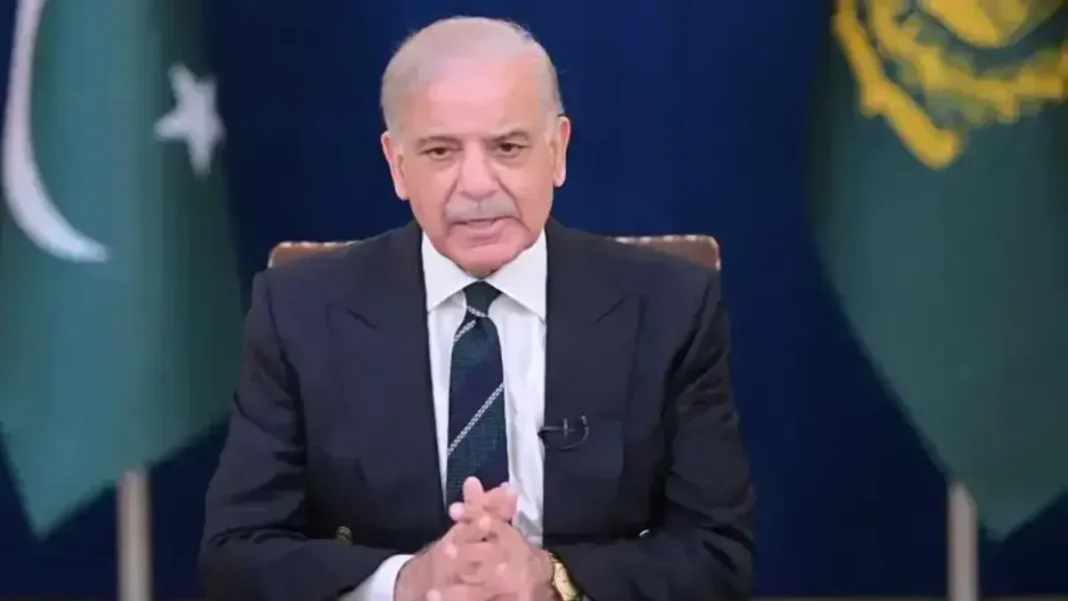
Prime Minister Shehbaz Sharif has imposed a complete ban on schools for police deployment in Islamabad, ending the practice of housing police and security personnel in school and college buildings during law and order situations. He has also directed that teachers shall not be given duties other than teaching under any circumstances.
The prime minister gave the directions while chairing a meeting on the education sector in Islamabad recently. He observed that schools were meant to impart education and teachers were responsible for teaching students, so there was no justification for using school buildings for any other purpose to deal with law and order situations.
“School premises and buildings shall not be occupied by law enforcement agencies for any purpose,” the prime minister said.
Following the meeting, the Prime Minister’s Office issued written instructions to the Ministry of Education. On Wednesday, the education ministry conveyed the decisions to the Islamabad district administration and police.
Schools for police deployment: what the ban covers
The education ministry’s letter states that the premises, buildings, classrooms and other facilities of schools and colleges under the Federal Directorate of Education (FDE) must not be occupied, used or handed over to any law enforcement agency.
The ban covers temporary campuses, personnel deployment, detention facilities and other operational activities. Its stated purpose is to prevent disruption to students’ education.
The letter was addressed to the chief commissioner Islamabad, the Capital Development Authority chairman, the inspector general of police, the interior secretary and the director general of the FDE.
Teachers freed from election and census duties
The second part of the decision concerns teachers. The prime minister has directed that schoolteachers shall not be required to perform administrative duties, including election duties, census activities and household surveys, in future.
Duties already assigned to teachers must be cancelled immediately in compliance with the directive, the letter states.
“The prime minister has further directed that schoolteachers shall not be required to perform administrative duties, including election duties, census activities, household surveys, etc, in future,” the letter stated.
Teachers’ associations have raised this demand for years. They argue that election, census and survey work pulls teachers out of classrooms for weeks at a time and leaves students without lessons. The prime minister’s order accepts that demand in full for the capital’s public schools and colleges.
Why the decision came now
The order follows a disruption in September, when thousands of students in 38 public-sector schools and colleges in the capital lost lessons. Their institutions remained closed for periods ranging from one to three weeks to accommodate law enforcement personnel.
An FDE official said the 38 schools and colleges had been closed in September to accommodate police personnel ahead of the PTI’s anticipated protest march. The government had started shifting police personnel to Islamabad’s educational institutions on Sept 24, three days before the party’s scheduled rally.
Later, when the situation came under control and governor’s rule was imposed in Khyber Pakhtunkhwa, the government reopened the schools and colleges.
A federal government officer welcomed the decision. “Let me appreciate Prime Minister Shehbaz Sharif for this remarkable decision. Closing schools and colleges to accommodate police personnel was illogical,” the officer said. He added that teachers had been demanding exemption from election, census and other duties for years, and the prime minister had finally accepted their demand.
What it means for Islamabad classrooms
The decision draws a clear line between security arrangements and schooling in the capital. Police deployments during protests and law and order operations will now have to be housed elsewhere, and school buildings will stay open for classes. Our latest Islamabad roundup will carry updates as they come.
It also removes a recurring burden from teachers. In past years, teachers in Islamabad were routinely assigned to election duty, census work and household surveys, often at short notice and during term time. Under the new order, those assignments must stop, and any already issued must be withdrawn.
The move fits a wider debate about the role of teachers in public life. Senate Chairman Yousaf Raza Gillani recently called for student unions to be revived, arguing that the grassroots nurseries of leadership had gone dormant. Both decisions point in the same direction: schools and colleges should serve education first.
The September closures also showed how quickly classroom time can be lost when institutions are pressed into other uses. Feature Pakistan reported on the federal government’s imposition of governor’s rule in Khyber Pakhtunkhwa, the step after which the closed Islamabad schools were reopened, and on the lockdown arrangements in the capital during the protest period. The new ban is meant to stop that pattern from repeating.
Frequently asked questions
What has the prime minister banned?
Prime Minister Shehbaz Sharif has banned the use of Islamabad schools and colleges to accommodate police and security personnel during law and order situations.
Which institutions does the ban cover?
It covers schools and colleges under the Federal Directorate of Education in Islamabad, including their premises, buildings, classrooms and other facilities.
Are teachers still required to perform election and census duties?
No. The prime minister has directed that teachers shall not be given administrative duties such as election duty, census work and household surveys, and duties already assigned must be cancelled.
Why were Islamabad schools closed in September?
Thirty-eight public-sector schools and colleges were closed for one to three weeks to house police personnel ahead of the PTI’s anticipated protest march. Police were shifted into the institutions from Sept 24.
When were the schools reopened?
The government reopened the schools after the situation came under control and governor’s rule was imposed in Khyber Pakhtunkhwa.