FBR Chairman Sparks New Provinces Debate
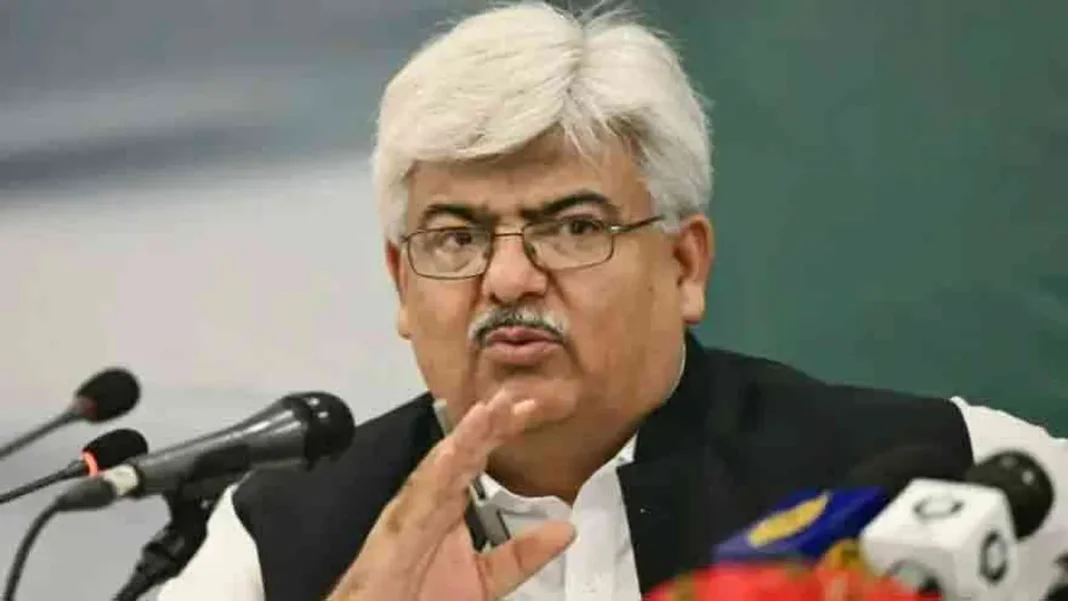
The Federal Board of Revenue (FBR) chairman has raised a fresh question about Pakistan’s administrative map, sharing satellite images that have added fuel to the new provinces debate. Rashid Langrial posted the comparison on social media, showing the country’s lit-up land grew by about 27 per cent between 2012 and 2026.
According to the figures in his post, Pakistan’s continuously illuminated land area rose from about 13,259 square kilometres in 2012 to 16,876 square kilometres in 2026. The country’s urban population grew by about 60 per cent over the same period.
Langrial argued that the state’s administrative structures have failed to keep pace with the growth of its cities. Government institutions still work along boundaries drawn around an older urban landscape.
New provinces debate: Lahore belt now bigger than Karachi
The satellite comparison shows rapid growth in several urban centres, above all in Punjab. Lahore, Gujranwala and Kasur, which appeared as separate clusters of light in 2012, have grown into a single connected belt that also takes in Sheikhupura, Muridke and Kamoke.
The combined lit area of that belt rose from 1,794 square kilometres in 2012 to 2,696 square kilometres in 2026, a 1.5-fold expansion. The post describes it as a megacity taking shape along the Grand Trunk Road, and the belt is now larger than Karachi’s lit area.
Faisalabad recorded the biggest expansion among the major centres, with its lit area more than doubling from 403 square kilometres to 853 square kilometres. Islamabad and Rawalpindi grew 1.8 times, Multan doubled, and Sialkot more than doubled. Karachi’s lit area rose 1.4 times, from 1,119 square kilometres to 1,605 square kilometres, while Hyderabad and Peshawar grew more slowly. Quetta and Bahawalpur also recorded increases.
| City or belt | Lit area 2012 (sq km) | Lit area 2026 (sq km) | Growth |
|---|---|---|---|
| Lahore belt | 1,794 | 2,696 | 1.5 times |
| Faisalabad | 403 | 853 | More than doubled |
| Islamabad-Rawalpindi | 855 | 1,498 | 1.8 times |
| Multan | 277 | 550 | Doubled |
| Sialkot | 154 | 330 | More than doubled |
| Karachi | 1,119 | 1,605 | 1.4 times |
| Hyderabad | 256 | 334 | 1.3 times |
| Peshawar | 270 | 311 | 1.2 times |
Governance has not kept pace with growth
Langrial pointed to the Lahore belt, which now stretches across four districts but has no single governing authority for the whole metropolitan region. Karachi, meanwhile, is divided among about a dozen land-owning agencies, which leaves a city that works as one economic centre with a fragmented administration.
He also noted that Punjab’s cities have largely been run by appointed administrators for most of the past decade, rather than through empowered local governments. The result, in his view, is that planning, services and revenue decisions do not match the scale of the cities they serve.
“The lights have merged. The state has not,” Langrial wrote. He argued that cities will keep expanding whatever the government does, but their future will depend on whether the state adapts its systems to the urban centres they have become.
Why the debate matters now
The post lands in the middle of a live political argument. Sindh parties have already rejected a plan for new provinces, and the question of how Pakistan should be governed is back on the table. Langrial’s figures add a data point to that argument: the map of lit land no longer matches the map of government.
The debate is not only about provinces. It also covers local government, which decides who runs a city day to day. The PPP in Punjab has pressed for devolution to local governments, while the Senate panel recently ordered the FBR to explain large tax waivers in the former tribal districts.
For readers, the practical question is simple. If Lahore, Karachi and Faisalabad keep growing at this pace, the bodies that collect their taxes, plan their roads and run their water systems will need to match the cities as they are now, not as they were in 2012. Development spending has already lagged, with only 10.4 per cent of the allocation used in four months.
Whether the answer is new provinces, stronger local governments or a new way to govern urban belts, Langrial’s post frames the choice in plain terms: the lights have joined up, and the state now has to decide how to follow.
Frequently asked questions
How much has Pakistan’s lit-up land grown since 2012?
It grew from about 13,259 square kilometres in 2012 to 16,876 square kilometres in 2026, an increase of about 27 per cent. The urban population rose by about 60 per cent in the same period.
Which city grew fastest?
Faisalabad recorded the biggest expansion among the major centres, with its lit area more than doubling from 403 square kilometres to 853 square kilometres.
Is the Lahore urban belt bigger than Karachi?
Yes, on the satellite figures shared by the FBR chairman. The Lahore belt covers 2,696 square kilometres of lit land, against 1,605 square kilometres for Karachi.
What did the FBR chairman say about governance?
He said administrative structures have failed to keep pace with urban growth, pointing to the Lahore belt, which spans four districts with no single governing authority, and Karachi, which is split among about a dozen land-owning agencies.