Punjab E-Receipts Mandatory for Hotels, Restaurants
Punjab e-receipts are now compulsory for hotels, restaurants, coffee shops and wedding halls across the province, the Punjab Revenue Authority (PRA) has announced. Businesses that fail to comply face fines of Rs400,000 to Rs1 million.
Under the new rules, all relevant businesses must connect their invoicing systems to the authority’s Electronic Invoice Monitoring System (EIMS) and give customers electronically generated receipts for every transaction. The requirement applies to hotels, restaurants, coffee shops, marriage halls and other relevant businesses operating across the province.
The move aims to bring business transactions under digital monitoring, improve transparency in tax collection, and strengthen the monitoring of sales tax payments. The PRA said the digital system will keep an electronic record of commercial activity and tax-related transactions, helping improve oversight and prevent tax evasion.
Punjab e-receipts: what changes for businesses
The change is practical, not just administrative. A restaurant or hotel can no longer run its billing off the books. Every sale must pass through an invoicing system linked to EIMS, and every customer must receive a receipt generated by that system.
Businesses that conduct transactions without issuing receipts through the electronic system will face penalties. The fines run from Rs400,000 to Rs1 million, a level that makes non-compliance costly even for large establishments.
The PRA issued the directives as part of a wider push to document the economy. Cash-heavy sectors such as food and hospitality have long been hard for the tax authorities to track, because sales could go unrecorded. An electronic receipt creates a record at the point of sale, and that record feeds straight into the authority’s monitoring system.
What it means for customers
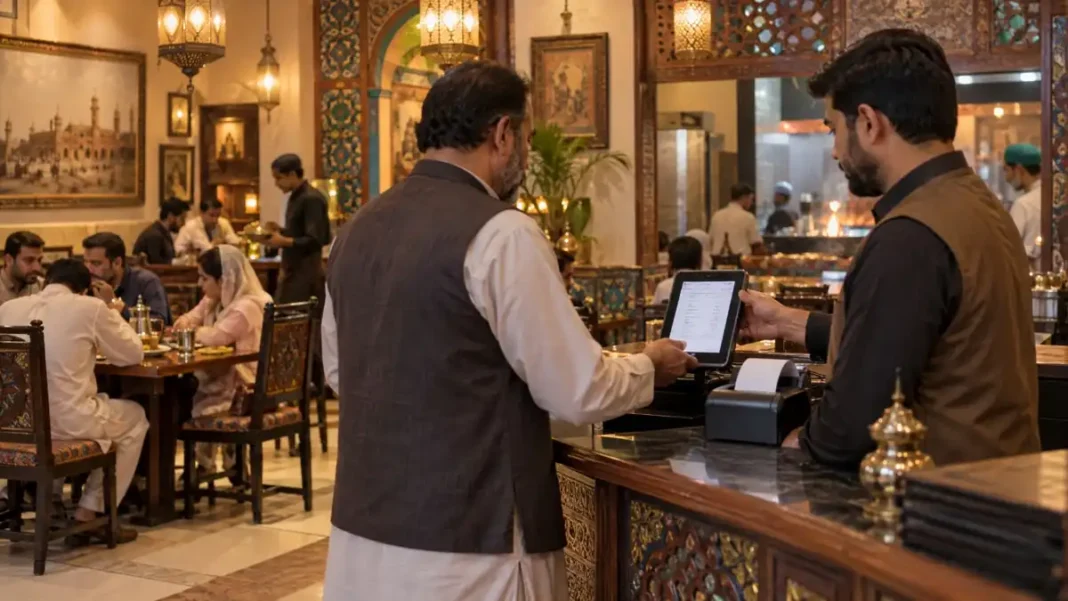
For diners and guests, the change should be visible at the counter. Every bill should now come with an electronic receipt, and customers have a right to ask for one. The receipt is proof of the transaction, and it is also the record that the business has reported the sale.
The system also gives customers a simple check. A business that cannot produce an electronic receipt is not following the rules, and the PRA has made clear that such transactions will draw penalties.
The reform sits alongside other efforts to tighten tax collection in the province and at the federal level. The Senate panel recently ordered the FBR to explain large tax waivers in the former tribal districts, and the National Accountability Bureau has recovered assets worth Rs241 billion in two months. The e-receipts rule adds a day-to-day enforcement tool to that work: instead of chasing records after the fact, the authority will see transactions as they happen.
There are open questions about how smoothly the change will land. Small restaurants and wedding halls will need to set up compatible invoicing systems, and the PRA will need to handle the flow of data from thousands of businesses. Development spending has already lagged this year, with only 10.4 per cent of the allocation used in four months, so the province’s capacity to run large systems is under watch.
The Punjab government has also been active on other administrative fronts. A bill to set up a Punjab Asset Management Authority has drawn criticism in the provincial assembly. The e-receipts rule is the latest in that series of changes, and its success will be measured by whether receipts actually appear at counters across the province.
Frequently asked questions
Which businesses must issue e-receipts?
Hotels, restaurants, coffee shops, wedding halls and marriage halls across Punjab, along with other relevant businesses covered by the PRA’s directives.
What are the fines for non-compliance?
Businesses that fail to comply face fines ranging from Rs400,000 to Rs1 million, and transactions made without receipts through the electronic system will draw penalties.
What is EIMS?
EIMS is the Punjab Revenue Authority’s Electronic Invoice Monitoring System. Businesses must connect their invoicing systems to it and issue electronically generated receipts for transactions.
What changes for customers?
Every bill should now come with an electronic receipt. Customers can ask for one, and the receipt serves as proof that the sale has been recorded with the tax authority.