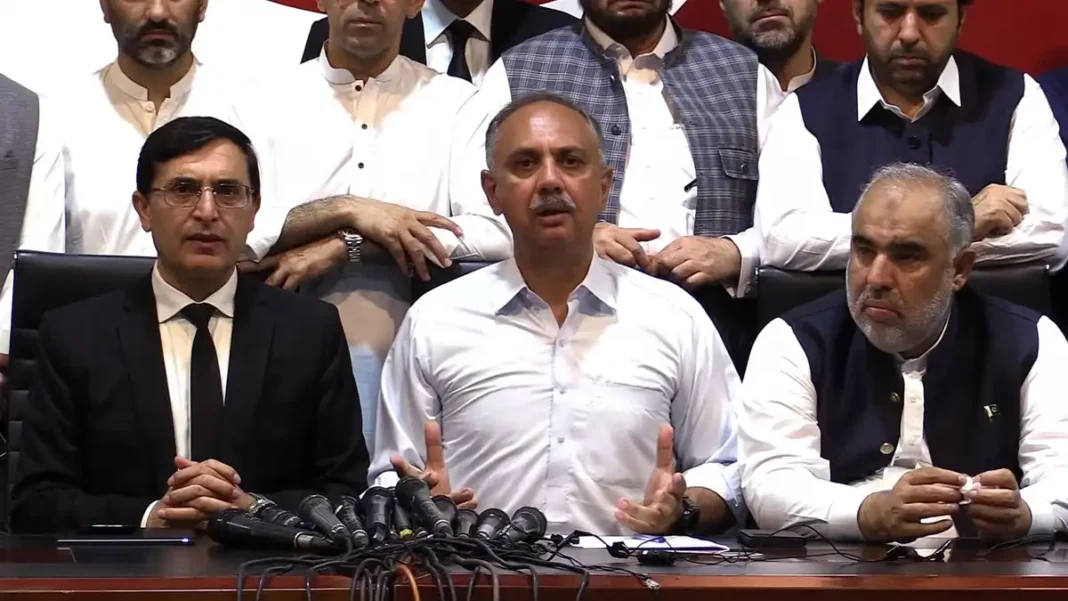
Barrister Gohar Ali Khan used a visit to Buner on Saturday to press for an independent judiciary, the rule of law and an end to what he called political victimisation. He was talking to reporters in Buner, where members of the Insaf Lawyers Forum were also present.
Mr Khan said his party had always strived for an independent judiciary and the supremacy of the Constitution and law. He said no society could achieve development and stability without justice.
He said the party believed in resolving political differences through dialogue and democratic means. He added that PTI had consistently advocated negotiations despite what he called “theft of its electoral mandate” and the denial of its seats.
The PTI chairman said access to party founder Imran Khan, including meetings with his personal physician and family members, remained their foremost demand. He alleged that court orders issued in Mr Khan’s favour were not being implemented, adding that the Supreme Court’s August 18 ruling was still awaiting implementation.
Political victimisation and the courts
Mr Khan described political isolation and what he termed “political apartheid” as harmful to democracy. He expressed concern over the alleged illegal detention of political leaders.
He claimed that the Khyber Pakhtunkhwa chief minister and the provincial assembly speaker were being held in unlawful confinement. He said the whereabouts of PTI leaders Junaid Akbar and Dr Amjad remained unknown following their alleged abduction.
Referring to a habeas corpus petition, he said the Peshawar High Court had directed that the matter be placed before a larger bench. He also expressed concern over an order issued by the Federal Constitutional Court on November 5.
The PTI chairman said keeping individuals in custody despite the grant of bail amounted to a miscarriage of justice. He added that imprisoning people to serve personal interests and egos posed a serious threat to democracy and fundamental human rights.
The KP backdrop
The Buner presser is the latest step in a sequence of legal and political moves that Feature Pakistan has followed through the week. On November 6, Mr Khan raised Imran Khan’s health and the Supreme Court in the same terms, pressing for access to the party founder. A day later, the Peshawar High Court struck off the petitions against the provincial emergency and governor’s rule, after the Federal Constitutional Court stripped it of jurisdiction over cases from the province.
The opposition’s own ranks have been unsettled at the same time. The Tehreek Tahafuz Ayeen-i-Pakistan has drawn up an organisation plan to hold its alliance together amid the PTI rift, and PTI’s political committee has been working to restore unity in the party. Mr Khan’s call for dialogue sits inside that wider picture: a party arguing for talks while its own alliance strains and its leaders face detention cases.
Emphasising that the country was passing through a critical phase, Mr Khan urged all stakeholders to act responsibly and exercise restraint. “We should take one step back, act with wisdom and reason, and ensure that justice is provided to us,” he said.
Dawn reported the presser. The demands themselves are familiar: access to Imran Khan, implementation of court orders, and an end to detentions the party calls unlawful. What is new is the setting. With the Peshawar High Court out of the picture on the emergency petitions and the Federal Constitutional Court now the forum that matters, the party’s case will be argued in a different court, under a different set of rules.
Frequently asked questions
What did Gohar Ali Khan demand in Buner?
The PTI chairman demanded an end to political victimisation, judicial independence and the rule of law, along with access to party founder Imran Khan, including meetings with his physician and family.
What did he say about court orders?
He alleged that court orders issued in Imran Khan’s favour were not being implemented, and said the Supreme Court’s August 18 ruling was still awaiting implementation.
What did he say about detained PTI leaders?
He claimed the Khyber Pakhtunkhwa chief minister and the provincial assembly speaker were being held in unlawful confinement, and said the whereabouts of Junaid Akbar and Dr Amjad remained unknown following their alleged abduction.
What did he say about the courts’ role?
He said the Peshawar High Court had directed a habeas corpus petition to a larger bench, expressed concern over a Federal Constitutional Court order of November 5, and said keeping people in custody despite bail amounted to a miscarriage of justice.