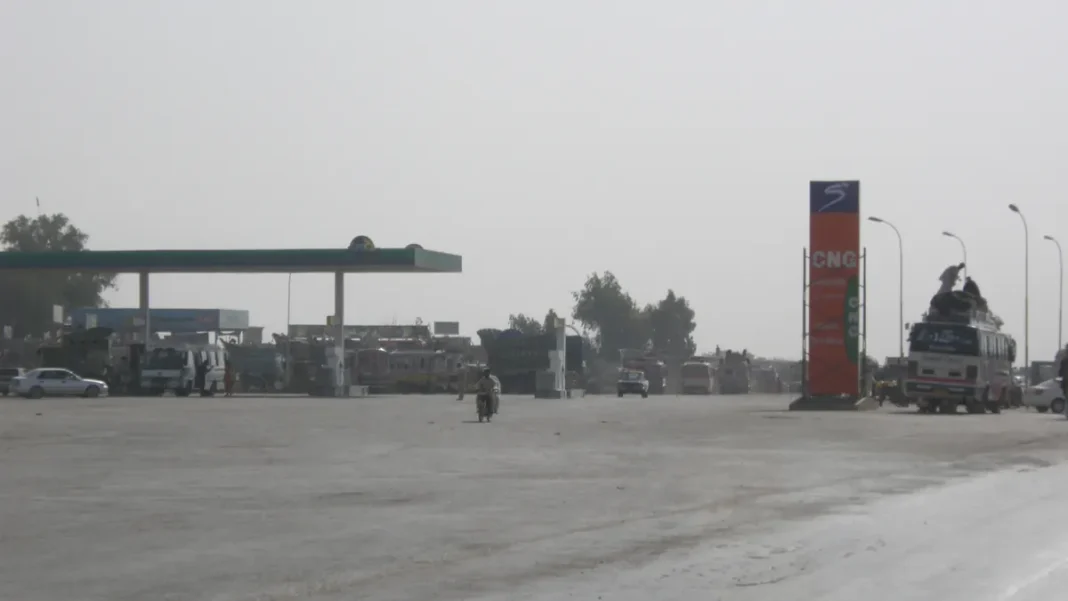
Pakistan’s fuel retailers are still opening petrol stations at a fast pace, even as the government’s new auto policy tries to steer drivers towards cheaper cars and electric vehicles. OMCs petrol pumps keep multiplying even as the state pushes drivers towards electric cars.
The Auto Policy 2026-31 aims to make 30 per cent of all new vehicles in Pakistan electric by 2030. The policy, which promises cheaper vehicles and more EVs, was announced on Saturday. The fuel companies, for now, are betting that petrol demand will stay strong long enough to justify new stations.
OMCs petrol pumps: why fuel firms still see growth
Oil marketing companies are more upbeat about rising petrol demand, driven by robust sales of petrol-powered two-wheelers and 660-1,000cc cars, despite uncertainty over fuel prices following the US-Iran war.
Against this backdrop, rising petrol prices have further increased demand for motorcycles, as an ineffective public transport system continues to leave consumers reliant on owning one, new or used, depending on their income.
That logic is visible on the roads. The country has five million cars, 30 million bikes and 10 million rickshaws on its roads. Petrol demand is expected to remain robust because many older vehicles continue to operate, with no policy requiring vehicles to be scrapped after decades on the road. The companies are also opening new pumps at new highways, bypasses and motorways in the upcountry, where traffic is growing.
PSO leads the expansion
Pakistan State Oil (PSO) completed the development of 37 new retail sites during the first quarter of fiscal year 2026-27, bringing its nationwide network to 3,727 outlets, the largest in the country. It also commissioned electric vehicle (EV) chargers in Faisalabad and Multan, expanding its charging network to 16 locations.
PSO added 92 retail outlets in fiscal year 2025-26.
Wafi Energy Pakistan Ltd said it expanded its network by adding 54 new Shell retail sites and nine electric vehicle charging locations in the first nine months ending September 30.
Attock Petroleum Ltd (APL) commissioned five new retail outlets in the first quarter of fiscal year 2026-27 while six underperforming sites were phased out as part of the ongoing network optimisation exercise. Accordingly, the company’s operational retail network stood at 816 outlets as of September 30, including 46 company-owned, company-operated (COCO) sites.
50 licences, and a debate over chargers
An oil industry executive said the government has issued licences to 50 OMCs. Somehow, 48 companies have established their presence in the country.
As OMCs move slowly to open charging stations, he said pumps do not offer this facility worldwide, as electric bike and car owners charge their vehicles at their apartments, houses, and shopping malls, but the government continues to pressurise fuel pump owners to install chargers.
The tension is real. The government wants pumps to host chargers so that EV drivers can refuel on the road, while the companies argue that home and workplace charging will carry most of the load.
Two-wheelers still run on petrol
The executive said petrol demand will remain robust, as 50-60 per cent of two-wheelers still run on petrol despite some improvement in electric bike sales after a surge in petrol prices.
The number of electric two-wheelers sold increased to 240,000 in fiscal year 2025-26 from 60,000 in 2024-25. That is rapid growth, but it starts from a small base against a fleet of 30 million bikes.
What the numbers mean for drivers
For drivers, the message is mixed. Petrol now sells at Rs346 a litre after the November 6 cut of Rs6.59 a litre, and the new auto policy promises cheaper cars and more EVs in the years ahead. But the pumps are still being built, the bikes are still mostly petrol, and the charging network is still thin. The fuel bill matters too: Pakistan’s energy imports cost Rs3.5 trillion a year, which is why the government wants the EV shift to succeed.
The OMCs are betting that the transition will be slow. If they are right, the new stations will pay for themselves for years. If the EV shift comes faster than they expect, some of those stations will end up selling electricity instead of petrol. The next two years of sales data will show which bet was right.
Frequently asked questions
How many outlets does PSO have in Pakistan?
PSO’s network reached 3,727 outlets after it completed 37 new retail sites in the first quarter of fiscal year 2026-27. It is the largest fuel retail network in the country.
What is the government’s EV target?
The Auto Policy 2026-31 aims to make 30 per cent of all new vehicles in Pakistan electric by 2030.
How many electric two-wheelers were sold in Pakistan?
Electric two-wheeler sales rose to 240,000 in fiscal year 2025-26 from 60,000 in 2024-25, though 50-60 per cent of two-wheelers on the road still run on petrol.
How many OMCs operate in Pakistan?
The government has issued licences to 50 oil marketing companies, and 48 have established a presence in the country.
What is the petrol price in Pakistan now?
Petrol sells at Rs346 a litre after the price cut on November 6, 2026.