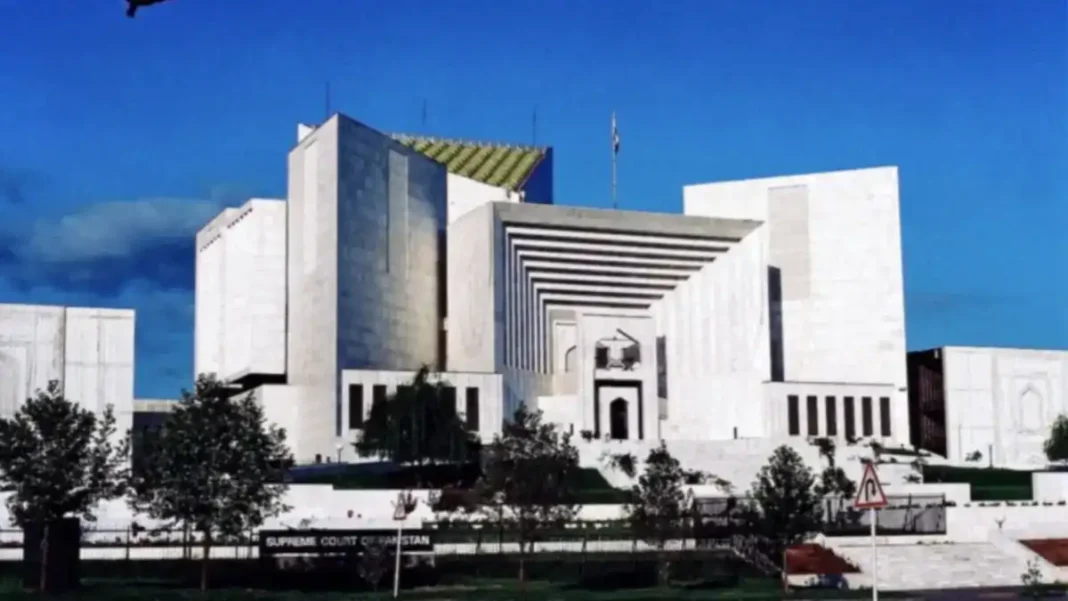
ICJ Sees ‘Judicial Capture’ After 26th, 27th Amendments
The International Commission of Jurists says the 26th and 27th Constitutional Amendments have led to judicial capture in Pakistan, in a report that calls for a full review of the changes and how they have been put into practice.
The report, titled ‘Judicial Capture: Independence of the Judiciary in Pakistan after the 26th and 27th Constitutional Amendments’, was released on Wednesday. It found that after the two amendments, the judiciary no longer enjoys the institutional guarantees of independence required under international law and standards.
“The 26th and 27th Constitutional Amendments were a decisive break from the model of judicial independence that Pakistan had built after the restoration of the judiciary in 2009,” the report said.
How the amendments led to judicial capture in Pakistan
The 26th Amendment, passed in October 2024, carved constitutional benches out of the Supreme Court, with their members chosen by a reconstituted Judicial Commission of Pakistan in which judges no longer held a majority. It also took away the Supreme Court’s suo motu powers and set the chief justice’s term at three years.
Barely a year later, the 27th Amendment turned those benches into an entirely separate court, the Federal Constitutional Court. It also changed the military’s chain of command and granted immunities to government officials. Two of the Supreme Court’s senior-most judges resigned in protest on the day it became law.
The ICJ said the ruling coalition had “exploited” public grievances over the functioning of the courts in a “self-serving manner” to control the judiciary. The report acknowledged that the Supreme Court had “encroached into roles of Parliament and other institutions”. But it said Parliament had failed to fix those problems in a way that protected judicial independence.
The government has argued that the amendments were made to check judicial overreach, reduce the backlog of cases, and give Parliament a role in judicial appointments comparable to legislatures in other democracies. The ICJ said those claims did not justify “changing the judicial structure in a manner that is glaringly inconsistent with Pakistan’s obligations under international law”.
“As a result, even the highest courts of the land in Pakistan no longer serve as a check on the executive or the Parliament and their function as avenues for redress of victims of human rights violations is seriously impaired,” the report stated.
What the ICJ wants changed
The report called on the government to begin a comprehensive review of the amendments in light of international law and standards, particularly Pakistan’s obligations under the International Covenant on Civil and Political Rights, and to hold “transparent and broad” public consultation.
It also suggested the government seek technical help from the UN special rapporteur on the independence of judges and lawyers.
For the Judicial Commission, the ICJ called for revised appointment criteria. It said the published criteria should be the sole basis for nomination of judges to the Federal Constitutional Court, the Supreme Court, the high courts and constitutional benches, with a transparent procedure and published reasons for each appointment. It also said the commission should not transfer a high court judge without that judge’s consent.
The report asked the Supreme Judicial Council to define “inefficiency” so that it means only serious incompetence that leaves a judge unfit to serve. It asked the Special Parliamentary Committee, which nominates the chief justice, to adopt clear criteria for choosing the top judges of the Supreme Court and the Federal Constitutional Court, and to publish the reasons for each selection.
Finally, it urged the courts to interpret and apply the 26th and 27th Amendments in a manner consistent with judicial independence under Article 14 of the Covenant.
ICJ Secretary-General Santiago Canton said: “The 26th and 27th amendments have done exactly what we feared: they have placed Pakistan’s highest courts under the control of the executive. When the courts are captured, no one is left to hold the government to account, and victims of human rights violations have nowhere to turn.”
Why the report matters for Pakistan
The report lands a year after the 27th Amendment created the Federal Constitutional Court, which now handles cases that once went to the Supreme Court. The new court has already begun deciding cases, including an inheritance ruling, and has faced petitions from opposition leaders, including a challenge from Khyber Pakhtunkhwa Chief Minister Sohail Afridi.
The amendments have also stayed at the centre of politics. PPP Chairman Bilawal Bhutto-Zardari raised questions about the court in a speech this week, and ministers have defended the changes as a matter for Parliament and the provincial assemblies.
Whether the government accepts the call for a review, or defends the amendments as settled law, will shape the next round of the argument over who controls Pakistan’s courts.
Frequently asked questions
What is judicial capture?
It means the courts have come under the control of the executive or the legislature, so they can no longer act as an independent check on the government. The ICJ says this has happened in Pakistan through the 26th and 27th Amendments.
What did the 26th Amendment do?
Passed in October 2024, it created constitutional benches inside the Supreme Court, changed how their judges were picked, removed the court’s suo motu powers, and fixed the chief justice’s term at three years.
What did the 27th Amendment do?
Passed in November 2025, it turned the constitutional benches into a separate Federal Constitutional Court, changed the military’s chain of command, and granted immunities to top government officials.
What has the ICJ asked Pakistan to do?
It has called for a comprehensive review of both amendments in light of international law, broad public consultation, and clearer, published criteria for appointing judges, with reasons given for each appointment.
What happens next?
The government has not yet responded. The ICJ has also asked the courts to interpret the amendments in a way that protects judicial independence as far as possible.