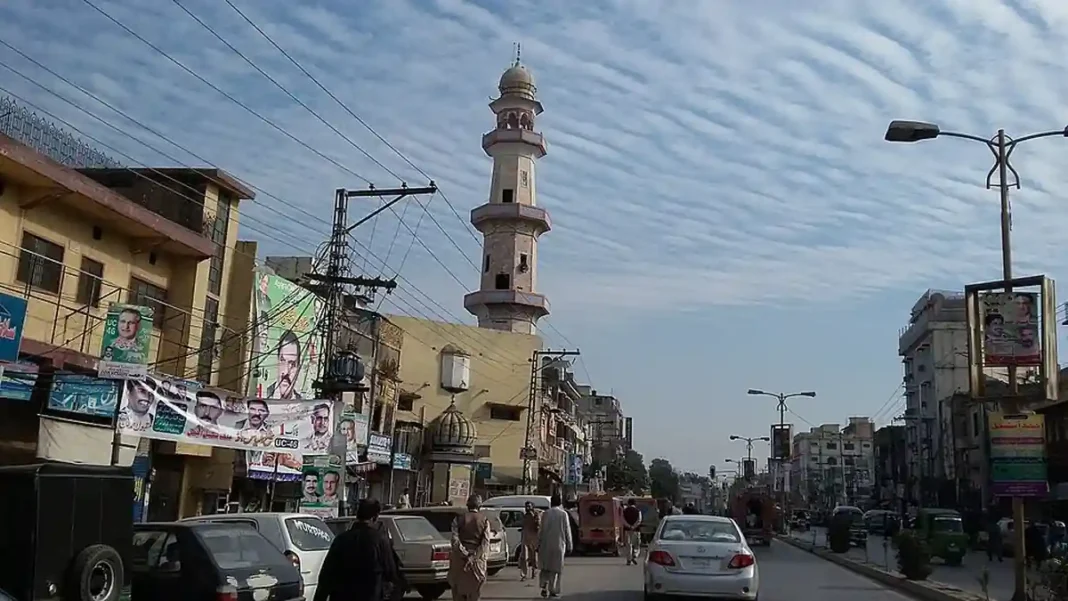
Karachi Pakistan news: the city in national context. Karachi is not just Pakistan’s largest city — it is the economy’s engine, the census’s biggest controversy, and the political contest that previews national trends. Here is why Karachi’s news is Pakistan’s news.
Quick answer: Karachi in national context: ~19 million people (2023 census); ~25% of Pakistan’s GDP and ~54% of federal tax revenue; the country’s ports and financial centre; PPP-governed city and province contested by MQM-P, JI and PTI; the census undercount dispute affecting national resource allocation. Karachi’s municipal stories move national markets and politics.
In this guide
The economic engine
A quarter of the economy. Karachi’s ports (Karachi Port, Port Qasim) handle the overwhelming share of Pakistan’s trade; the Pakistan Stock Exchange, the central bank’s head office, and most corporate headquarters sit here; the industrial zones (SITE, Korangi, Landhi) employ hundreds of thousands. When Karachi’s infrastructure fails — a flooded artery, a power crisis — the national economy feels it within days.
The business community’s voice (FPCCI and trade bodies) makes Karachi’s concerns — taxation, infrastructure, the census — national policy debates. The city’s economic weight is also its vulnerability: national governments cannot ignore Karachi, but often govern it at arm’s length.
The census controversy
Numbers are politics. The 2023 digital census counted Karachi city at 18,868,021 and the division at 20.38 million — figures the MQM-P and Jamaat-e-Islami reject as a deliberate undercount, claiming the real number is far higher. The stakes: National Finance Commission transfers, National Assembly seats, and provincial resources all flow from the count.
The dispute is Karachi’s permanent political background music — it affects every development promise (“for how many people?”) and every election. A recount or revised count would redraw Sindh’s politics. It is the single most consequential unresolved Karachi story.
The political laboratory
Pakistan in miniature. Karachi contains every national political force: the PPP (city and provincial government), MQM-P (the Urdu-speaking base), JI (the organised street), PTI (the 2018 disruptor), plus ethnic and sectarian undercurrents. The June 2023 mayoral contest — Wahab (PPP) vs Hafiz Naeem (JI) in the 366-member council — previewed the coalition-era bargaining now standard nationally.
Karachi’s local government experiment (empowered mayor, contested council) is watched as a model — or warning — for urban governance across Pakistan. The latest news page tracks the contest.
Why it matters to Pakistan
The city’s news is the nation’s news. A Karachi water crisis is a national economic risk; a Karachi political deal previews national coalitions; Karachi’s census fight decides national resources. Visitors and investors read Karachi as Pakistan’s proxy — fairly or not, the city’s condition shapes the country’s image.
Follow the city to understand the country: the Karachi news guide is the standing reference, and the roundup the regular check-in.
For investors and analysts, the Karachi dashboard is simple: port throughput, KMC delivery metrics, and the political temperature. When all three are green, Pakistan’s economic story is working; when Karachi strains, the national numbers follow within quarters.
Why is Karachi important to Pakistan?
It holds ~19 million people, produces ~25% of GDP, pays ~54% of federal taxes, hosts the ports and stock exchange, and its politics preview national trends.
What is the Karachi census controversy?
MQM-P and JI reject the 2023 census count (18.87m city / 20.38m division) as an undercount; the figures determine NFC transfers, assembly seats and resources — making it Karachi’s most consequential dispute.
Who governs Karachi?
Mayor Murtaza Wahab (PPP, elected June 2023) leads the KMC; CM Murad Ali Shah (PPP) leads the province — both contested by MQM-P, JI and PTI.