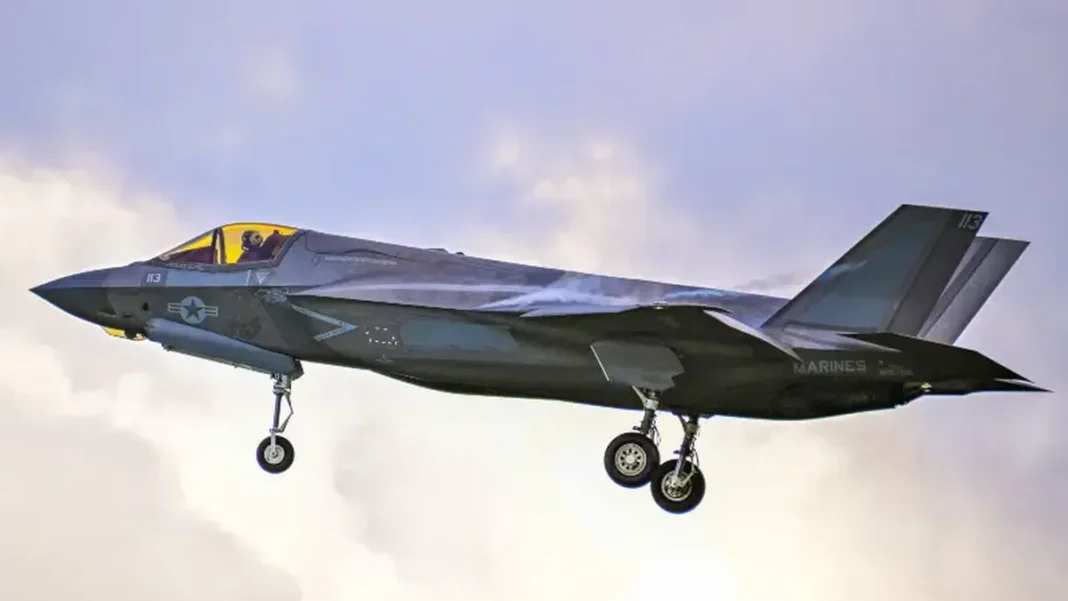
WASHINGTON: Lockheed Martin has entered an initial production and sustainment agreement with the United States Department of Defence for at least 850 F-35 Lightning II fighter jets over the next 10 years, the company and the Pentagon announced on Thursday, Reuters first reported.
Under the agreement, Lockheed will self-fund at least $7 billion in initiatives supporting the F-35 programme. The company aims to maintain annual production at 156 aircraft.
F-35 jets deal: agreement, not an order
The agreement does not constitute a formal order. It is a prearranged long-term contract: if the Pentagon is granted multi-year authority in the coming months, the F-35 Joint Programme Office and Lockheed Martin will finalise contract terms, pricing and schedules through a formal contract award.
The framework also covers international orders for the F-35, along with initial spares and modification kits.
“We have fundamentally changed how we stabilise the American defence industrial base to produce at speed and scale,” said Under Secretary of Defence Michael Duffey. “This agreement with Lockheed Martin proves it. By aligning financial incentives with actual performance, we are ensuring our warfighters are equipped with the lethal capabilities they need to fight and win.”
The economics behind the deal
The F-35 is built with stealth technology that lets it evade enemy detection, and it is considered the world’s most advanced fighter jet. It sits at the core of Lockheed’s aeronautics division, which accounts for nearly 40 per cent of the company’s quarterly revenue.
Lockheed estimates the agreement will support 317,000 American jobs and generate nearly $79 billion in annual economic activity over the next decade. The company also expects the arrangement to lower production costs and ease supply-chain constraints from raw materials to finished parts.
The announcement came alongside strong quarterly results. Lockheed raised its full-year earnings forecast to $30.35 to $30.75 per share and projected sales of $80 billion to $82 billion, after third-quarter profit rose to $1.85 billion and its order backlog hit a record $291.98 billion, according to Dow Jones Newswires.
Why the region is watching
Defence deals of this scale are followed closely in South Asia, where air-power balances shape strategic planning. In Pakistan, military planners have warned adversaries against miscalculation as regional tensions persist.
The economics of the deal also matter for Pakistan. Washington’s defence spending feeds into global energy markets and the Gulf outlook, dollar flows and reserves and trade ties with Western partners.
What happens next
The framework now needs multi-year authority and appropriations from Washington in the coming months before it becomes a binding contract. If approved, it would lock in a decade of production at 156 jets a year.
Frequently asked questions
How many F-35 jets does the deal cover?
At least 850 F-35 Lightning II jets for the US military over 10 years, plus international orders, spares and modification kits.
Is this a confirmed order?
No. It is an initial framework agreement. A formal contract with final terms and pricing will follow if multi-year authority is granted.
What is the economic impact?
Lockheed estimates 317,000 US jobs and nearly $79 billion in annual economic activity over the decade.