PPP Backs New Provinces Except in Sindh, Says Murad
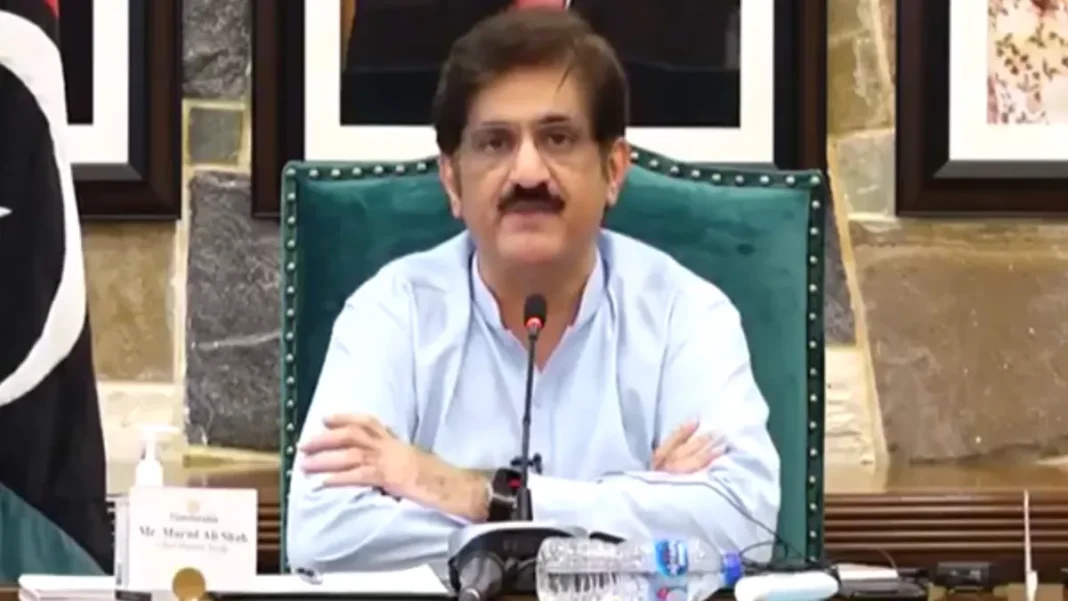
The PPP has no objection to the creation of new provinces in other parts of Pakistan, but the division of Sindh is neither legally nor politically acceptable, Chief Minister Syed Murad Ali Shah said on Wednesday.
He was speaking to the media in Thatta after attending the urs of Pir Syed Ghulam Jilani Shah Jilani in Makli, Dawn reported on Thursday. The people of Sindh had repeatedly rejected the idea of dividing the province through their elected representatives, he said.
New provinces need the people’s consent
“Constitutionally, the boundaries of a province cannot be altered unless its people want such a change,” Mr Shah said. He added that the Punjab Assembly had already passed several resolutions seeking the creation of new provinces.
“If Punjab wants to create new provinces, we have no objection,” he said.
The chief minister said the Constitution also provided a mechanism for holding a referendum, but maintained that a referendum could only be held on an issue where there was ambiguity. “Even after a referendum, the final decision would rest with the assemblies, as no referendum could override the Constitution,” he said.
He categorically stated that the division of Sindh was not possible, either legally or in terms of public opinion.
Water case already before the CCI
Speaking about the water-sharing issue, the chief minister said Sindh’s case for distribution of water in accordance with the 1991 Water Apportionment Accord was already before the Council of Common Interests.
He rejected the notion that the downstream province was responsible for water shortages, saying it was unfair to blame Sindh for the problem.
“How can Sindh be accused of stealing water when water does not reach the province in the first place,” he asked. He said Sindh was still facing a severe water shortage and that the provincial government had taken up the matter with the federal government.
Visit to Makli
Earlier, the chief minister visited Jilani House in Makli, accompanied by party MNA Sadiq Memon. He was received by Pir Ghulam Rizwani, Pir Ghulam Haqqani, Pir Ghulam Rehmani, Zain-ul-Abideen, provincial minister Muhammad Ali Malkani, Riaz Shah Shirazi and members of the provincial assembly.
The chief minister attended the urs and addressed the gathering at the shrine. He said Sindh was the land of Sufis, whose teachings had promoted peace, tolerance and brotherhood in the province. The teachings of Sufi saints encouraged people to respect one another and live with love, harmony and mutual understanding, he said.
Mr Shah said Sindh would remain strong and secure as long as the PPP continued to stand with the people of the province. “No one can dare cast an evil eye on Sindh,” he said.
A debate that keeps returning
Mr Shah’s statement is the latest in a debate that has run for weeks. Feature Pakistan reported that Sindh’s political parties have already rejected any plan to divide the province, while former federal minister Muhammad Ali Durrani has launched a movement for Bahawalpur, South Punjab and Hazara provinces.
The debate has also reached the Federal Board of Revenue, where the chairman has weighed in on the new provinces question, and the PPP’s Punjab chapter, which has demanded devolution and stronger local governments rather than new provinces.
The constitutional position is clear enough. Creating a new province needs a constitutional amendment passed by a two-thirds majority in both houses of parliament, along with approval from the relevant provincial assembly. The Sindh Assembly passed a resolution on September 4 rejecting all attempts to divide the province, and PPP Chairman Bilawal Bhutto-Zardari has said the debate should end. Defence Minister Khawaja Asif has backed the idea of twelve new provinces, but warned they must not be created on ethnic or political grounds.
Mr Shah’s contribution narrows the argument. He is not opposing new provinces as such. He is drawing a line around Sindh, and insisting that the final word belongs to the assemblies, not to a referendum and not to a proposal drawn up in Islamabad. His other message, on water, points the same way: Sindh’s case is already before the Council of Common Interests, the constitutional forum for such disputes.
His government has just completed one million houses for flood victims, a delivery the PPP cites as proof that it can turn promises into results.
What happens next
No draft amendment for new provinces has been published, and no vote is scheduled. The debate will continue in press conferences and party meetings, but any change must pass through parliament and the provincial assemblies. For now, the PPP’s position is on the record: new provinces elsewhere, if their people want them, but no division of Sindh.
Frequently asked questions
What is the PPP’s position on new provinces?
Chief Minister Murad Ali Shah said the PPP has no objection to the creation of new provinces in other parts of the country if their people so desire, but the division of Sindh is neither legally nor politically acceptable.
Can a referendum create a new province?
Mr Shah said a referendum can only be held where there is ambiguity, and even after a referendum the final decision rests with the assemblies, as no referendum can override the Constitution.
What does the Constitution require to create a new province?
Creating a new province requires a constitutional amendment passed by a two-thirds majority in both houses of parliament, along with approval from the relevant provincial assembly.
What did Murad Ali Shah say about water sharing?
He said Sindh’s case for water distribution under the 1991 Water Apportionment Accord is already before the Council of Common Interests, and rejected the claim that Sindh steals water when water does not reach the province.
Where did the chief minister make the statement?
He spoke to the media in Thatta on Wednesday after attending the urs of Pir Syed Ghulam Jilani Shah Jilani in Makli.