Kamal Says New Provinces Vital for Pakistan Progress
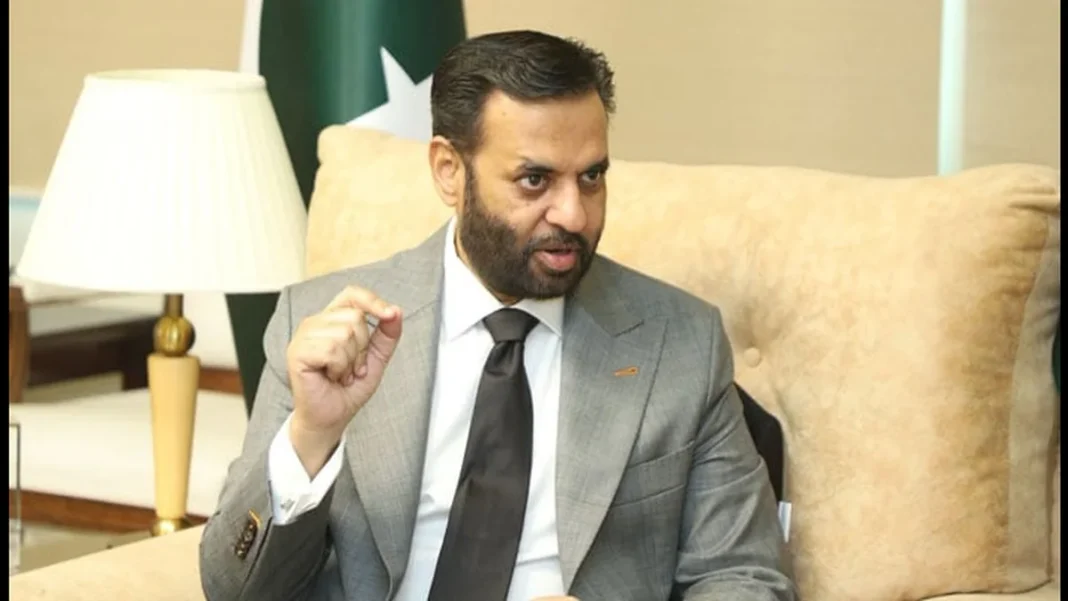
Federal Health Minister Syed Mustafa Kamal has called for the creation of new provinces and administrative units, saying the country’s growing population and failure to provide basic facilities are paralysing Pakistan administratively and economically. The demand for new provinces came as he addressed a youth convention in Johar Town and public gatherings organised by the Pashtun Qabail Movement in North Nazimabad, Karachi.
Kamal, a senior leader of the Muttahida Qaumi Movement-Pakistan (MQM-P), said decentralising administrative powers was essential to ensuring people’s fundamental rights, improving service delivery and creating better educational and employment opportunities for local youth.
He alleged that the Pakistan Peoples Party (PPP), which has been in power in Sindh for the past 16 years, had been depriving young people of their rightful opportunities through fake domiciles.
“The time has come to ensure that all marginalised people in Pakistan receive their due rights,” he said.
Population pressure on services
Kamal said growing population pressures had placed an increasing burden on the existing administrative structure, affecting the provision of education, healthcare, employment and other basic services.
He said new provinces and administrative units would help improve governance, ensure a fairer distribution of resources and create opportunities for young people by bringing decision-making closer to communities.
The argument is not new in Karachi politics. MQM-P has long pressed for administrative restructuring in Sindh, and the demand has returned to the centre of debate in recent days. Defence Minister Khawaja Asif’s remarks about the PPP drew a sharp response from the party, as Feature Pakistan reported, and the exchange spilled into a wider row between the two coalition partners, covered in Feature Pakistan’s report on the Asif-Bilawal spat.
The new provinces question also surfaced at the Jamaat-i-Islami’s Quetta rally, where the party’s chief spoke about the rights of the provinces, as Feature Pakistan reported.
Warning against ethnic strife
“We are not intimidated by anyone’s threats, nor will we allow anyone to foment ethnic riots while we are here,” Kamal said, adding that protecting the lives, property and dignity of people belonging to all linguistic communities was their responsibility.
He further claimed that his party had liberated Karachi from the influence of India’s Research and Analysis Wing (RAW), adding that it was now their responsibility to secure the rights of all oppressed communities across Pakistan.
He stressed that people living in Karachi and other parts of the country needed administrative powers and basic facilities in proportion to their population.
The gatherings also witnessed support for the demand for new provinces and administrative units. The Pashtun Qabail Movement, led by its chairman Daud Jan Nazari, announced its unconditional support for Kamal’s demand, while participants of the youth convention also endorsed the proposal.
The events were attended by MQM-P senior leader Anis Qaimkhani, Central Organising Committee in-charge Furqan Atiab, members of the national and provincial assemblies, office-bearers and party workers. Kamal received a warm welcome, with participants showering him with flower petals and presenting him with garlands.
What new provinces would mean for Karachi
For Karachi, the debate is about more than maps. The city is Pakistan’s largest, its main port and its biggest contributor to tax revenue, yet its residents have long complained that decisions about water, transport and policing are taken far from the neighbourhoods they affect.
Kamal’s case is that smaller administrative units would let local governments respond faster to local needs, from hospital beds to school places to jobs. Critics of the idea say new provinces would need constitutional amendments, agreement in parliament and a settlement of boundaries and resources, none of which is close.
The Sindh government, which would have to agree to any division of the province, has rejected the idea in the past. The PPP argues that the province’s problems come from a lack of resources and federal transfers, not from its size. That disagreement is why the demand returns at rallies and conventions but has never reached parliament as a formal proposal.
The provincial government has been rolling out relief and development schemes, including a water supply project for Thar, but the opposition says the benefits are not reaching young people in Karachi and other urban centres.
What happens next
Any move to create a new province would require a two-thirds majority in the National Assembly and the Senate, along with the consent of the provincial assembly concerned. No bill has been tabled, and no party has said it will move one.
Kamal’s speech keeps the issue alive in public debate, and the MQM-P is likely to raise it again as the budget session approaches. Whether it becomes a formal demand in parliament will depend on whether the party can build support beyond its own base in urban Sindh.
Frequently asked questions
Who is demanding new provinces?
Federal Health Minister and MQM-P senior leader Syed Mustafa Kamal called for new provinces and administrative units at a youth convention in Karachi and at gatherings organised by the Pashtun Qabail Movement.
Why does Kamal say new provinces are needed?
He says the growing population and failure to provide basic facilities are paralysing Pakistan administratively and economically, and that decentralising power would improve governance, fair distribution of resources and opportunities for young people.
What did he allege about fake domiciles?
Kamal alleged that the PPP, in power in Sindh for 16 years, had deprived young people of their rightful opportunities through fake domiciles.
Who supported the demand at the gatherings?
The Pashtun Qabail Movement, led by chairman Daud Jan Nazari, announced unconditional support for the demand, and participants at the youth convention endorsed the proposal.
Can a new province be created easily?
No. Creating a new province needs a two-thirds majority in the National Assembly and the Senate, plus the consent of the provincial assembly concerned. No bill has been tabled.