Pakistan Condemns India at UN Over Kashmir and Minority Rights
Pakistan Condemns India at UN Over Kashmir and Minority Rights
GENEVA: Pakistan condemns India at the United Nations Human Rights Council over occupied Kashmir and minority rights, in a sharp exchange that once again brought the decades-old dispute before the world body.
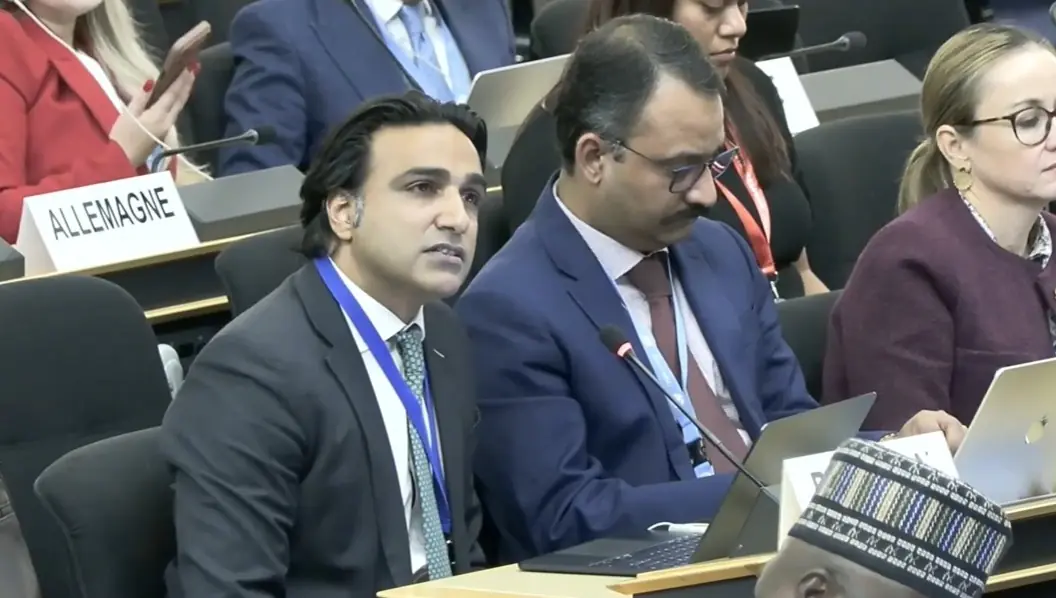
First Secretary Adeel M. Khokhar, speaking for Pakistan at the council’s 63rd session in Geneva on Thursday, said India’s “repeated denials” could not alter the reality that Jammu and Kashmir is disputed territory.
Kashmir at the centre of the exchange
Khokhar told the council that India’s position on Kashmir could not erase the internationally recognised status of the dispute. Pakistan has consistently argued that Jammu and Kashmir is neither an integral part of India nor its internal matter, and that its final status must be decided in line with UN Security Council resolutions and the wishes of the Kashmiri people.
Pakistan also used the session to highlight what it described as grave human rights violations in Indian-occupied Kashmir, including arbitrary detentions, restrictions on movement and communication, and curbs on press freedom. Islamabad has repeatedly demanded that UN investigators be given access to the territory, a demand New Delhi has refused.
The intervention came days after India’s First Secretary Petal Gahlot used her right of reply at the UN General Assembly to reject Pakistan’s Kashmir remarks and to accuse Islamabad of terrorism and of mistreating its own minorities. Pakistan’s latest statement at the council was, in part, an answer to that line of attack.
Pakistan condemns India over Kashmir and minority rights
Alongside Kashmir, Pakistan’s statement took up the treatment of religious minorities in India. Khokhar’s remarks echoed a long-standing Pakistani position that Muslims and other minorities in India face discrimination, hate speech and mob violence, and that these patterns have worsened in recent years.
Pakistan pointed to UN findings that have raised concern about arbitrary detentions, communication blackouts and restrictions on journalists in occupied Kashmir, arguing that these documented patterns demand an international response.
India rejects all of this. New Delhi says Jammu and Kashmir is an integral part of the country, accuses Pakistan of sponsoring cross-border terrorism, and argues that Islamabad raises Kashmir to deflect attention from its own domestic problems.
What happens next
The 63rd session of the Human Rights Council runs in Geneva until October 7, and Kashmir is likely to surface again before it closes. Neither side shows any sign of softening its position.
For Pakistan, the council remains one of the few international platforms where it can keep the Kashmir issue in view. For India, the strategy is to deny the premise entirely and to turn the spotlight back on Pakistan’s record.
The result is a familiar stalemate, but one that Islamabad believes keeps the dispute alive in the international conscience.
What did Pakistan say at the UN?
First Secretary Adeel M. Khokhar condemned India over occupied Kashmir and minority rights, saying India’s repeated denials could not change the fact that Jammu and Kashmir is disputed territory.
Which UN body was involved?
The UN Human Rights Council, meeting for its 63rd session in Geneva from September 7 to October 7, 2026.
How did India respond?
India maintains that Jammu and Kashmir is an integral part of the country, accuses Pakistan of supporting cross-border terrorism, and says Islamabad raises the issue to divert attention from its own problems.
Why does Pakistan keep raising Kashmir at the UN?
Pakistan argues the dispute must be settled under UN Security Council resolutions and in line with the wishes of the Kashmiri people, and uses the council to press for international scrutiny of the situation.