Pakistan Civil Nuclear Cooperation Call at UN
Pakistan civil nuclear cooperation must be equitable and non-discriminatory, Pakistan told the United Nations on Saturday, arguing that rules against proliferation should not block peaceful uses of nuclear technology. The call came during a UN General Assembly debate on the report of the International Atomic Energy Agency (IAEA).
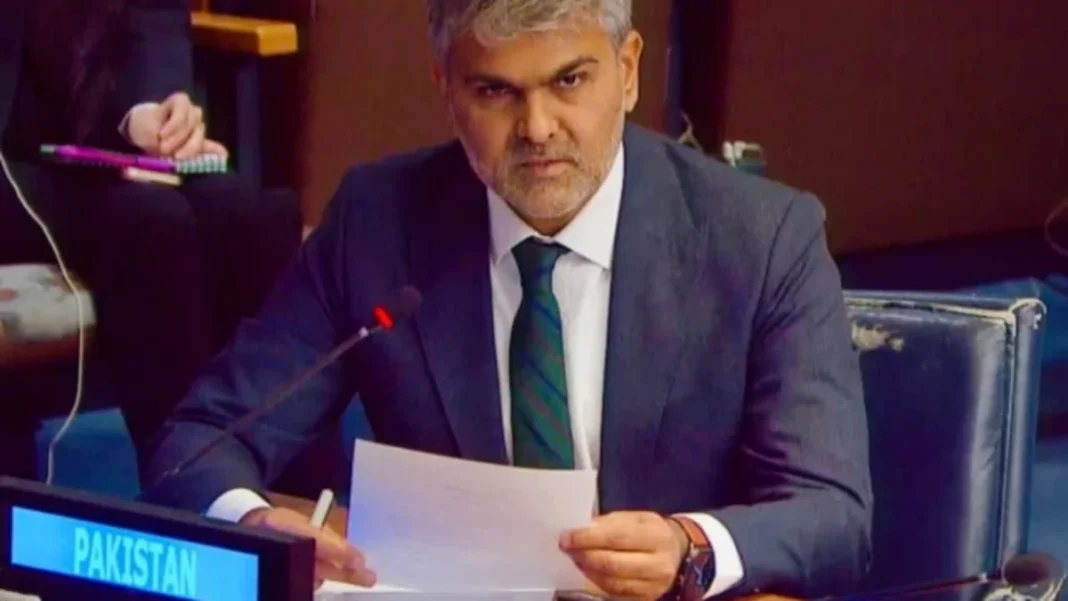
Counsellor Syed Atif Raza, speaking for Pakistan’s Permanent Mission to the UN, said efforts to stop the spread of weapons of mass destruction must not stand in the way of cooperation on peaceful uses of dual-use technologies. He said such cooperation was vital for the economic development of the Global South.
“All countries must retain their inalienable right to utilise nuclear energy for peaceful purposes, consistent with their respective non-proliferation and international legal obligations,” Raza said.
Pakistan, he said, was a party to the main international instruments of nuclear safety and security. He added that compliance or safety issues should be settled through technical bodies like the IAEA, without political bias.
Pakistan civil nuclear cooperation: energy at stake at home
The argument carries direct weight for Pakistan’s own energy mix. Pakistan operates six nuclear power reactors, all under IAEA safeguards. They supply about 20 per cent of the country’s energy needs and one-third of its low-carbon power.
For a country facing high energy costs and pressure to cut emissions, that share matters. Access to civil nuclear technology, fuel and technical help shapes how far Pakistan can expand clean power without adding to its import bill.
Raza also urged restraint in language and action. “Countries should refrain from irresponsible and destabilising rhetoric, actions, and postures that could escalate tensions and increase the risk of conflict,” he said. He added that outstanding issues should be settled through dialogue and diplomacy, in a way that upholds the non-proliferation regime and protects regional and international peace.
“We support the agency’s work in peaceful applications of nuclear science and technology and look forward to the successful implementation of IAEA’s major initiatives,” he said.
What the IAEA chief told the Assembly
IAEA Director-General Rafael Mariano Grossi briefed the Assembly on Syria, Iran and Ukraine before Pakistan spoke. On Syria, he said the agency had gained access to previously restricted facilities after nearly two decades, with all nuclear material now under monitoring.
On Iran, Grossi said the agency had completed most of the technical preparations needed to verify its nuclear activities. He expressed hope that talks between Tehran and Washington would produce an agreement, adding that there would be no lasting, stable solution without a diplomatic deal, and that a deal needed verification.
On Ukraine, he warned of continuing nuclear safety risks at the Zaporizhzhia Nuclear Power Plant, where the IAEA has kept a presence for nearly five years. The agency recently negotiated its eighth localised ceasefire between Russia and Ukraine, allowing essential repairs to prevent a nuclear accident.
Grossi also highlighted the agency’s independent monitoring of treated water discharges from Japan’s Fukushima plant. On peaceful uses, he stressed the need to widen access to nuclear energy in developing countries and welcomed the World Bank’s decision to finance nuclear projects as a watershed moment.
Why the debate matters for Pakistan
The session sits alongside Pakistan’s wider diplomatic push at the UN this week. Feature Pakistan has covered the warning by European and regional states against a new attack on Iran, Pakistan’s call for a fairer global order at the UN Security Council, the Istanbul meeting of regional and European ministers and Pakistan’s warning on AI warfare oversight at the UN.
The common thread is a push for rules that apply equally to all states. Pakistan’s point on civil nuclear cooperation fits that pattern: safety rules should be enforced through technical checks, not used to deny developing countries access to peaceful technology.
What happens next depends on the Assembly’s handling of the IAEA report and on the Iran talks Grossi pointed to.
Frequently asked questions
What did Pakistan ask for at the UN?
Pakistan called for equitable, non-discriminatory civil nuclear cooperation, saying anti-proliferation efforts must not block peaceful uses of dual-use technologies needed by the Global South.
Who spoke for Pakistan?
Counsellor Syed Atif Raza of Pakistan’s Permanent Mission to the UN, during the General Assembly debate on the IAEA’s report.
How much of Pakistan’s energy comes from nuclear power?
Six reactors under IAEA safeguards supply about 20 per cent of national energy needs and one-third of low-carbon power.
What did the IAEA chief report on Iran and Ukraine?
Grossi said most technical preparations to verify Iran’s nuclear activities were complete, and warned of continuing safety risks at Ukraine’s Zaporizhzhia plant, where the agency brokered an eighth localised ceasefire for repairs.