Pakistan Urges UN to Deliver Self-Determination for Kashmir and Palestine
Pakistan has called on the United Nations to apply international law evenly and deliver on Kashmir Palestine self-determination, urging the world body to implement its long-pending resolutions for the people of Kashmir and Palestine.
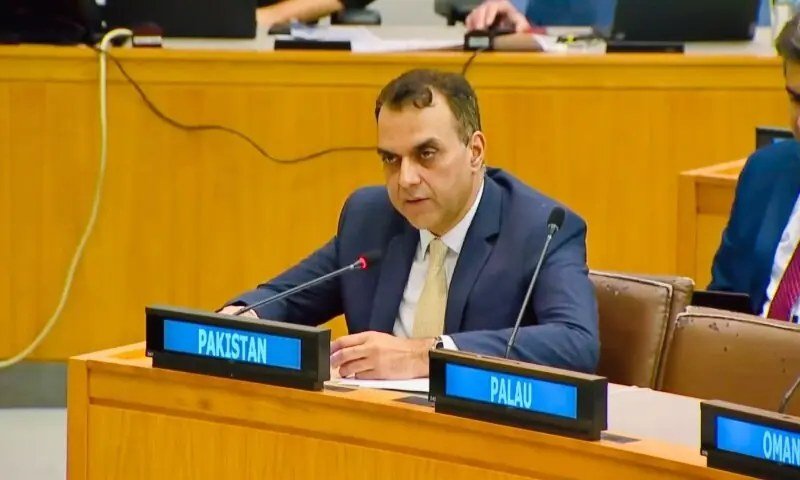
Ambassador Usman Jadoon, Pakistan’s deputy permanent representative to the UN, made the call during a debate in the General Assembly’s Third Committee, which handles social, humanitarian and cultural questions. “International law cannot be invoked vigorously in one situation and disregarded in another,” he told the committee.
Kashmir Palestine self-determination: resolutions awaited eight decades
Jadoon said Kashmiris had waited nearly eight decades for the implementation of UN Security Council resolutions, including provisions for a free and impartial plebiscite under UN auspices.
He accused India of intensifying repression and curbs on fundamental freedoms in Jammu and Kashmir since Aug 5, 2019, when New Delhi revoked the region’s special constitutional status, and of trying to change the territory’s demographic and political character.
“Arbitrary detention, enforced disappearances, restrictions on expression and peaceful assembly, and demographic engineering cannot become acceptable merely because they persist over time,” he said. “Rights delayed for generations do not become rights denied.”
Sharp exchange with India on the floor
An Indian delegate, exercising the right of reply, described Kashmir as an “internal matter”. A Pakistani representative countered that Jammu and Kashmir remained an internationally recognised disputed territory, with its final status to be decided in line with the wishes of its people and relevant UN resolutions.
In a second exchange, Indian delegate Bhavika Mangalanandan accused Pakistan of involvement in terrorism and of mistreating minorities, while repeating India’s position that Kashmir is an integral part of the country.
Pakistan’s first secretary to the UN, Sarfraz Ahmed Gohar, rejected the claim. He said Jammu and Kashmir “never was, neither is, nor will ever be” an “inalienable part of India”. He accused India of suppressing rights in Kashmir, of discrimination and violence against religious minorities, and of backing militant groups. He restated Islamabad’s commitment to dialogue, diplomacy and peaceful settlement of disputes under the UN Charter. “India would be well advised to also follow that path,” he said, in the interest of regional peace, security and stability.
Palestine called a test of conscience
Jadoon described the plight of Palestinians as a “defining test of our collective conscience”. He called for the protection of civilians, unhindered humanitarian assistance, respect for international law and accountability, and said the Palestinian people must realise their “inalienable right to self-determination”.
Debt, Islamophobia and AI also raised
The ambassador also pointed to the shrinking fiscal space of developing countries, unsustainable debt and climate shocks, and underlined the right to development. He voiced concern about the normalisation of Islamophobia, noting the March 15 International Day to Combat Islamophobia, and said artificial intelligence and technology must remain human-centred and inclusive.
Frequently asked questions
What is the UN General Assembly’s Third Committee?
It is one of the General Assembly’s six main committees. It deals with social, humanitarian and cultural questions, including human rights issues.
What did Pakistan ask the UN to do on Kashmir?
Pakistan urged the UN to implement Security Council resolutions on Kashmir, including a free and impartial plebiscite under UN auspices, and accused India of repression since Aug 5, 2019.
How did India respond?
An Indian delegate called Kashmir an “internal matter” and accused Pakistan of involvement in terrorism. Pakistan rejected the charge and restated that Kashmir is an internationally recognised disputed territory.
What did Pakistan say about Palestine?
Ambassador Jadoon called the Palestinian plight a “defining test of our collective conscience” and said Palestinians must realise their “inalienable right to self-determination”.