The federal government has told parliament that the petroleum levy in Pakistan is treated as non-tax revenue, separate from customs duty and other taxes, as lawmakers questioned the charge that now forms a large part of what consumers pay for fuel.
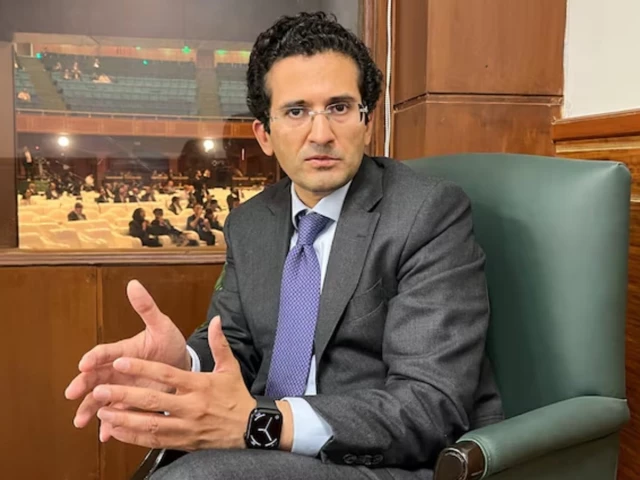
Federal Petroleum Minister Ali Pervaiz Malik briefed the National Assembly Standing Committee on Petroleum Division on Thursday, the Express Tribune reported, telling members the government was taking all possible steps to keep petroleum supplies uninterrupted and to soften the impact of the global oil price shock — a crisis the IMF has praised Pakistan for handling — on domestic consumers.
The meeting was chaired by MNA Syed Mustafa Mehmood.
Global market in ‘unprecedented crisis’
The minister told the committee the international petroleum market was facing an unprecedented crisis spanning crude oil, refined products, shipping, insurance and refining capacity.
Committee members were told that higher shipping and insurance costs, longer transport routes and exceptionally high refining margins had pushed up the international cost of petroleum products.
The briefing comes as fuel prices stand near record levels. Under the latest revision, which took effect on Oct 9, petrol costs Rs398.96 a litre and high-speed diesel Rs395.72 a litre, after an increase of Rs2.31 and 78 paisas respectively.
Petroleum levy in Pakistan: from shock absorber to revenue source
During the meeting, officials clarified that the petroleum levy was classified as non-tax revenue and was distinct from customs duty and other taxes.
The committee, however, noted that the levy had become a significant component of petroleum prices. Members observed that the levy was initially intended to absorb fluctuations in international prices, but had since become a regular source of government revenue.
The levy ranks among the federal government’s largest sources of non-tax income. Because it is classified as non-tax revenue, its proceeds are not shared with the provinces under the National Finance Commission award.
The committee chairman said members had the right to question the basis and justification of the levy, and stressed the need for greater clarity about how it affected consumers.
OGRA defends pricing formula
Responding to questions about how fuel prices are fixed, the Oil and Gas Regulatory Authority (OGRA) told the committee that the existing petroleum pricing mechanism was based on a transparent formula available on its website.
The minister has previously linked the levy to the government’s commitments with the International Monetary Fund, with which Pakistan has reached a staff-level deal for $1.2 billion, telling a Senate panel earlier this year that any cut would need an IMF-approved alternative revenue source.
FAQ
What is the petroleum levy?
The petroleum levy is a charge the federal government collects on petrol and diesel. Officials told the NA committee it is classified as non-tax revenue, separate from customs duty and other taxes.
Why did the NA committee question the levy?
Committee members noted the levy had become a significant part of fuel prices. They observed it was originally meant to absorb international price fluctuations but had turned into a regular revenue source, and said its basis and justification should be open to questioning.
Who decides fuel prices in Pakistan?
The Oil and Gas Regulatory Authority (OGRA) fixes petroleum prices under a formula it says is transparent and published on its website. Since mid-July, prices have been revised daily instead of weekly.
What are the current fuel prices?
From Oct 9, petrol costs Rs398.96 a litre and high-speed diesel Rs395.72 a litre, following the latest revision under the daily pricing mechanism.