PVARA Mastercard Discuss Tokenisation, Payments
The PVARA Mastercard talks on tokenisation and digital payments put Pakistan’s $40 billion-plus remittance flows at the centre of the discussion.
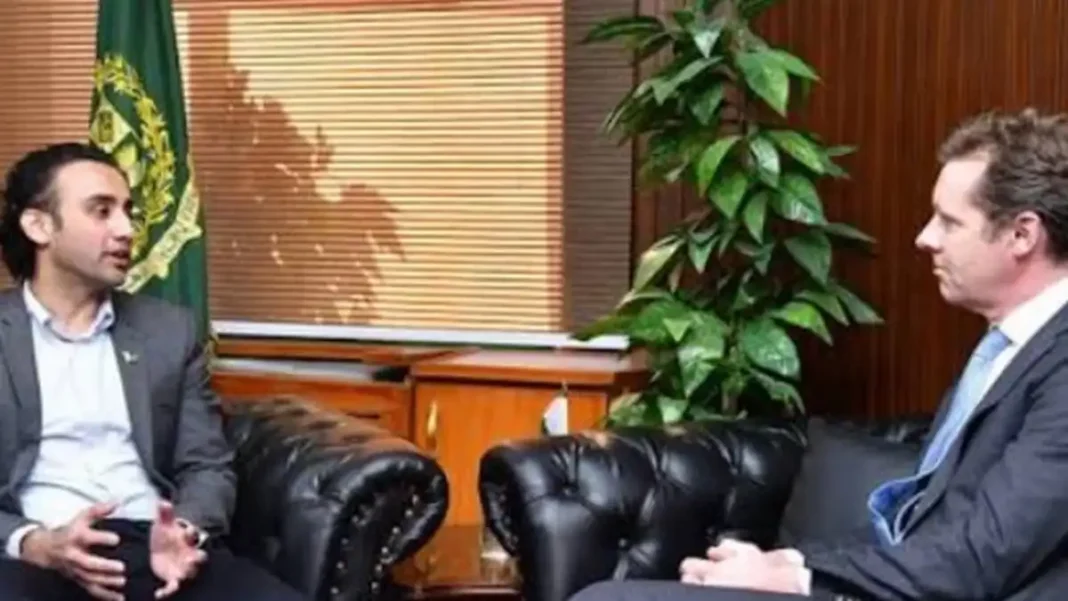
Minister of State and Chairman of the Pakistan Virtual Assets Regulatory Authority (PVARA), Bilal Bin Saqib, met Mastercard Division President for East Asia Mark Elliott to discuss the opportunities arising from the convergence of traditional financial systems and emerging digital-asset technologies, according to a statement issued on Thursday.
The meeting focused on the evolving role of blockchain-based financial infrastructure, including ways to improve cross-border payments, strengthen remittance efficiency, support the responsible tokenisation of financial assets and widen access to modern financial services.
Why the PVARA Mastercard talks matter
Pakistan receives over $40 billion in annual remittances and has a rapidly growing digital economy. The discussions highlighted the potential for next-generation financial technologies to deliver real economic benefits, particularly for overseas Pakistanis, freelancers, small businesses and financial institutions.
For the millions of Pakistanis working abroad, the cost and speed of sending money home matter directly. Faster and cheaper transfers would put more of each payment into the hands of families in Pakistan. For freelancers, who are paid by clients overseas, the same improvements would cut delays and fees.
The two sides also exchanged views on global developments in digital payments, cybersecurity and financial integrity. They discussed the importance of regulatory frameworks that enable responsible innovation while protecting consumers and safeguarding financial stability.
‘An opportunity to help shape the change’
“The next generation of global financial infrastructure is being built today. Pakistan has an opportunity not merely to participate in this transformation, but to help shape how emerging economies benefit from it. Our priority is to translate technological innovation into real economic value for citizens, businesses and the broader economy,” Saqib said.
He said the future of finance would increasingly depend on cooperation between established financial institutions, technology providers and regulators.
Tokenisation means turning a real-world asset, such as a bond or a share, into a digital token that can be traded on a blockchain. Supporters say it can cut settlement times and costs and open markets to smaller investors. Regulators, including PVARA, are working out how to allow it without opening the door to fraud or instability.
Pakistan’s digital-assets push
The meeting is part of a wider push by Pakistan to build a regulated digital-assets sector. PVARA was set up to oversee virtual assets, and the government has been moving to bring crypto and tokenised products inside a formal framework.
Feature Pakistan has followed that push closely. Pakistan has already moved towards a tokenised eurobond, and a crypto industry body has been formed. Saqib has also spoken about financial innovation and digital assets at LUMS.
The talks with Mastercard come as Pakistan’s foreign exchange position improves. The State Bank’s reserves rose by $39.5 million in the latest week, according to SBP reserves data reported this week.
No deal was announced from the meeting. The talks were exploratory, and any concrete steps on tokenisation or payments would need further work between PVARA, Mastercard and the banking regulator.
What did PVARA and Mastercard discuss?
Tokenisation, cross-border payments, remittance efficiency and wider access to modern financial services, along with digital payments, cybersecurity and financial integrity.
Why do remittances matter to the talks?
Pakistan receives over $40 billion in remittances a year. Faster and cheaper transfers would benefit overseas Pakistanis, freelancers and small businesses.
What is tokenisation?
Turning a real-world asset, such as a bond, into a digital token that can be traded on a blockchain, with the aim of cutting costs and settlement times.
Was a deal announced?
No. The meeting was exploratory, and any concrete steps would need further work with regulators.