Saudi Arabia Eyes Balochistan Minerals Investment
Saudi Arabia has shown interest in investing in Balochistan minerals, energy, agriculture and industry, while also exploring jobs in the kingdom for the province’s skilled workers.
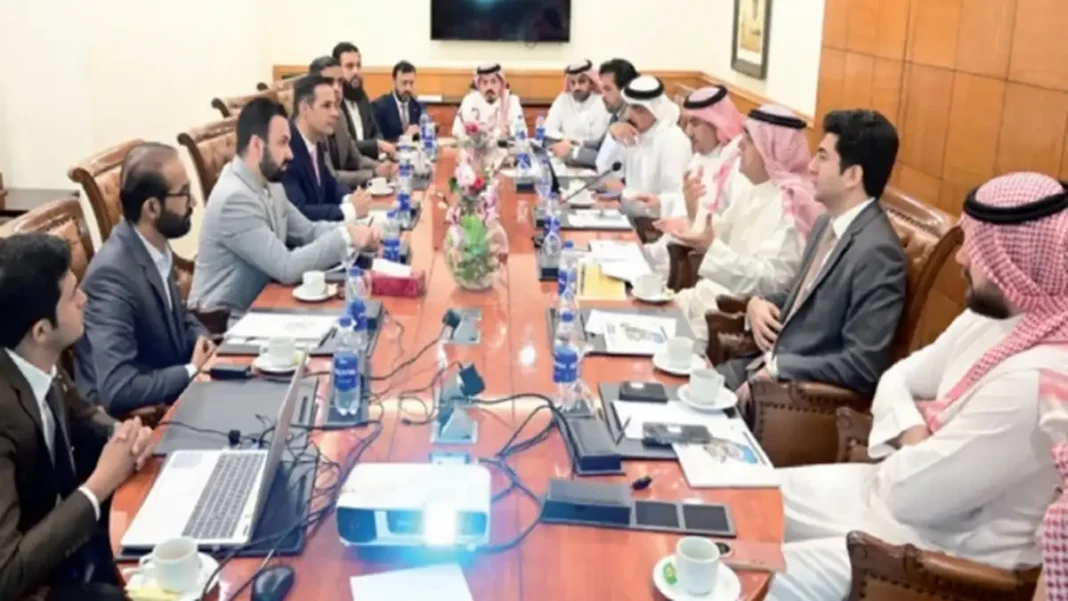
The interest was conveyed by Prince Mansour bin Mohammad Al Saud, chairman of the Saudi-Pakistan Joint Business Council, during a meeting with a high-level Balochistan government delegation in Karachi. The prince was accompanied by a 10-member Saudi business delegation.
The meeting was led by Balochistan Board of Investment and Trade vice chairman Bilal Khan Kakar. Balochistan Technical Education and Vocational Training Authority managing director Abdul Kabeer Zarkoon and Lasbela Industrial Estates Development Authority managing director Liaqat Kashani also attended.
Balochistan minerals top the Saudi agenda
The Saudi delegation was briefed on investment opportunities and development projects across the province. These included a low-BTU gas-based urea fertiliser complex, a ferrochrome plant, industrial development through the Lasbela authority, the blue economy, olive cultivation, livestock farming, and projects in the minerals and energy sectors.
Prince Mansour expressed his commitment to exploring investment initiatives and taking part in projects ready for launch in Balochistan. He also assured the provincial government that efforts would be sped up to create jobs in Saudi Arabia for skilled workers from the province, describing the initiative as a special gift to the Balochistan government.
Kakar said the province offered strong investment potential because of its natural resources and economic capacity. He said investment across minerals, energy, agriculture, livestock, the coastal economy and industry could stimulate economic activity and generate jobs locally.
He said Chief Minister Mir Sarfraz Bugti wanted to turn Balochistan into a major national and international hub for investment and trade. The provincial government, he added, was committed to facilitating investors and creating a business-friendly environment.
Kakar invited the Saudi delegation to explore the province’s investment prospects and assured them that the investment board would help identify suitable projects, coordinate with the relevant government departments and provide support throughout the process.
Why Balochistan’s minerals draw investors
Balochistan holds some of Pakistan’s largest mineral reserves, along with a long coastline and large tracts of land for agriculture and livestock. Yet the province has long received less investment than its resources suggest it should. Poor roads, weak power supply and security concerns have held projects back.
Mineral investment is also moving elsewhere in the country. Sindh has opened its mineral sector to investors, with the chief minister inviting private capital into mining. The Saudi interest in Balochistan fits the same pattern: provinces are competing to turn their geology into jobs and revenue.
The jobs angle matters as much as the investment. Skilled workers from Balochistan have long sought work in the Gulf, and a formal channel through the Saudi-Pakistan Joint Business Council could give them a safer route than informal recruiters.
Trade routes and the wider picture
The meeting in Karachi also comes as Balochistan’s trade links are being rebuilt. Efforts are under way to reopen border crossings for trade, which would give the province’s producers new markets. Better trade and new investment together could lift a province that has lagged behind the rest of the country.
Energy is part of the same picture. Pakistan’s spending on renewable energy still trails fossil fuels, and Balochistan’s gas, solar and wind resources could help close that gap if investors commit.
Public finances frame the stakes. The centre has deducted Rs35 billion from provincial grant receipts for the first time, which leaves provinces more dependent on their own revenue. Investment that creates taxable activity in Balochistan would ease that pressure.
What happens next
The Saudi delegation will now study the projects it was shown, including the fertiliser complex and the ferrochrome plant. The investment board will follow up with project details and coordination with the departments concerned.
No deal has been signed yet, and the interest expressed in Karachi is a first step rather than a commitment. The test will be whether the delegation returns with concrete proposals, and whether the province can clear the land, power and security hurdles that have slowed past projects.
For Balochistan, the visit itself sends a signal. A Gulf business delegation of this size, led by a Saudi prince, puts the province on the investment map. Turning that attention into jobs and revenue is the work that now begins.
Frequently asked questions
Who led the Saudi delegation to discuss Balochistan investment?
Prince Mansour bin Mohammad Al Saud, chairman of the Saudi-Pakistan Joint Business Council, led a 10-member Saudi business delegation that met a Balochistan government delegation in Karachi.
Which sectors is Saudi Arabia interested in?
Minerals, energy, agriculture and industry, along with the blue economy, olive cultivation and livestock farming. The delegation was also briefed on a urea fertiliser complex and a ferrochrome plant.
What jobs did the Saudi side offer?
Prince Mansour assured the province that efforts would be sped up to create jobs in Saudi Arabia for skilled workers from Balochistan, describing the initiative as a special gift to the Balochistan government.
Who led the Balochistan side?
Balochistan Board of Investment and Trade vice chairman Bilal Khan Kakar led the delegation, with the heads of the technical education authority and the Lasbela industrial estates authority also present.
Has any investment deal been signed?
No. The meeting was an expression of interest and a briefing on projects. The Saudi side will study the proposals, and the investment board will follow up with details and coordination.