Saudi Arabia Intercepts Missiles as Strikes Hit Sanaa
Saudi Arabia intercepts missiles fired from Yemen, the Saudi-led coalition said on Tuesday, bringing down a ballistic missile and a cruise missile aimed at Riyadh, a second ballistic missile aimed at the kingdom’s southern region, and a drone over the oil-rich Eastern Province. In the same hours, Houthi-run media reported airstrikes on the Yemeni capital, Sanaa.
Coalition spokesman Maj Gen Turki al-Maliki announced the interceptions in posts on social media. Saudi civil defence issued alerts in Riyadh and the southern cities of Abha and Khamis Mushait, and later said the threats had passed. There were no immediate reports of damage or casualties from the interceptions.
The Houthis said they had fired missiles at several Saudi targets. Their military spokesman, Yahya Saree, said the group had struck King Khalid International Airport in Riyadh and an oil facility in Abqaiq in the east, and later added pumping stations along the East-West Pipeline and other targets in Riyadh. Saudi authorities have not confirmed any of those claims.
Saudi Arabia intercepts missiles over Riyadh and the south
The coalition said its air defences destroyed a ballistic missile and a cruise missile that were heading towards Riyadh, and a separate ballistic missile over the southern region. A drone was also brought down over the Eastern Province.
The interceptions came a day after Saudi Arabia reported an attack on its East-West oil pipeline. The Energy Ministry said on Monday that an attack in the Madinah region had caused a limited fire, which emergency teams extinguished. There were no casualties, and pipeline operations were not affected. Saudi authorities did not say who was behind that attack.
The East-West Pipeline runs about 1,200 kilometres from the eastern oilfields to the Red Sea port of Yanbu, carrying about four million barrels of crude a day, roughly four per cent of global supply. The route has become more important since the conflict disrupted shipping through the Strait of Hormuz, forcing Riyadh to move more oil overland to the Red Sea.
The war began when the Houthis seized Sanaa in late 2014, forcing the internationally recognised government from power. The Saudi-led coalition intervened in March 2015. Since then the Houthis have repeatedly targeted Saudi airports, ports and energy infrastructure with missiles and drones, while Saudi Arabia has carried out airstrikes against Houthi-linked targets in Yemen.
Strikes reported on Sanaa
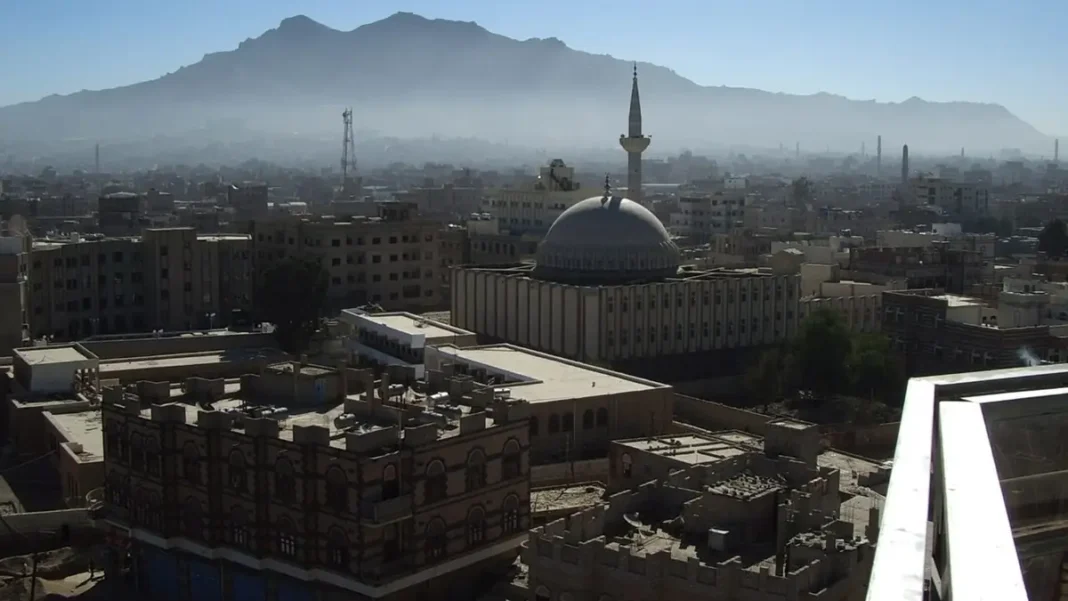
Houthi-run media reported that airstrikes hit Sanaa, the Yemeni capital, which the Houthis control. The Saba news agency said the strikes hit the al-Mufazir gas facility in the Jadar district, north of the capital, and a building belonging to the state oil company in southern Sanaa. Civil defence crews worked to put out a fire in gas trailers at the facility.
The Houthi health ministry said one person was killed and three others were wounded in the attack on the gas facility. The Saudi-led coalition has not confirmed the reported strikes.
The exchange shows how the war in Yemen keeps spilling beyond its borders. Each side tells its own version, and neither has confirmed the other’s account. What is verified is narrow: missiles were fired and strikes were reported on Sanaa.
The war reaches Gaza and the wider region
The Houthis have said they will continue to target Israel until the blockade of Gaza is lifted, linking the war in Yemen to the war in Gaza. Seven Palestinians were killed in Gaza on Tuesday, according to local health officials, as the ceasefire there came under fresh strain. The UN has also warned that repairs to a Gaza water basin are blocked, leaving displaced families at flood risk.
Pakistan has already condemned an attack on the Aramco facility in Riyadh, and the kingdom’s security is a sensitive issue in Islamabad. A defence alliance meeting was recently held in Islamabad, underlining the region’s focus on collective security.
Oil markets are also watching. Attacks on shipping in the Strait of Hormuz have pushed oil prices higher, although prices slid to a two-month low earlier this week as hopes of an end to the US-Iran war grew. Each new missile launch tests that fragile calm.
What happens next
The immediate question is whether the missile fire continues. If the Houthis keep launching missiles at Saudi cities and energy sites, Riyadh will face pressure to respond.
The coalition has also not confirmed the reported strikes on Sanaa, leaving the other half of the exchange unverified. Until either side confirms what happened on the ground, the full picture of the night’s exchange will remain unclear.
For now, the war in Yemen grinds on, and its missiles keep flying across borders. Talks held over the years have yet to produce a settlement, and the latest exchange shows how far the parties still have to travel.
Frequently asked questions
What did the Saudi-led coalition say it intercepted on Tuesday?
The coalition said its air defences intercepted a ballistic missile and a cruise missile aimed at Riyadh, a ballistic missile aimed at the southern region, and a drone over the Eastern Province.
What did the Houthis claim to have hit?
Houthi military spokesman Yahya Saree said the group had struck King Khalid International Airport in Riyadh and an oil facility in Abqaiq in the east, and later added pumping stations along the East-West Pipeline and targets in Riyadh. Saudi authorities have not confirmed any of those claims.
What was hit in Sanaa?
Houthi-run media reported that strikes hit the al-Mufazir gas facility in the Jadar district, north of Sanaa, and a building belonging to the state oil company in southern Sanaa. The Houthi health ministry said one person was killed and three were wounded at the gas facility. The coalition has not confirmed the strikes.
What happened to the East-West Pipeline on Monday?
Saudi Arabia’s Energy Ministry said an attack on the pipeline in the Madinah region caused a limited fire, which was quickly extinguished. There were no casualties, and pipeline operations were not affected. Saudi authorities did not say who was behind the attack.
When did Saudi Arabia intervene in Yemen’s civil war?
Saudi Arabia’s intervention in Yemen’s civil war began in March 2015, to restore the government ousted from the capital Sanaa by the Houthis.