Hormuz Oil Prices Rise After Shipping Attacks
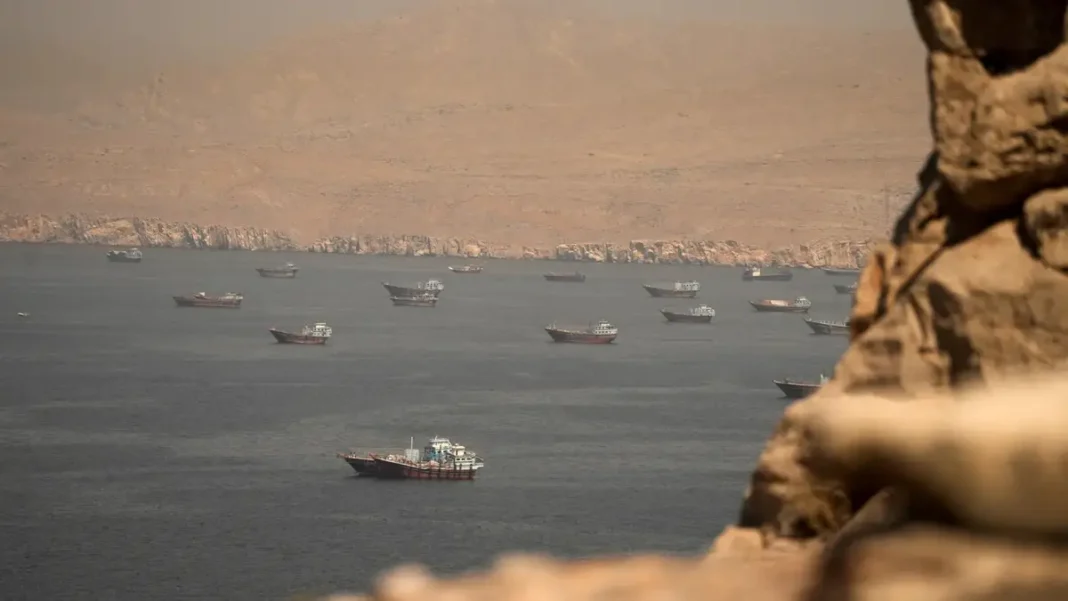
Hormuz oil prices rose on Wednesday from two-month lows, as attacks on shipping in the Strait of Hormuz dimmed hopes of a de-escalation in the United States-Israeli war on Iran.
Brent futures climbed $1.04, or 1.1 per cent, to $92.53 a barrel at 0420 GMT. US West Texas Intermediate crude rose 67 cents, or 0.8 per cent, to $86.71.
The market swung between hopes of a diplomatic breakthrough and concern for tankers passing through the strait, which carries a large share of the world’s seaborne oil.
Tanker struck as Hormuz oil prices climb
A tanker was struck north-east of Lima in Oman, the United Kingdom Maritime Trade Operations agency said on Tuesday, and Iran’s Revolutionary Guards Navy said two tankers caught fire after hitting naval mines on what it called an “unauthorised route”.
Attacks have not let up. After 37 ships were attacked in October, the highest monthly total since the start of the Middle East war, recent data showed little sign of fewer attacks in November, according to the Washington Institute for Near East Policy.
June Goh, senior analyst at Sparta Commodities, said vessel attacks had increased amid uncertainty over the diplomacy talks, and LSEG Oil Research noted that even a deal would not restore flows at once, given mine clearance, insurance and shipowner caution.
Iran sets terms for reopening the strait
Iranian Foreign Minister Abbas Araghchi said on Tuesday that Tehran’s proposal to reopen the strait within two days of an agreement remained on the table, and that diplomacy, not military action or further sanctions, was the only way to end the war.
Iran’s conditions include ending the war on all fronts, unfreezing its assets abroad, lifting oil sanctions and ending the US naval blockade of Iranian ports. Washington insists that nuclear issues must feature in the first negotiations.
US Secretary of State Marco Rubio said there was no need for major combat operations against Iran, after meeting G7 foreign ministers in Paris. President Donald Trump said the United States was seeing progress towards ending the conflict, which began with US-Israeli strikes on Iran on 28 February, and that further strikes were quite unlikely.
The Qatari prime minister joined talks with G7 foreign ministers in Paris on Tuesday, after his trip to Washington. Iranian security chief Mohsen Rezaei urged Washington to accept Tehran’s demands, while an Iranian security official said no talks were taking place between the two sides. The New York Times reported on Tuesday that US Treasury chief Scott Bessent had been moved to a military base after Iranian threats against his life.
The rise came a day after prices fell by more than $3 a barrel, when US officials played down the need for further strikes on Iran, before recovering some losses when the Iranian official said no talks were taking place.
Three tankers burning
Despite the diplomacy, vessels kept coming under attack. Iran’s Revolutionary Guards said on Tuesday that three oil tankers were on fire in the waterway, without identifying the vessels.
The Emirati state oil company ADNOC said one of its vessels was damaged in an attack in UAE waters, while UKMTO reported a tanker struck by an unknown projectile off the Omani coast.
Yet gas kept moving. Data from S&P Global Energy showed 31 laden LNG tankers transited the strait in October, up from 23 in September, the highest monthly total since the war began, with 23 loading at Qatar’s Ras Laffan terminal and eight at Das Island in the UAE. One vessel, Al Mafyar, transferred LNG to Shandong Redwood and Ejnan, both of which delivered the cargoes to Pakistan.
What it means for Pakistan
Pakistan imports most of its oil, so a sustained rise in Brent feeds directly into the fortnightly fuel price review. Oil prices had slid to a two-month low only a day earlier, and the government cut petrol by Rs8 a litre to Rs338 in the last review.
If Brent holds above $92, the next review will be harder: the government must choose between passing the increase to motorists and absorbing it through taxes.
The wider economy feels the same pressure. The stock market jumped 5,449 points this week, but dearer oil widens the import bill and pushes up inflation, and development spending is already running at only 10.4 per cent of its annual allocation.
What happens next
Traders will watch the strait first. If attacks continue, insurers will raise war-risk premiums and some shipowners may avoid the route, keeping Brent supported even if diplomacy improves.
Until Washington and Tehran show signs of real talks, the market will price in the risk of further strikes on shipping. For now, the rebound is modest, about a dollar on Brent, but it has ended the slide to two-month lows.
Frequently asked questions
How much did oil prices rise on 11 November?
Brent futures climbed $1.04, or 1.1 per cent, to $92.53 a barrel at 0420 GMT, while US West Texas Intermediate crude rose 67 cents, or 0.8 per cent, to $86.71.
What are Iran’s conditions for reopening the Strait of Hormuz?
Iran’s conditions include ending the war on all fronts, unfreezing its assets abroad, lifting oil sanctions and ending the US naval blockade of Iranian ports. Tehran says it could reopen the strait within two days of an agreement.
How many tankers were hit in the strait?
Iran’s Revolutionary Guards said three oil tankers were on fire in the waterway on Tuesday. A tanker was also struck north-east of Lima in Oman, and ADNOC said one of its vessels was damaged in the UAE’s territorial waters.
Did LNG shipments to Pakistan continue?
Yes. One vessel, Al Mafyar, transferred LNG to Shandong Redwood and Ejnan, both of which delivered the cargoes to Pakistan. In October, 31 laden LNG tankers passed through the strait, up from 23 in September.
What does the oil rebound mean for petrol prices in Pakistan?
Pakistan imports most of its oil, so if Brent holds above $92, it will feed into the next fortnightly fuel price review and may cut short the relief from the recent Rs8 per litre petrol cut.