Slug: sc-reasonable-doubt-bail-ruling-expired-drugs
Category: National
Focus keyphrase: Supreme Court bail reasonable doubt ruling
SEO title: Supreme Court: Bail Must Not Be Denied on Reasonable Doubt
Meta description: Supreme Court has ruled that bail must not be denied on reasonable doubt, rebuking prosecutors for quietly swapping charges after bail was granted.
Tags: Supreme Court, bail, reasonable doubt, Justice Muhammad Ali Mazhar, expired drugs, Quetta, prosecution, Pakistan judiciary
Original element: explainer context — what the ‘further inquiry’ principle means for under-trial prisoners in Pakistan and how the ruling limits the prosecution’s power to defeat bail by rewriting charges, with internal links to our own recent Supreme Court coverage.
Supreme Court Rules Bail Must Not Be Denied Over ‘Reasonable Doubt’
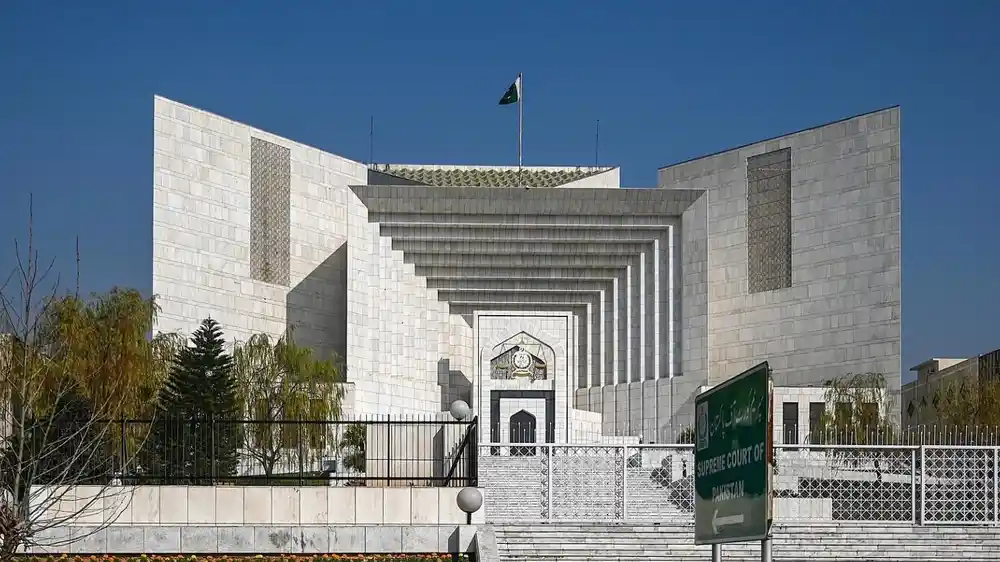
ISLAMABAD: The Supreme Court has ruled that whenever reasonable doubt arises over a suspect’s involvement in a crime, the suspect should not be deprived of the benefit of bail. The ruling came in a five-page order by Justice Muhammad Ali Mazhar, who headed a three-member bench hearing a case about the transportation of expired drugs.
Justice Mazhar took exception to the prosecution’s shifting stance in the case, registered at Quetta’s New Sariab Police Station against Muhammad Akbar. The bench heard his criminal appeal on July 22; a two-judge bench had granted him post-arrest bail on April 16 on bonds of Rs100,000 with two sureties.
The case behind the ruling
The original case was lodged under Sections 379, 420, 274, 275 and 276 of the Pakistan Penal Code, along with Sections 23 and 27 of the Drugs Act 1976. These provisions cover offences affecting public health and safety, relating to drug adulteration and misrepresentation, and carry penalties of up to six months.
Charges were quietly rewritten after bail
When the Supreme Court’s bail order was sent for compliance, it emerged that the prosecution had modified the first information report. The original provisions were replaced with Sections 409, 471, 468, 467, 420 and 109 of the Pakistan Penal Code, read with Section 5(2) of the Prevention of Corruption Act 1947.
These are far heavier provisions. They cover major white-collar and financial crimes involving public servants, forgery, cheating and abetment, and carry punishments ranging from 10 years in jail to life imprisonment.
At the July hearing, the court asked state counsel Baqir Shah and investigating officer Muhammad Ajmal why the FIR had been modified. They replied that the additions were made on January 15, but offered no plausible reason why the modified FIR had not been brought on record when the Supreme Court granted bail. They also could not justify deleting Sections 23 and 27 of the Drugs Act, when the original allegation was transporting expired drugs in violation of that Act.
Asked what new evidence justified the insertions, the investigating officer said only that four witness statements had been recorded under Section 161 of the Code of Criminal Procedure, and that the Quetta deputy superintendent of police had sought the opinion of the deputy inspector general (Legal), who had advised deleting and adding sections.
The court’s rebuke
“It appears from the conduct of the prosecution that to complicate the case with some ulterior motives, the prosecution acted unfairly and added certain sections without realising the effect of deleting these sections of the Drugs Act,” Justice Mazhar observed. Another aim may have been to frustrate and deprive the petitioner of the concession of bail.
He regretted that, because of the concealment of facts, the possibility could not be ruled out that new sections were added after the court order only to deprive the petitioner of bail. He remarked that the prosecution had “not acted seriously”: if any insertion had been made before bail was granted, it should have been brought to the Supreme Court’s knowledge “without playing hide and seek”.
“Due to such callous conduct,” Justice Mazhar regretted, the petitioner who had earlier been granted bail was still behind bars. The order extended the bail granted earlier on the same terms and conditions.
What the ruling means for under-trial prisoners
The wider significance of the verdict lies in the principle it restates. When the prosecution is itself unsure about the culpability of the accused because its stance keeps changing, the case becomes one of “further inquiry” — and further inquiry, the court said, presupposes a tentative assessment that may create doubt about the suspect’s involvement. In that situation, the order reads, “it would be better to keep him on bail than in jail during the trial”.
The object of a trial, Justice Mazhar stressed, is to make an under-trial suspect answer the criminal trial, not to punish him by letting him rot behind bars.
The verdict also limits the prosecution’s powers. The court said a new section or offence can be inserted only when something was actually gleaned by the prosecution during investigation of the crime, not on the whims of the prosecution. In practice, that closes off a route where charges are quietly upgraded after bail is granted, a tactic this case put on the record.
The ruling arrives amid a steady stream of bail and prison-related litigation before the superior courts. The Supreme Court upheld bail in the Chauntra case this week and issued show-cause notices to the KP prisons chief over a convict’s early release, while the Peshawar High Court has stayed the arrest of the KP Assembly deputy speaker and ordered his residence de-sealed.
For readers following the judiciary, the Federal Constitutional Court’s ruling that minor offences cannot bar government jobs forms part of the same broader push.
The text of Wednesday’s order has been published on the Supreme Court’s website, and Dawn’s Pakistan section reported the verdict in detail.