Second Capital of Pakistan: Rawalpindi’s Interim Capital Years (1959–1967) Explained
Most Pakistanis can name the first capital of Pakistan — Karachi — and the current one — Islamabad. Far fewer know that the country had a second capital in between: Rawalpindi, which hosted the federal government for about eight years while Islamabad was being built. This guide explains when, why and how the garrison city became the seat of power, and what happened during its brief capital years.
Quick answer: Rawalpindi was Pakistan’s second capital, serving as the interim national capital from 1959 to 1967. President Ayub Khan moved the government there from Karachi in 1959; ministries operated from the city while the purpose-built Islamabad was constructed nearby, and the capital formally shifted to Islamabad on 14 August 1967.
In this guide
When Rawalpindi Became the Capital
In 1959, President Ayub Khan ordered the shift of the seat of government from Karachi to Rawalpindi. The move was part of the same decision that would create Islamabad: Rawalpindi was never meant to be permanent. It was the working capital — a functioning city close to the future capital’s site where ministries could operate while construction crews built Islamabad on the Potwar Plateau.
According to the historical record summarised on the first capital of Pakistan pillar, the Karachi-to-Rawalpindi move was completed in 1959, making Rawalpindi the country’s second capital — a fact still missing from many textbooks.
Why Rawalpindi Was Chosen
The choice was practical and strategic:
- Proximity to the new site: Rawalpindi sits about 14 kilometres from the land chosen for Islamabad. Officials could supervise construction directly.
- Army headquarters: The General Headquarters (GHQ) of the Pakistan Army was already in Rawalpindi, placing the civil government beside the military command during a period of military rule.
- Ready infrastructure: Unlike an empty construction site, Rawalpindi had offices, housing, roads and a railway — the government could move in immediately.
- Neutral ground: Like the future Islamabad, Rawalpindi was geographically central — far from the commercial and ethnic politics of Karachi.
What Happened During the Interim Years
The Rawalpindi years (1959–1967) coincided with Ayub Khan’s “Decade of Development”. The Second Five-Year Plan was launched, the Indus Waters Treaty was signed with India in 1960, and Mangla and Tarbela dam projects moved forward. Administratively, the city hosted the federal ministries, the planning commission and foreign missions — many embassies that would later relocate to Islamabad’s Diplomatic Enclave began their Pakistan presence in Rawalpindi.
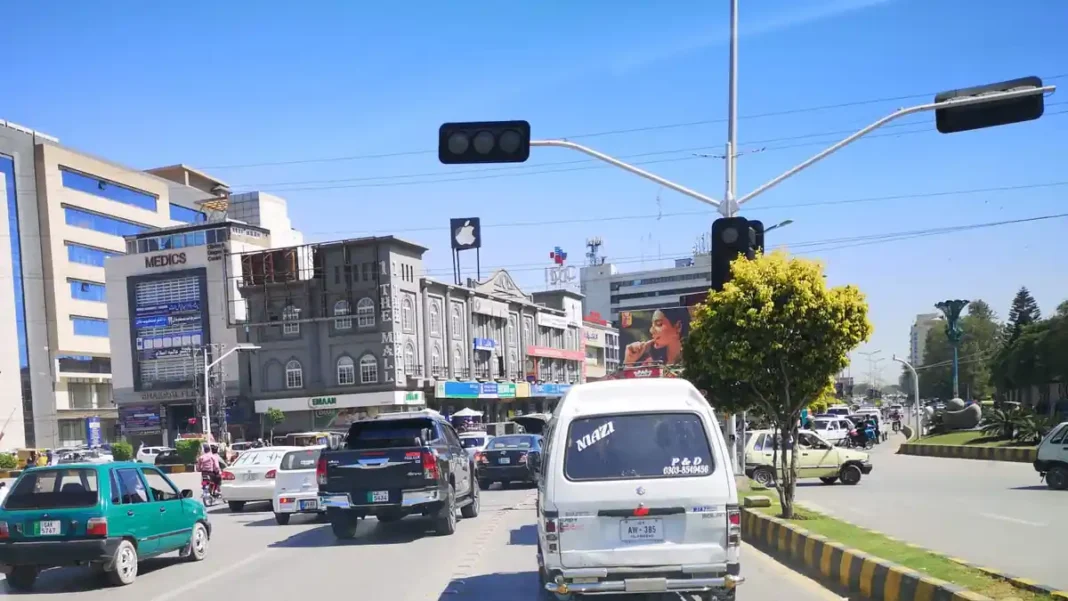
Rawalpindi’s twin-city relationship with Islamabad was born in this era: as Islamabad’s sectors rose one by one, government offices migrated across the boundary into the new capital.
The Handover to Islamabad
By the mid-1960s the essential work on Islamabad was complete — the Secretariat blocks, the presidency site, and the first residential sectors. On 14 August 1967, Islamabad was declared the national capital, exactly twenty years after independence. Rawalpindi’s term as second capital ended, and it settled into its modern role as Punjab’s major garrison and commercial city, now forming a metropolitan area of over 5.7 million people with Islamabad.
Want the full three-capital story? Start with our first capital of Pakistan guide, then read when Islamabad became the capital.
Frequently Asked Questions
Was Rawalpindi ever the capital of Pakistan?
Yes. Rawalpindi served as Pakistan’s interim national capital from 1959 to 1967, between Karachi (the first capital) and Islamabad (the current capital). It is correctly described as the country’s second capital.
How long was Rawalpindi the capital?
About eight years — from the government’s move in 1959 until Islamabad was declared the capital on 14 August 1967.
Why did the capital move from Rawalpindi to Islamabad?
Rawalpindi was always intended as a temporary arrangement. Once the purpose-built city of Islamabad — designed by Constantinos Doxiadis — was ready, the government shifted there as originally planned.
Is Rawalpindi still important today?
Very. Rawalpindi hosts the army’s General Headquarters, is Punjab’s fourth-largest city, and forms a twin-city metropolitan area with Islamabad of over 5.7 million people.