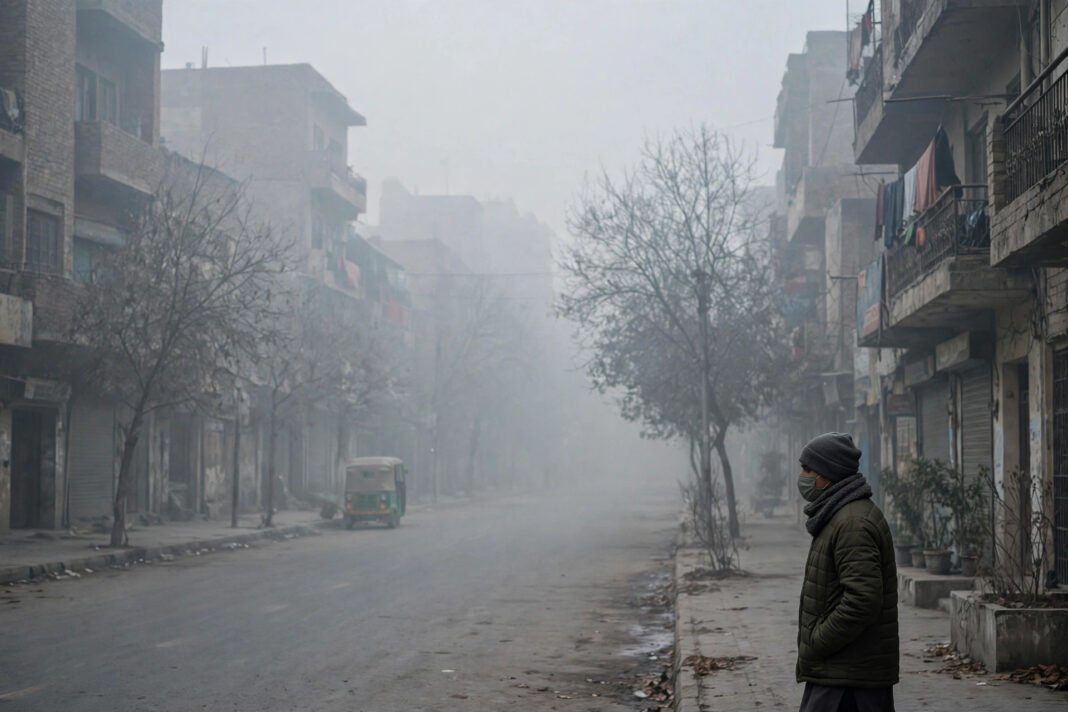
You wake up, open the window, and the street has vanished. A thick grey blanket covers the road, the trees, and the rooftops. Your eyes sting, your throat feels dry, and the air smells of smoke.
This is smog, and it has returned to Punjab this winter. On 12 November 2026, Lahore’s air quality index stood at 199, which counts as unhealthy. Families across Punjab are asking how bad it is, and what they can do about it. This article explains what smog does to your health, who is most at risk, and how you can protect your family.
What Is Smog in Punjab?
Smog is a mix of smoke and fog. It forms when smoke from vehicles, factories, and burning waste meets fog in cold, still air. As a result, a thick haze hangs over cities and villages for hours at a time.
Punjab gets smog every winter because cold air traps pollution close to the ground. In the morning, the air is cold and still, so the smog sits thick over roads and rooftops. Later in the day, the sun and wind may clear it a little, but it often returns the next morning.
The main danger in smog is PM2.5. These are tiny particles, far smaller than a grain of sand. Because they are so small, they go deep into the lungs. In fact, weather.com lists PM2.5 as the primary pollutant in Lahore’s air right now, and describes the conditions simply as “Smoke”.
Smog in Punjab is not new. It comes back every year as winter sets in, and it usually stays until the cold eases. This year, the early November readings have already reached hazardous levels.
How Bad Is the Air in Lahore Right Now?
The numbers this week show how serious the problem has become. On 10 November 2026, Lahore’s average air quality index was 303, which counts as very unhealthy. Some readings that day reached 563, which counts as hazardous.
An Associated Press report on 10 November, citing Punjab Environmental Protection Agency data, said Lahore’s air quality index had reached 421. That level also counts as hazardous. Then, on 11 November, IQAir put Lahore at 453, at the top of its global ranking of the world’s most polluted cities.
On 12 November, the index stood at 199, in the unhealthy range. That is lower than the days before, but it is still far from safe air. Experts quoted on 11 November said smog levels generally keep rising until 15 November, and then begin to decline.
The Pakistan Meteorological Department forecast on 11 November said morning fog or smog was possible at isolated locations in Lahore, Narowal, Sialkot, Gujranwala, Faisalabad, Multan, Kot Addu, and Bahawalpur. In other words, smog in Punjab covers much of the province, not just Lahore.
How Smog in Punjab Affects Your Lungs
Your lungs feel smog first. The tiny PM2.5 particles slip past your nose and throat and settle deep inside your lungs. As a result, the lining of your airways swells and feels sore.
For most people, this means a dry cough, a scratchy throat, and a feeling of tightness in the chest. You may also feel tired or get a headache after a few hours outside. These signs often fade after a day indoors, but they return as soon as you breathe smoggy air again.
For people with asthma, the danger is greater. Smog can trigger an asthma attack and make breathing very hard. People with long-term breathing problems may also find their cough gets worse and their medicines work less well. Because of this, people with lung problems should stay indoors on bad days, and keep their inhalers close.
Your throat also suffers. Smog dries out the lining of your throat, which is why so many people wake up with a sore throat on smoggy mornings. Drinking enough water can soothe it, but the soreness often comes back the next day if the air is still bad.
What Smog Does to Your Eyes and Heart
Smog does not stop at your lungs. It stings your eyes, makes them water, and can leave them red and sore. If you rub them, the irritation only gets worse.
Your heart is at risk too. The World Health Organization links particulate pollution with respiratory and cardiovascular disease. In other words, the same tiny particles that hurt your lungs can also strain your heart over time. People with heart disease should therefore take smog days seriously, even if they feel fine at first.
Who Is Most at Risk From Smog in Punjab?
Smog in Punjab harms everyone, but some people suffer more than others. Children are high on the list. The World Health Organization calls air pollution a major environmental risk to children’s health.
Older people also face a higher risk, and so do people with asthma or heart disease. Pregnant women are also in the high-risk group, so they should take extra care on bad days. If you have asthma or heart disease, keep your medicines ready and avoid going out when the air is thick.
Outdoor workers face the highest exposure of all. Traffic wardens, builders, street vendors, and rickshaw drivers spend the whole day outside. For them, a proper mask is not a choice but a daily need. Employers can also help by giving workers masks and letting them take breaks indoors.
How to Protect Yourself and Your Family
You cannot clear the smog in Punjab yourself, but you can lower the harm it does. These simple steps help a lot, and most of them cost nothing. Share them with your family, so everyone in your home knows what to do.
- Wear a proper mask when you go out. An N95 or KN95 mask filters fine particles, while a thin cloth mask does not.
- Stay indoors when the air looks thick or smells of smoke, and keep your windows and doors closed on bad days.
- Avoid outdoor exercise in the morning, when smog is worst.
- Check the air quality index before you go out, so you know what to expect.
- Keep inhalers and prescribed medicines close, and take them as your doctor told you.
- Drink enough water through the day.
- Do not burn waste or leaves, because the smoke adds to the smog.
- Use an air purifier at home if you have one.
Food also matters for your general health. A healthy diet supports your body, and foods rich in antioxidants are a good choice. Our article on foods with more antioxidants than beets lists simple foods, such as berries, spinach, and kale, that you can add to your meals.
Children still go to school during smog, so parents should send them with a proper mask. Remind them to avoid playing outside during breaks on bad days. You can also ask their school what steps it takes on smoggy mornings.
What the Government Is Doing
The Punjab government has decided not to close schools or colleges because of smog. On 11 November 2026, Punjab Education Minister Rana Sikandar Hayat said there would be no additional school holidays. Schools continue as usual, but he urged students to wear masks and follow government precautions.
Market timings will also stay as they are. The Environment Protection Department said smog levels in October 2026 were about 33% lower than the same month last year. In other words, the government says the air was cleaner than last October, even though it is still unhealthy.
The government is also acting against polluters. Deputy Director Environment Lahore Ali Ejaz said officials shut down and fined more than 30 factories involved in tyre burning. This happened on the directions of Senior Minister Marriyum Aurangzeb.
Punjab’s Pre-Smog Action Plan 2026 also includes drone-based monitoring. Drones help officials find pollution-causing activities from the air, so they can act faster. These steps aim to cut pollution at its source, before it becomes smog.
When Should You See a Doctor?
Most smog symptoms fade after a day or two indoors. However, some warning signs mean you should see a doctor soon. Do not wait if you notice any of these:
- Breathing that stays difficult
- Wheezing that does not stop
- Chest pain or tightness
- A cough that keeps getting worse
- Lips or face turning blue
These signs can mean your lungs or heart are struggling. Get medical help quickly. Do not try to wait it out at home if your breathing does not improve.
Smog in Punjab is a winter problem, and this year it has arrived with force. The air in Lahore has reached hazardous levels, and families across Punjab are breathing it every day. However, small steps, such as wearing a proper mask, staying indoors on bad days, and checking the air before you go out, can make a real difference.
The smog in Punjab will not clear in a day. Experts expect levels to keep rising until 15 November before they begin to fall. Until then, the best defence is simple: a proper mask, closed windows, and fewer hours outside.
Want to go deeper on smog in Punjab? Read our guides on whether schools are closed, how to drive safely in fog and smog, how to protect your home indoors, and what the government is doing to clear the air.
How are you and your family coping with the smog this winter? Tell us in the comments.
This article is for general information only and does not replace medical advice. If you have breathing problems, speak to a doctor.