Tirah Displaced Families to Return Home in Phases
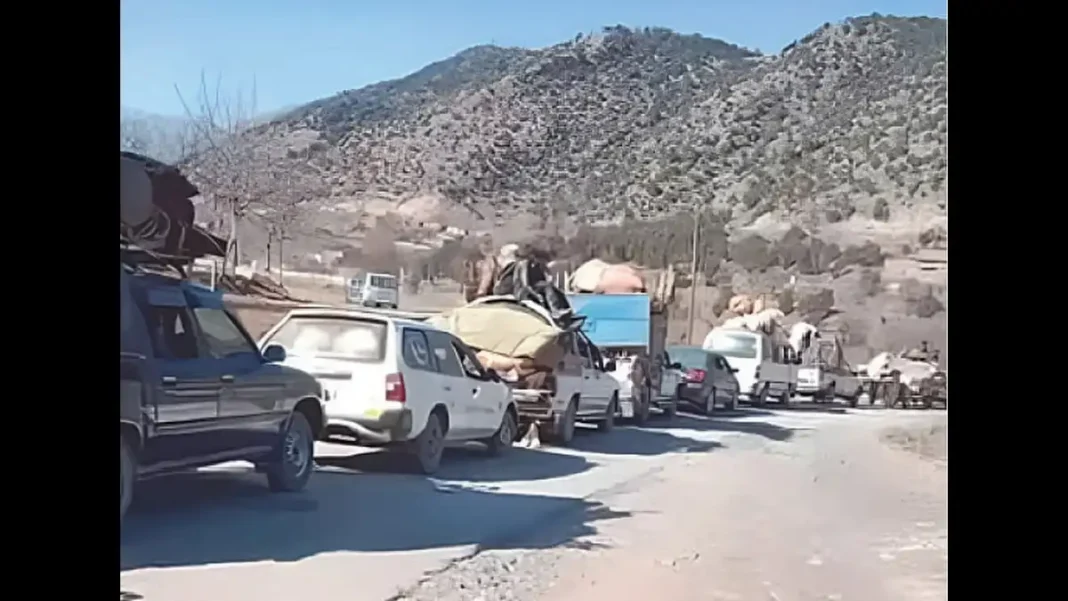
The Tirah IDPs return will take place in phases, the Khyber district administration announced on Tuesday, Dawn reported.
A 24-member committee of tribal elders will prepare the list of residents chosen for return. The administration will work with the committee to plan the organised return of around 600 displaced people in phases.
A notification issued by the Khyber House said the district administration would issue the list of selected people. One person from each displaced family will be selected for return on a daily basis, to prevent overcrowding and mismanagement during the process.
Tirah IDPs return: how it will work
Selected people will have to arrange their own transport for the journey to the valley. Only those whose names are approved by the administration will be allowed to leave for Tirah from the Naviya Kamar locality in Bara on the specified date.
“People whose names are not included in the initial lists shall wait for their turn and shall not come to Naviya Kamar in order to avoid any inconvenience,” the notification said.
The plan covers only a small group at first: around 600 people, one member per family each day, while the rest wait for later lists.
Displaced families raise objections
The Tehreek Mutasreen-i-Tirah (TMT), a group representing the displaced people, objected to the partial and limited return. Its spokesman, Suhbat Khan Afridi, told Dawn the new mechanism would add to the misery of the displaced families instead of easing their problems.
Afridi said it was unjust to allow only one person from each family to return to a valley where basic necessities of life were missing and the weather was fast turning hostile. One person from a family, without any government assistance, could neither repair a damaged house nor rebuild it, he said.
He said the government was giving the returning people neither financial assistance nor food packages and non-food items, which were needed before any individual or family returned.
Movement in the valley was also a problem, he said, because of heavy security checks and fears of militant attacks, and the area has yet to be de-notified by the security forces.
“The government shall take our utter helplessness into consideration while devising a plan to send the displaced families back as most Tirah residents currently living in Bara and its suburbs are passing through a very difficult phase of their lives. Most of them have exhausted their financial resources and are unable to bear the cost of such a hasty return,” he said.
He urged the authorities to arrange the return of all displaced families with honour and dignity, with enough financial assistance to rebuild their homes and restart a decent life.
A return plan withdrawn in September
The announcement follows an earlier plan that never took effect. In September, the district administration announced that all Tirah displaced people would return from October 10. The plan was later withdrawn without any reasons being given, to the disappointment of thousands of Tirah residents.
Displaced families had already questioned that October 10 return plan, asking how they could rebuild homes without support. The new phased plan answers part of that question by limiting numbers, but it leaves the main complaint untouched: the families say they need money, food and transport help before they go back.
The timing adds pressure. Winter is setting in across the tribal districts, and rain and snow have been forecast for the northern parts of the country. Families returning to damaged homes in the hills will face cold nights with little shelter. Schools in the neighbouring Bara area have already been disrupted, with girls’ schools closed in Bara this month.
What de-notification means
De-notification is the formal step by which security forces hand an area back to civilian control after a military operation. Until an area is de-notified, movement is restricted, checkpoints stay in place and residents need permission to travel.
Tirah has been under such restrictions since the displacement. The displaced families say the valley cannot support a normal return until the area is de-notified and basic services are restored.
What happens next
The committee of elders will now draw up the first list of names. The administration will then set the dates on which the selected people can travel from Naviya Kamar.
The test of the plan will be whether the first group reaches home safely and finds shelter, water and food on arrival. If the first phase goes badly, the families waiting in Bara will have little reason to trust the later phases.
Frequently asked questions
How many Tirah displaced people will return first?
Around 600 displaced people will be allowed to return in phases, with one person from each family selected each day.
Who decides which families return?
A 24-member committee of tribal elders will prepare the list, in consultation with the Khyber district administration.
Where do returning families depart from?
Selected people will leave for Tirah from the Naviya Kamar locality in Bara on the date specified by the administration.
Why are displaced families unhappy with the plan?
They say one person per family cannot repair a damaged house alone, and the government is giving no financial assistance, food packages or transport help.
What happened to the earlier October 10 return plan?
The district administration announced in September that all Tirah displaced people would return from October 10, but the plan was later withdrawn without any reasons being given.