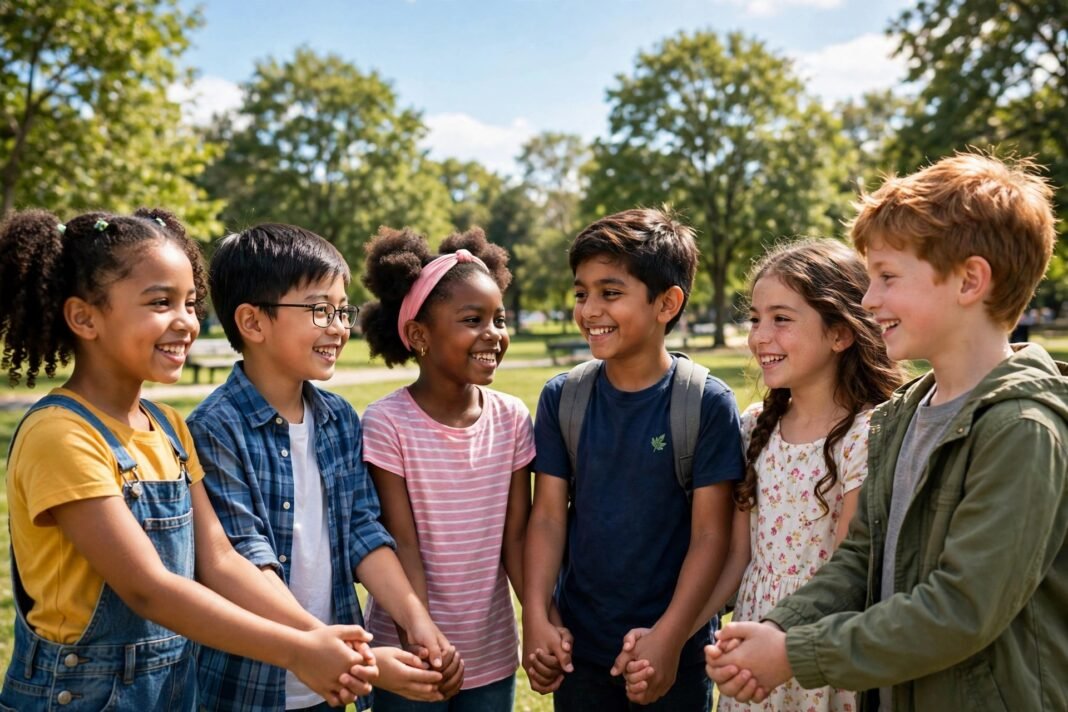
Every child has a voice. And every child has the right to use it. World Childrens Day 2026 gave children around the world a day to speak up about their lives, their rights, and the future they want. It fell on Friday 20 November 2026. But its message does not end with the day. So here is what the day means, and why every child has rights that matter all year long.
What Is World Childrens Day 2026?
World Childrens Day 2026 is a global day of action for children, by children. UNICEF leads it. On this day, children share their ideas with the people who make decisions about their future. In fact, the day exists so that adults hear children’s voices, not just their needs. Around 190 countries take part in the day’s activities each year.
For example, children take over roles in media, politics, business, sport and entertainment. These takeovers put a spotlight on the issues that matter most to them. As a result, adults hear directly from children, instead of only talking about them.
Why 20 November Matters
The date is not random. On 20 November 1959, the United Nations General Assembly adopted the Declaration of the Rights of the Child. Then, on the same date in 1989, it adopted the Convention on the Rights of the Child. As a result, 20 November now marks both milestones. The United Nations had already set up Universal Children’s Day in 1954. Today, most people know the day as World Children’s Day.
More countries have ratified the Convention than any other human rights treaty. It has 54 articles. Together, they set out the rights of every child. In other words, the whole world agreed that children have rights of their own.
World Childrens Day 2026 Theme: My Day, My Rights, My Future
The 2026 theme is “My day. My rights. My future.” It has three simple parts. The first part, “my day”, means a happy childhood, with time to learn and play. The second part, “my rights”, means protection, learning, good health and a voice in decisions. The third part, “my future”, means a say in the world children will grow up in. Above all, the theme asks adults to listen to children today, so that children can shape tomorrow.
What Children’s Rights Mean in Plain Words
Children’s rights are human rights. They are not extras, and they are not optional. Every child has the right to protection from harm. School and learning are rights too, not favours. Good health and care when they are ill are rights as well. And every child has the right to share their views and have adults take them seriously.
Good health is one of those rights. So parents need to know when a child needs care, and when to seek help. Here is how to spot throat and chest infections in children, and what to do next.
Governments and adults have a duty to protect these rights. But in too many places, people still misunderstand or deny children’s rights. That is why the day matters. It reminds the world that promises to children must turn into action.
A Future Shaped by AI
This year, one focus is artificial intelligence. AI is changing the world fast, and it is changing children’s lives too. It can open new chances to learn and create. But it also brings hidden risks. Children’s rights should never be an afterthought in this new world. So this year, children get to say what matters most to them: privacy, safety and inclusion. Their answers will help shape a Children’s Manifesto on Child Rights and AI. In short, children get a say in how new technology treats them.
How Families Can Mark the Day
You do not need a big event to mark the day. Start at home. Sit down with your child and ask what kind of future they want. Then listen, and take their answer seriously. For example, ask what would make their school day better, or what worries them most. Listening to a child’s feelings takes patience, and these calm techniques can help when feelings run high.
Schools and communities can join in too. Many schools light up blue on 20 November to show support for child rights. Children can also share their ideas with teachers and local leaders. Finally, remember that the day is not only about one date. Listening to children is a habit worth keeping all year. Parents need support too, because a child thrives when their family is supported. Here is a guide to childcare rights for working mothers around the world.
World Childrens Day 2026 fell on 20 November, but its message lasts all year. So here is a question for every adult reading this. When was the last time you asked a child what they want for their future — and really listened to the answer?