Shenzhou-24 Launch Carries Pakistan’s Zeeshan Ali Into Orbit
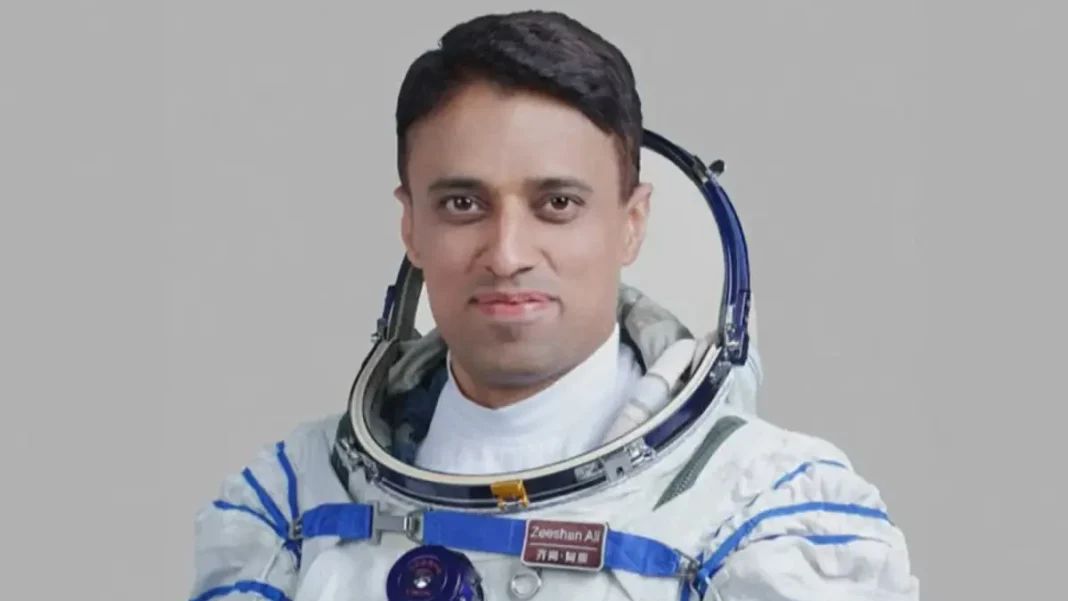
The Shenzhou-24 launch carried Muhammad Zeeshan Ali into orbit at 5:18am Pakistan time on Wednesday, making him the first Pakistani to travel into orbit and the first foreign astronaut to board China’s Tiangong space station. A Long March-2F rocket lifted the spacecraft from the Jiuquan Satellite Launch Centre in northwest China at 8:18am Beijing time, Reuters reported.
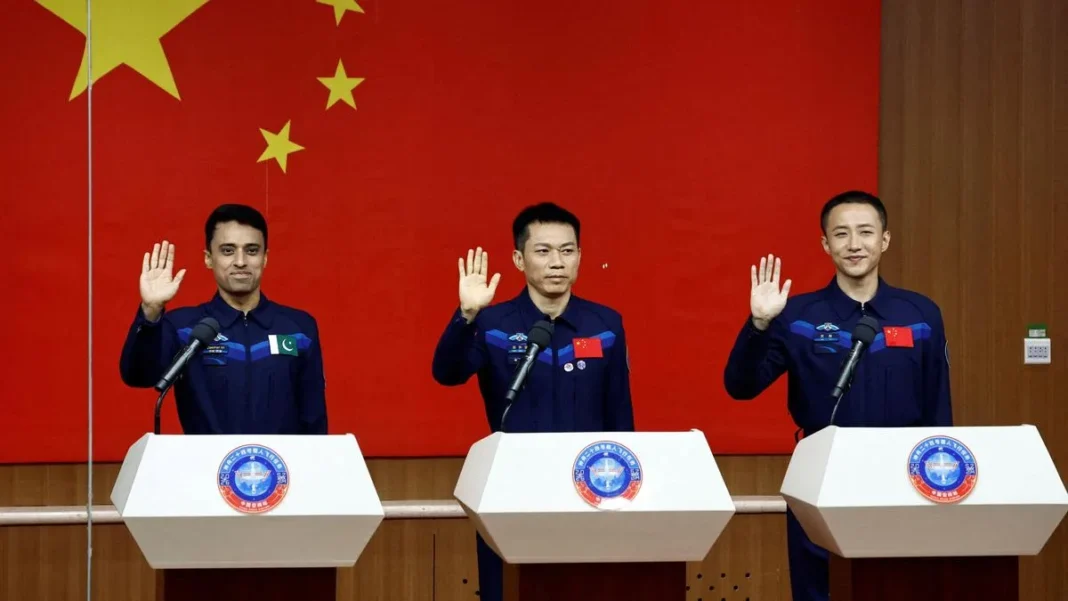
Ali, a 40-year-old Pakistan Air Force pilot, flew as payload specialist alongside mission commander Tang Hongbo, 51, and flight engineer Wu Yi, 39. The spacecraft was due to dock with Tiangong around three and a half hours later. Ali will spend around a week on the station, and Dawn reported the crew will conduct around 90 experiments during the mission.
What the Shenzhou-24 launch means for Pakistan
Pakistan has no launch vehicle or crewed spacecraft of its own, so the flight is its first entry into human spaceflight. Chinese state media first reported on November 7 that a Pakistani astronaut would fly on the mission. Suparco signed a cooperation agreement with the China Manned Space Agency in February 2025, and Ali and fellow pilot Khurram Daud were chosen in April to train in China, after screening that began with around 20 finalists. Daud is Ali’s backup. A launch drill earlier this month cleared the way, and Ahsan Iqbal travelled to Beijing as the final pick neared.
Pakistanis can follow the mission through a new Suparco portal. The Suparco Mission Hub, at astronaut.suparco.gov.pk, carries a dashboard with the station’s modules, a mission timeline and a countdown clock. Visitors can download a boarding pass by entering their name and city, track the station live over Pakistani cities, and send good wishes to the crew.
I carry the name of Pakistan on my shoulders
At a press briefing on Tuesday, Ali said he was deeply grateful to China for helping Pakistan realise its dream of going into space.
“This mission is not a finish line; it is a launch pad. And I hope the next chapter of China-Pakistan space cooperation will grow from one astronaut, one flight to multiple joint flights, to the Moon, Mars and beyond,” he said.
Addressing Pakistanis, he said: “I want to assure you that I am not flying for myself. I carry the name of Pakistan on my shoulders, the hopes of 250 million Pakistanis,” he said. “To every child who is watching while I am in orbit, just look up at the sky and remember that I am up there with your dreams.”
Ali trained for seven months in Beijing, learning Chinese, songs, poetry and calligraphy. As payload specialist, his work in orbit centres on science. Four biotechnology experiments from Pakistani universities are part of the mission, and CCTV said he will also run one on photosynthetic microorganisms.
Pakistan reacts
President Asif Ali Zardari called the flight a landmark achievement and a moment of immense national pride, and quoted Allama Iqbal: “Sitaron se aagay jahan aur bhi hain.”
In a post on X on Monday, before the launch, Prime Minister Shehbaz Sharif said the country looked to the skies with anticipation, pride and deep gratitude. He paid tribute to Suparco and the armed forces, and thanked Chinese President Xi Jinping. “Pakistan-China friendship is surpassing the heights of the Himalayas, in its journey to outer space,” he wrote. Dunya News reported both messages and noted Ahsan Iqbal attended the farewell ceremony, where Pakistani flags were hoisted.
A first, with one distinction
Ali is the first Pakistani in orbit, though not the first Pakistani to travel to space. Polar explorer Namira Salim flew on Virgin Galactic’s Galactic 04 mission in October 2023, a short suborbital flight. Tiangong has been fully operational since late 2022. China was barred from the International Space Station in 2011, so it built its own station.
What happens next
Once docked, Ali will join the Shenzhou-23 crew on Tiangong for experiments and station work. After around a week, he will board Shenzhou-23 with Zhang Zhiyuan and Lai Ka-ying, the first astronaut from Hong Kong, and return to Earth. Shenzhou-23 commander Zhu Yangzhu will stay on for a year, a record single stay for a Chinese astronaut.
Frequently asked questions
When did Shenzhou-24 launch?
At 5:18am in Pakistan on Wednesday, November 25, 2026, aboard a Long March-2F rocket from Jiuquan.
Who is Zeeshan Ali?
A 40-year-old Pakistan Air Force pilot and the mission’s payload specialist, the first Pakistani in orbit.
How long will he stay in space?
Around a week. He will return aboard Shenzhou-23 with Zhang Zhiyuan and Lai Ka-ying.
What experiments will he conduct?
Around 90 experiments, including four biotechnology experiments from Pakistani universities.
How can Pakistanis follow the mission?
Through Suparco’s Mission Hub portal at astronaut.suparco.gov.pk, with a dashboard, boarding pass and live tracking.