Pakistan and Saudi Arabia have completed their ratification processes for the Makkah Joint Defence Agreement (MJDA), the Foreign Office confirmed on Friday, while Turkiye is still taking the trilateral pact through its domestic legal procedures. The announcement marks a concrete step forward for the Makkah defence pact, whose text became public only after Ankara submitted it to the Turkish parliament for approval.
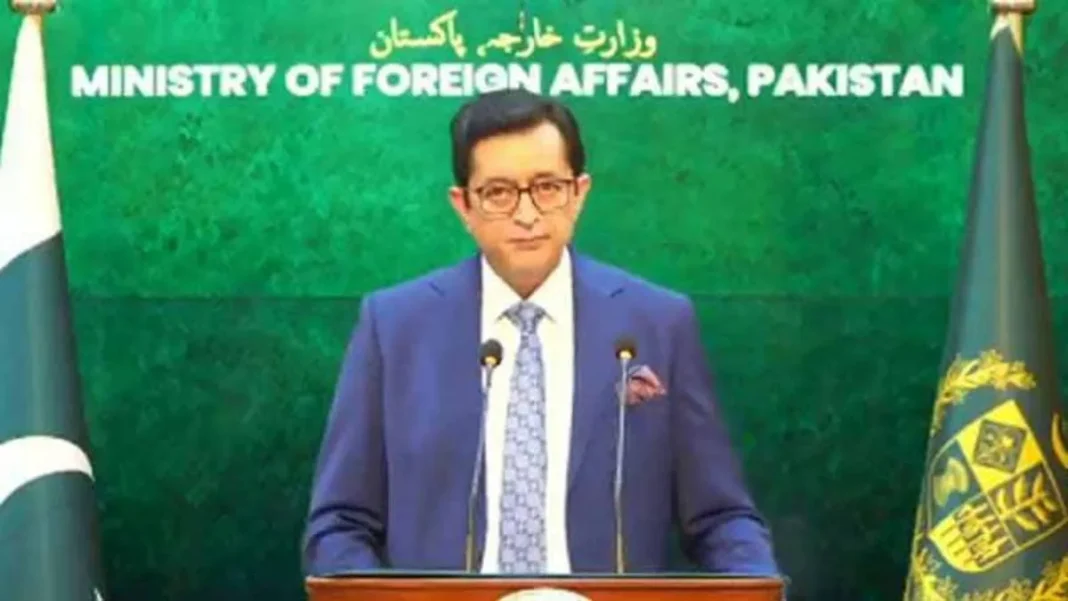
“Pakistan and the Kingdom of Saudi Arabia have already completed their ratification processes, while Turkiye is undertaking the requisite procedures in accordance with its domestic legal framework,” Foreign Office spokesperson Sajjad Haider Khan told the weekly press briefing in Islamabad.
Khan said the agreement comprised 16 articles and contained no hidden provisions, endorsing the text released through the Turkish parliament. “There are no hidden provisions; the agreement is explicit and clear in its provisions and articles,” he said. He added that ratification and operationalisation were being deliberated through the trilateral Strategic Political and Defence Committee, which last met on October 5.
What the Makkah defence pact covers
The spokesperson stressed the defensive character of the pact, saying it was consistent with the United Nations Charter and aimed at promoting regional peace, security and stability. Article 2 of the agreement treats an external armed attack on any party as an attack on all three.
Asked whether that clause would cover Houthi attacks on Saudi Arabia, Khan said the pact was defensive and consistent with Article 51 of the UN Charter. It was “not directed against any particular country,” he said, adding that the nature and extent of any assistance would be decided collectively by the three countries after an objective assessment of the circumstances.
Khan also pointed to the agreement’s mechanism for invoking it, noting that any such decision rested with the three partners. Pakistan “remains fully committed to the letter and spirit of the agreement,” he said.
Ratification journey so far
The confirmation follows months of public debate in Pakistan over the pact’s scope. The Foreign Office has previously said that signing the agreement and committing military capabilities under it were executive functions under Pakistan’s national laws and Rules of Business, and did not necessarily require parliamentary approval.
That position matters because Pakistani personnel are already deployed in Saudi Arabia under previous bilateral arrangements. The government has maintained that any decision on troops would be taken under the applicable legal framework, while stressing that forces committed under the pact would be used for defence, not for attacks inside Yemen.
The defence committee’s October 5 meeting came amid a sharp escalation in regional tensions. Houthi missile and drone strikes have repeatedly targeted Saudi airports and energy infrastructure in recent weeks, killing at least three people and prompting Pakistan, Turkiye and Saudi Arabia to order rapid force deployment under the pact. Pakistani troops have served in the Kingdom for decades under earlier arrangements, a history the government cites when describing the MJDA as an extension of a longstanding partnership rather than a new entanglement.
Regional picture
The spokesperson also used the briefing to restate Pakistan’s wider diplomatic posture. Deputy Prime Minister Ishaq Dar, who met his Turkish and Egyptian counterparts earlier this week, has since arrived in Istanbul for Regional Four talks and a first-ever seven-nation session with the United Kingdom, France and Germany. Khan rejected Indian remarks on OIC resolutions on Kashmir and said Pakistan would engage Afghanistan if Kabul acknowledged terrorist threats from its soil and agreed to a verifiable mechanism to stop them.
With two of the three partners now having completed ratification, the MJDA’s entry into force hinges on Ankara’s parliamentary process — and on how the capitals operationalise a pact that binds them to treat an attack on one as an attack on all.
Frequently asked questions
What is the Makkah Joint Defence Agreement?
The MJDA is a trilateral defence pact between Pakistan, Saudi Arabia and Turkiye, signed in Makkah. Its 16 articles include a collective-defence clause treating an external armed attack on any party as an attack on all three.
Has Pakistan ratified the Makkah pact?
Yes. The Foreign Office confirmed on October 23, 2026 that Pakistan and Saudi Arabia had completed their ratification processes. Turkiye is still completing its domestic legal procedures.
Does the pact have hidden provisions?
No, according to the Foreign Office. Spokesperson Sajjad Haider Khan said the agreement was “explicit and clear” and endorsed the 16-article text made public through the Turkish parliament.