Supreme Court Seeks AGP’s Help on Ex-FATA Jurisdiction Question
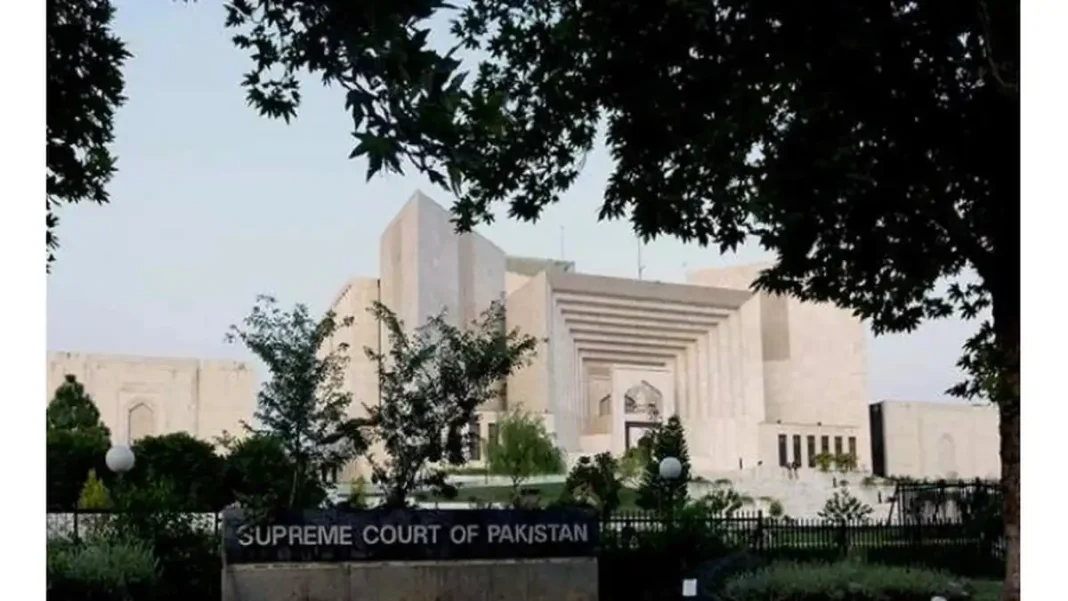
The Supreme Court on Friday issued a notice to the Attorney General for Pakistan and sought legal assistance on its jurisdiction over cases originating from the former Federally Administered Tribal Areas, reopening a constitutional question that has lingered since the tribal belt’s merger with Khyber Pakhtunkhwa.
A two-member bench comprising Justice Malik Shahzad Ahmad Khan and Justice Aqeel Ahmad Abbasi was hearing an appeal against a 14-year prison sentence awarded to a man accused of providing shelter and food to Taliban militants. The court directed the AGP, the Khyber Pakhtunkhwa government’s law officer and the appellant’s counsel to assist it on the legal questions involved.
The case dates back to before the 25th Constitutional Amendment merged FATA with Khyber Pakhtunkhwa in 2018 — and that timing is precisely what has created the ex-FATA jurisdiction puzzle now before the court.
A 14-year sentence built on a food allegation
During the hearing, Justice Malik Shahzad Ahmad Khan questioned the foundations of the conviction. He asked whether any Taliban militant had actually been arrested from the appellant’s house, noting that the allegation was that the man had provided food to the militants.
The provincial law officer, Arshad Hussain Yousafzai, replied that a joint investigation team report was available. The judge observed that while the JIT report was important, its findings still had to be proved in court.
Justice Aqeel Ahmad Abbasi also asked whether food had been provided to the militants, while Justice Khan remarked that it was unclear what food had allegedly been prepared and served. He observed that both sides in the case had suffered in one way or another.
Why the merger created an ex-FATA jurisdiction gap
Before 2018, the seven tribal agencies were governed under the Frontier Crimes Regulation, with political agents wielding near-absolute authority and the regular court system largely absent. The 25th Amendment abolished that order and extended the jurisdiction of the superior courts to the merged districts.
But cases registered before the merger — investigated under the old system, tried under transitional arrangements — have repeatedly raised the question of which court can finally decide them. The Peshawar High Court had already declared that it lacked jurisdiction in this matter and sent it back, with Justice Khan noting that the high court’s position suggested the authority to dispense justice lay elsewhere.
That is the vacuum the Supreme Court is now being asked to address: when neither the high court nor the old tribal apparatus clearly owns a pre-merger case, where does the appeal go?
The court’s notice to the AGP signals that the answer could set a precedent for a whole category of pending cases from the former tribal areas — matters where convictions were recorded years ago but the legal forum for appeal remains contested.
Feature Pakistan has followed the superior courts’ handling of sensitive cases, including the bail proceedings for Imaan Mazari and the Supreme Court’s rulings on service litigation. The courts have also been tightening their own procedures, with the LHC barring filming and phone confiscation inside courtrooms. Questions of jurisdiction, the bench’s move suggests, can matter as much as the merits of any single appeal.
Frequently asked questions
What is the ex-FATA jurisdiction question before the Supreme Court?
The court is examining whether and how it can hear appeals in cases that originated in the former tribal areas before their 2018 merger with Khyber Pakhtunkhwa under the 25th Amendment.
What case triggered the Supreme Court’s notice?
An appeal against a 14-year prison sentence given to a man accused of sheltering and feeding Taliban militants. The bench questioned whether any militant had been arrested from his house.
Why did the Peshawar High Court not decide the case?
The Peshawar High Court ruled that it lacked jurisdiction and referred the matter back, leaving the question of the correct forum unresolved.
Who will assist the court on the legal questions?
The Attorney General for Pakistan, the Khyber Pakhtunkhwa government’s law officer Arshad Hussain Yousafzai, and the appellant’s counsel Mehnaz Advocate have all been asked to assist.