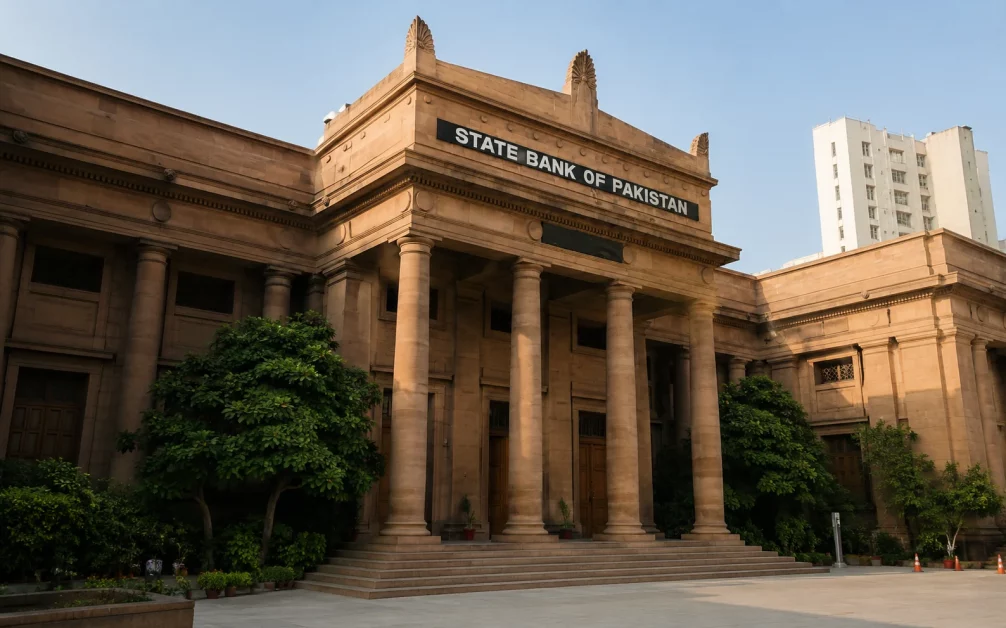
More Pakistanis are entering the formal financial system, the State Bank of Pakistan said on Wednesday, as the Pakistan financial inclusion index rose to 59.5 for 2025 from 58.1 a year earlier. The central bank credited the increase to wider use of financial services and improvements in access and service quality.
The result reflects progress under the National Financial Inclusion Strategy (NFIS) 2024-28, the SBP’s five-year plan to bring more people and businesses into the regulated financial system.
Digital payments drove the rise
The increase came mainly from growth in the Usage sub-index, followed by improvements in the Access and Quality sub-indices. In plain terms, Pakistanis are not just opening accounts but actually using them more.
The SBP pointed to four drivers. Merchants are being onboarded to Raast, the instant payment system. The digital payments ecosystem is expanding. New digital banks are taking shape. And account-opening drives are pulling first-time users into the system.
The central bank added that these gains were supported by a stronger focus on consumer needs and financial literacy, meaning people understand the products better and services are built around how they actually behave.
How the Pakistan financial inclusion index works
The Pakistan Financial Inclusion Index (P-FII) is the SBP’s official yardstick for measuring how financially included the country is. It was introduced in December 2025 and tracks three dimensions: Access, Usage and Quality.
The index combines 69 indicators covering banking, non-banking and payment services, from branch and ATM networks to mobile banking activity and the quality of customer service. Each indicator is benchmarked against a defined target that the SBP aims to reach by 2030, giving policymakers an evidence-based way to see where gaps remain.
The 2024 score of 58.1 served as the baseline. The 2025 reading of 59.5 shows the country moving in the right direction, though the gap to the 2030 targets remains large.
The road to the 2028 target
Under the NFIS 2024-28, the SBP has set a target of raising financial inclusion to 75 percent by 2028, up from 64 percent in 2023. It also wants to narrow the gender gap in financial inclusion from 34 percent to 25 percent over the same period.
The strategy also includes an Innovation and Fintech Hub in Karachi, an open banking framework and a pilot to turn 20 villages into fully digital ecosystems.
Index snapshot:
| Measure | 2024 | 2025 |
|---|---|---|
| Pakistan Financial Inclusion Index | 58.1 | 59.5 |
| Main driver | Baseline year | Usage sub-index growth |
| Secondary drivers | n/a | Access and Quality sub-indices |
| Policy framework | NFIS 2024-28 | NFIS 2024-28 |
| 2028 target | n/a | 75 percent inclusion |
FAQ
What is the Pakistan financial inclusion index?
The Pakistan Financial Inclusion Index (P-FII) is a composite measure published by the State Bank of Pakistan. It assesses access to, usage of and the quality of financial services across the country, combining 69 indicators from banking, non-banking and payment services.
Why did the index rise in 2025?
The rise was led by growth in the Usage sub-index, with Access and Quality also improving. Key contributors were merchant onboarding to the Raast payment system, expansion of digital payments, the introduction of digital banks and account-opening drives, backed by financial literacy efforts.
What is Raast and why does it matter here?
Raast is Pakistan’s instant payment system, run by the SBP. Getting merchants onto Raast lets small businesses accept digital payments cheaply, which brings everyday commerce into the formal financial system and drives the index’s Usage component.
What is the 2028 inclusion target?
Under the National Financial Inclusion Strategy 2024-28, the SBP aims to raise financial inclusion to 75 percent by 2028 and reduce the gender gap from 34 percent to 25 percent.
How often is the index published?
The SBP launched the P-FII in December 2025 and publishes it annually, with the 2024 score of 58.1 serving as the baseline for measuring progress toward the 2030 targets.
Related stories
- AMC-X concludes in Karachi with call to turn financial inclusion into economic progress
- Small Businesses Can Get Rs3 Million Digital Financing in Pakistan Through New SECP Facility
- KissanPay Launched as Pakistan’s First Shariah-Compliant Agri-Fintech Platform
- Pakistan Approves First Digital Retail Bank Pilot
Originally reported by propakistani.pk.