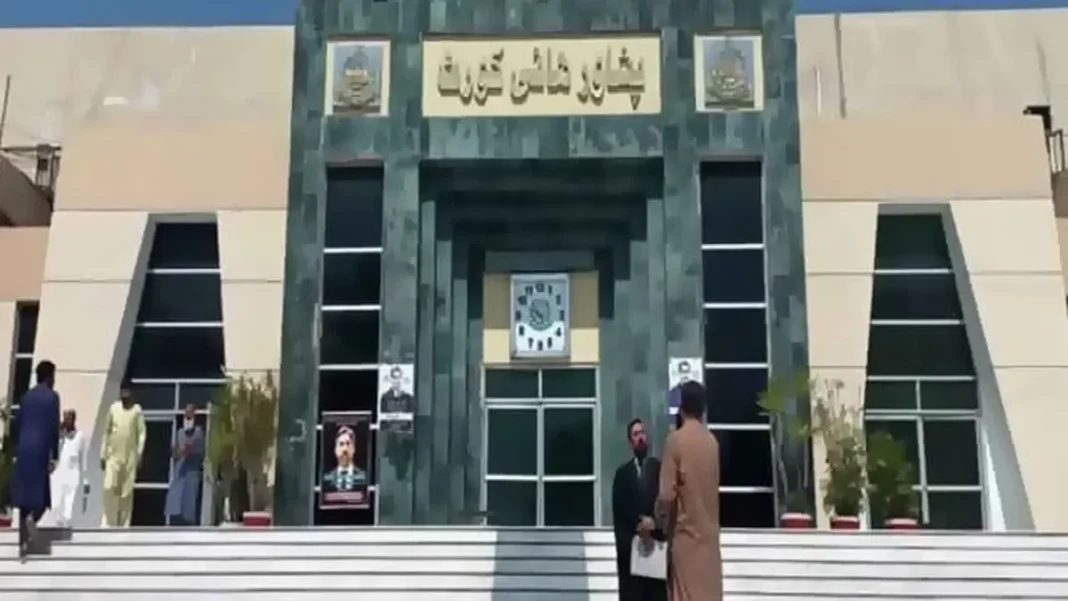
PHC Suspends Article 199 Petitions After FCC Order
The Peshawar High Court has suspended the hearing of all writ petitions filed under Article 199 of the Constitution on or after October 12, 2026, following an order by the Federal Constitutional Court. The PHC suspends Article 199 petitions filed on or after that date, and will not accept new ones.
The administrative committee of the PHC issued immediate implementation instructions on the Federal Constitutional Court’s November 5 decision. The committee comprises Chief Justice of the PHC Justice SM Atiq Shah, Justice Ijaz Anwar, Justice Syed Arshad Ali, Justice Sahibzada Asadullah and Justice Naeem Anwar.
According to the directive sent to the Additional Registrar (Judicial), writ petitions filed on or after October 12 will not be fixed for hearing. New petitions will neither be received nor entertained, and will be returned with advice to approach the relevant forum.
What the PHC suspends Article 199 petitions order means
Article 199 gives the high courts the power to issue writs for the enforcement of fundamental rights. It is the provision under which citizens challenge unlawful detention, official action and other breaches of their rights. Suspending hearings under it, even for a defined class of petitions, is a significant step.
The suspension applies only to petitions filed on or after October 12, 2026; earlier petitions will continue to be heard.
The order flows from a judgment of the Federal Constitutional Court. A bench headed by Chief Justice Aminuddin Khan and comprising Justice Aamir Farooq issued the orders a day earlier, while hearing appeals filed by the Khyber-Pakhtunkhwa government against interim orders of the PHC.
Those interim orders had restrained arrests of political workers under Section 3 of the Maintenance of Public Order (MPO) Ordinance and directed the release of detained activists. Feature Pakistan covered those MPO detention cases when the FCC took them up.
Why the FCC suspended the petitions
In its written judgment, the Federal Constitutional Court held that since the armed forces have been called in aid of the civil administration in Khyber-Pakhtunkhwa under Article 245 of the Constitution, proceedings on petitions filed under Article 199 on or after October 12 stand suspended by virtue of Article 245(4).
Article 245 allows the armed forces to act in aid of civil power when called upon to do so. Article 245(4) provides that when the armed forces are so deployed, the jurisdiction of the high courts under Article 199 stands suspended for the period of the deployment in the affected area, to the extent specified.
The FCC’s reasoning connects the two provisions directly. Because the armed forces are deployed in aid of the civil administration in Khyber-Pakhtunkhwa, and because that deployment began on October 12, petitions filed from that date fall within the suspension.
The court directed the Advocate General of Khyber-Pakhtunkhwa to submit a detailed report within seven days, identifying areas where the continued presence of the armed forces is no longer required. It clarified that after examining the report, the suspension order could be reviewed.
What happens to people who need the courts
The immediate effect is practical. A person who wants to challenge an arrest, a detention or any other official action in Khyber-Pakhtunkhwa through an Article 199 petition filed on or after October 12 will not get a hearing in the Peshawar High Court for now. New petitions will be returned with advice to approach the relevant forum.
The FCC has also ruled on other Khyber-Pakhtunkhwa matters, including a JUI-F reserved-seat appeal and the treatment of Imran Khan in jail.
For now, the seven-day report from the Advocate General is the next step. Its findings will determine whether the suspension is narrowed, lifted in some areas, or left in place.
Which petitions are affected?
Writ petitions filed under Article 199 on or after October 12, 2026, in the Peshawar High Court. Earlier petitions are not affected.
Why did the Peshawar High Court act?
Its administrative committee issued implementation instructions after the Federal Constitutional Court ruled on November 5 that Article 199 proceedings stand suspended under Article 245(4) while the armed forces are deployed in aid of the civil administration in Khyber-Pakhtunkhwa.
What did the FCC decide?
The FCC held that since the armed forces were called in aid of the civil administration under Article 245, petitions under Article 199 filed on or after October 12 stand suspended. The ruling came in appeals by the Khyber-Pakhtunkhwa government against PHC interim orders on MPO detentions.
Can the suspension be reviewed?
Yes. The FCC directed the Advocate General of Khyber-Pakhtunkhwa to report within seven days on areas where the armed forces presence is no longer required, and said the suspension could be reviewed after examining that report.