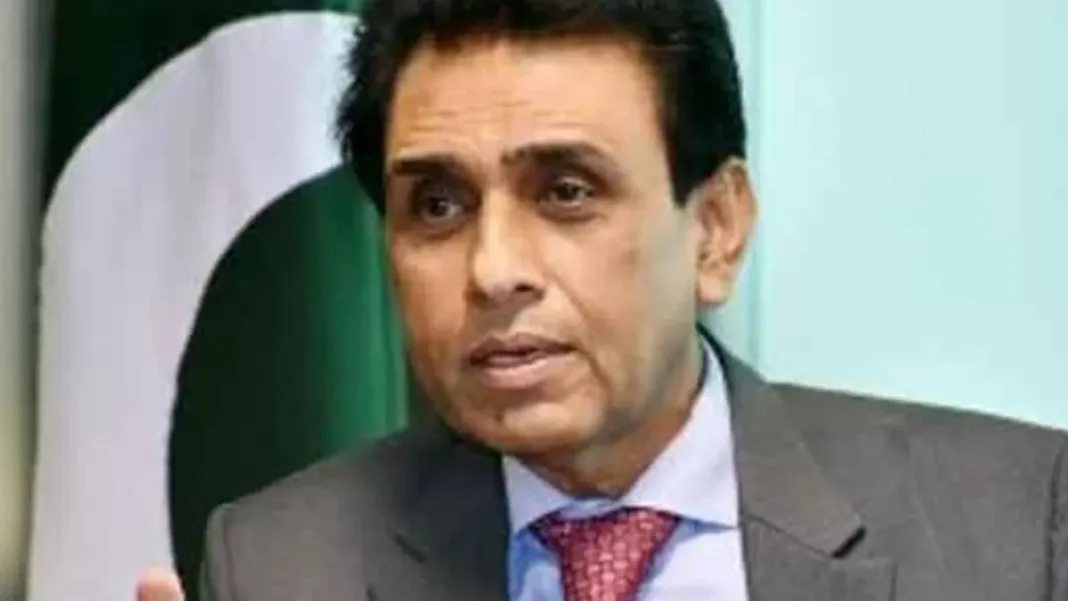
One hundred Basic Education Community Schools in Karachi have received solar panels from Federal Education Minister Dr Khalid Maqbool Siddiqui, so that lessons can continue through the city’s persistent power cuts. Karachi community schools will now be able to teach through the cuts that have long disrupted lessons for children from poor families.
The minister pledged to extend the initiative to Hyderabad, Mirpurkhas and Tando Allahyar, taking the solar model from Karachi to interior Sindh.
The distribution ceremony was held at Liaquat Memorial Library, where Siddiqui, who also chairs the Muttahida Qaumi Movement-Pakistan (MQM-P), attended as chief guest alongside Director General Basic Education Community Schools Hameed Khan Niazi and other education officials.
Karachi community schools: why solar power matters
Siddiqui said the government was confronting a mindset that not only denied itself education but also sought to deprive others of the opportunity to learn. He pledged to expand the community schools network from Karachi to interior Sindh, adding that students would receive vocational skills alongside education.
He said electricity shortages had emerged as a major obstacle after discussions with teachers revealed the difficulties faced by children from impoverished backgrounds. The 100 schools had been established without purchasing new buildings, while the solar initiative was launched to ensure students could continue learning without disruption.
That detail matters. The community schools work out of existing spaces in the neighbourhoods they serve, which keeps costs low and puts classrooms within walking distance of the children who need them. Power cuts were the weak link: a classroom without light or a fan in Karachi’s heat is a classroom where children stop coming. Solar panels fix the problem at the source, without waiting for the grid to improve.
5,000 students and trained teachers
Niazi said around 5,000 students were enrolled in the 100 schools and that teachers had received professional training, including orientation and Khan Academy programmes.
The training matters as much as the panels. Community school teachers often work with children who have missed years of schooling, and structured programmes give them tools to bring those children up to grade level. Pairing that with vocational skills, as Siddiqui promised, gives older students a path to work as well as to literacy. The focus on skills runs through the government’s education push: the prime minister has set a target of one million AI professionals by 2030, the Higher Education Commission has honoured 23 science olympiad students, and Khyber Pakhtunkhwa’s governor has backed scooter financing for students to cut the cost of getting to class.
Siddiqui also appealed to philanthropists to support education in the city’s vast informal settlements and urged welfare organisations to provide breakfast to underprivileged schoolchildren rather than limiting their food assistance to roadside distributions.
The breakfast appeal points to a problem teachers see every day: children who arrive hungry cannot concentrate, and a meal at school is often the reason a family keeps sending a child to class. Welfare groups already feed people on Karachi’s streets; Siddiqui wants some of that effort moved into classrooms, where it keeps children learning.
What happens next
The test of the programme will be the expansion beyond Karachi. Hyderabad, Mirpurkhas and Tando Allahyar have the same mix of power shortages and out-of-school children, and the same community-school model could work there if the funding follows. The federal government has already pushed school reforms in Islamabad, and Karachi University has revised its admission quotas to widen access in the same city.
For now, 100 schools and about 5,000 students in Karachi have light and fans that do not depend on the grid. In neighbourhoods where the state has often arrived late, that is a practical change families will notice every school day.
Frequently asked questions
How many Karachi community schools got solar panels?
Solar panels were distributed to 100 Basic Education Community Schools in Karachi, which together enrol around 5,000 students.
Who distributed the solar panels?
Federal Education Minister Dr Khalid Maqbool Siddiqui distributed the panels at a ceremony at Liaquat Memorial Library in Karachi.
Will the scheme expand beyond Karachi?
Yes. Siddiqui pledged to extend the initiative to Hyderabad, Mirpurkhas and Tando Allahyar, and to expand the community schools network from Karachi to interior Sindh.
What training have the teachers received?
According to Director General Hameed Khan Niazi, teachers received professional training, including orientation and Khan Academy programmes.