Differences inside the Pakistan Tehreek-e-Insaf have put the TTAP organisation plan on hold, with the opposition alliance and the party giving conflicting accounts of whether the PTI ever backed the move.
The Tehreek-e-Tahafuz-e-Aain-e-Pakistan (TTAP) said in mid-October that, with the PTI’s backing, it planned to build its own political arm and a formal organisational structure at the provincial level. Provincial chapters were asked to develop their structures and set up working and research groups. The move was meant to fix the PTI’s organisational problems and strengthen TTAP’s political role. Feature Pakistan reported the plan on October 15.
The plan has now stalled. TTAP spokesperson Akhunzada Hussain confirmed that the move to build a formal organisational structure has been put on hold because of the differences inside the PTI.
Why the TTAP organisation plan stalled
PTI sources said the publication of the mid-October report triggered friction between the two sides, with PTI leaders expressing strong reservations about the proposed arrangement. TTAP leaders Asad Qaiser and Akhunzada Hussain faced criticism from within the PTI, with party leaders reminding them of their political standing and warning that they could be called back from TTAP if required.
The sources questioned why the PTI would support the creation of a parallel political structure. They argued that it would allow individuals with little independent political standing to pursue a long-held ambition. They also pointed out that several TTAP leaders, including Allama Nasir Abbas and Mahmood Khan Achakzai, had failed to mobilise support beyond their own constituencies.
When the matter was discussed inside the party, the sources added, PTI leaders distanced themselves from any such commitment.
TTAP’s version of events
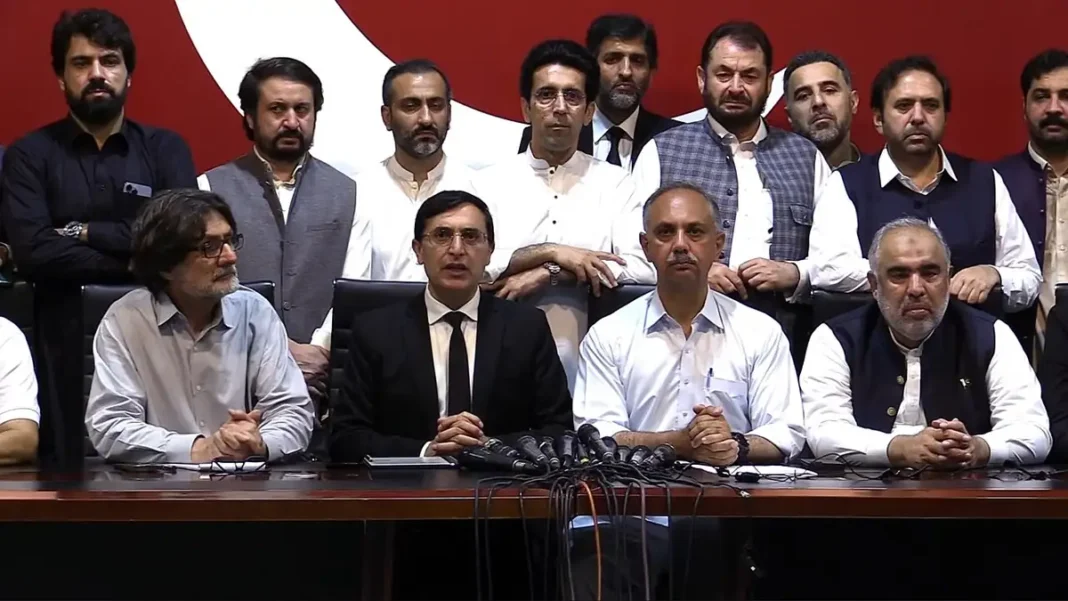
Hussain disputed that account. He said the proposal had been discussed at a meeting attended by PTI Chairman Barrister Gohar Ali Khan and Secretary General Salman Akram Raja, both of whom had endorsed the suggestion to allow TTAP to establish its own political arm.
He said TTAP later learnt through intermediaries that there was resistance within the PTI to the understanding reached at the meeting. He maintained, however, that the PTI had never formally communicated any reservations to TTAP.
“Whenever the next meeting takes place, we will put this issue on the agenda and ask PTI’s leadership that if it cannot get its own party to agree to decisions endorsed by its representatives at TTAP, then it should refrain from taking decisions on the party’s behalf,” he said.
PTI denies the plan was approved
The PTI’s central information secretary disputed the spokesperson’s account. He said Barrister Gohar had categorically told him that the proposal had not been approved as a formal agenda item during the meeting. He added that Gohar had also made it clear that the PTI would not allow the formation of such a structure under any circumstances.
Asked whether the creation of a separate political arm by TTAP could benefit the PTI, the information secretary rejected the idea, saying there was no logic in establishing a parallel organisational structure.
A wider strain inside the opposition
TTAP is the opposition alliance headed by Mahmood Khan Achakzai, the Leader of the Opposition in the National Assembly. It brings together the PTI and other opposition parties, and its chief has led the alliance’s engagement with the government.
The row is the latest sign of strain inside the opposition. Dawn reported on October 19 that recriminations were growing inside the PTI over the failure of its September 27 protest plan, with leaders at odds over who was to blame for the botched mobilisation. The Nation reported on October 16 that PTI leaders and Achakzai faced pressure from within the ranks after talks with the ruling coalition failed and the Khyber Pakhtunkhwa government was dismissed, following the imposition of emergency and governor’s rule on October 11.
The PTI’s internal troubles have run through the autumn. Its core committee has split over the party’s future course, and its leaders have clashed in public over strategy, including the party’s support for Fazl in a parliament clash. The opposition’s emergency meeting at Fazl’s residence and the Peshawar High Court’s notices over governor’s rule in Khyber Pakhtunkhwa show how far the crisis in the province has spread.
For now, the organisational plan stays on hold. TTAP says it will raise the matter again at its next meeting, when it will ask the PTI leadership to settle whether decisions taken by its own representatives at TTAP still stand.
Frequently asked questions
What is TTAP?
TTAP is the Tehreek-e-Tahafuz-e-Aain-e-Pakistan, an opposition alliance headed by Mahmood Khan Achakzai, the Leader of the Opposition in the National Assembly. It brings together the PTI and other opposition parties.
What was the plan?
TTAP planned to establish its own political arm and a formal organisational structure at the provincial level, with working and research groups. The move was meant to fix the PTI’s organisational problems and strengthen TTAP’s political role.
Why is the plan on hold?
The plan is on hold because of differences inside the PTI. The party denies it formally approved the proposal, while TTAP says PTI Chairman Barrister Gohar Ali Khan and Secretary General Salman Akram Raja endorsed it at a meeting.
What happens next?
TTAP says it will put the issue on the agenda at its next meeting and ask the PTI leadership whether decisions endorsed by its representatives at TTAP still stand.