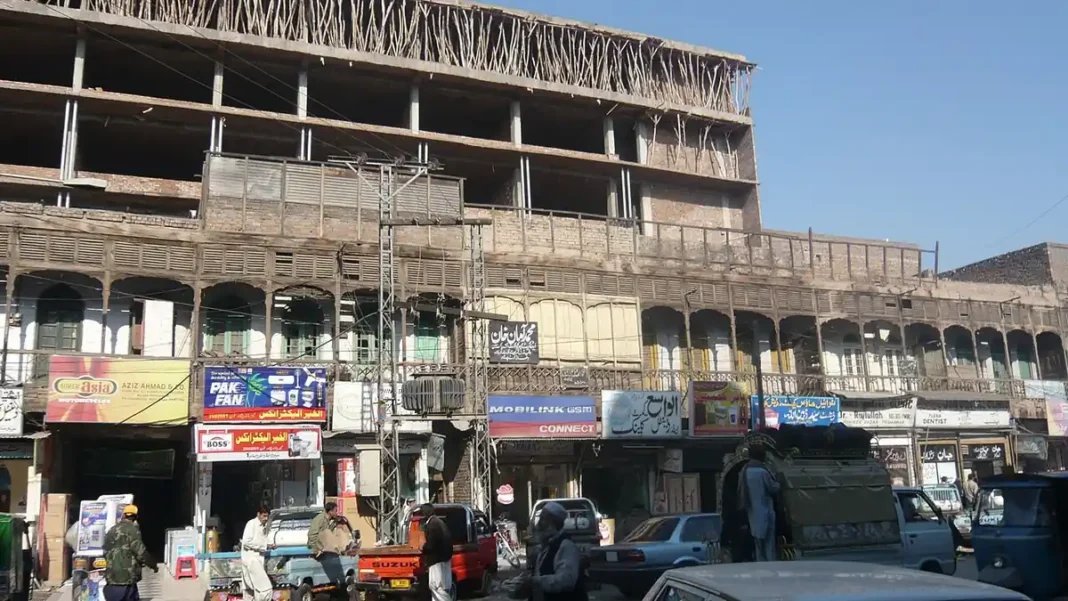
High Court Seeks Reply on Cantonment Property Tax
The Peshawar High Court has issued a notice to the attorney general for Pakistan, Dawn reported, seeking his response to a petition challenging the legality of the cantonment property tax.
A bench of Justice Syed Arshad Ali and Justice Babar Sattar also sought comments within a fortnight from the respondents, including the defence secretary, the director general and additional director general of the Military Lands and Cantonments Department in Rawalpindi, the chief executive officer of the Peshawar Cantonment Board and the secretary of the Khyber-Pakhtunkhwa excise and taxation department.
The court issued the notice to the attorney general under Order XXVII-A of the Code of Civil Procedure, 1908, observing that the constitutional validity of Section 60 of the Cantonments Act, 1924, was involved in the matter.
Cantonment property tax: what the petitioners want
The petitioners, including Mian Mohammad Tariq Siddiqui and several other citizens, asked the court to declare unconstitutional and without lawful authority the imposition, assessment and collection of tax on the annual rental value (ARV) of immovable properties by the respondents.
They also asked the court to quash the assessment notices, demands and recovery proceedings issued against them.
Annual rental value is the estimated yearly rent a property could fetch. Cantonment boards use it as the base for working out how much property tax an owner must pay. A sharp rise in the assessed value means a sharp rise in the tax bill.
The constitutional argument
Advocate Hafiz Zain Rasheed appeared for the petitioners. He argued that Section 60 of the Cantonments Act, 1924, as substituted through the Cantonments (Amendment) Act, 2023, read with Schedule VII (a), allowed taxation on the annual rental value of immovable property.
That framework, he said, conflicted with the constitutional scheme, because taxes on immovable property could only be imposed by the provinces. Property tax is a provincial subject under the Constitution.
He argued that the tax was beyond the legislative competence of the federation under Entry 50 in Part I of the Federal Legislative List, which expressly excluded taxes on immovable properties.
He also said the framework was inconsistent with the distribution of legislative powers after the Constitution (Eighteenth Amendment) Act, and with the provincial laws governing taxation of immovable property.
Questions over a 1979 presidential order
The lawyer also questioned the constitutional validity and continued use of Presidential Order No 13 of 1979, issued during the rule of Gen Ziaul Haq. He sought a declaration that the order could not sustain the taxation framework where it conflicted with the constitutional scheme after the Eighteenth Amendment.
He argued that the restoration and restructuring of the distribution of legislative powers through later constitutional amendments could not be overridden by a presidential order. The authority to impose taxes, he said, must rest on a valid constitutional and legislative source.
Sharp rise in assessed values
Rasheed also questioned the sharp increase in the annual rental values of commercial properties in the Peshawar cantonment area, including Saddar Bazaar, Shoba Bazaar and Khyber Bazaar. He alleged a 200 to 300 per cent increase compared with previous property taxes.
He said the assessments violated statutory safeguards and the principles of natural justice. He also raised questions about whether the Khyber-Pakhtunkhwa Urban Immovable Property Tax Act, 1958, applied to properties inside cantonment areas.
The counsel said property tax within provinces was a provincial subject, and the Khyber-Pakhtunkhwa government could levy it even inside the Peshawar cantonment board area, through its excise and taxation department.
Why the case matters beyond Peshawar
Cantonment boards run civic services in military-administered areas in cities across Pakistan. Their residents pay property tax to the board, not to the provincial excise department.
If the court accepts the argument, cantonment boards across the country could lose a source of revenue they use for roads, water, sanitation and street lighting, and provinces would gain the right to tax the same properties.
The Peshawar High Court has been active on questions of provincial authority in recent weeks, seeking replies from the governor and the speaker in another matter. It has also heard a recovery petition filed by the brother of Sohail Afridi. The cantonment tax case adds a fiscal dispute to that list, and its outcome will be watched by cantonment residents well beyond Peshawar.
What happens next
The attorney general and the other respondents have a fortnight to file their comments. The court will then decide whether to hear the case in full and whether to suspend the tax demands while the case is pending.
For now, the assessment notices and recovery proceedings remain in force. Property owners who have received demands must either pay or wait for the court’s decision.
Frequently asked questions
What is the cantonment property tax case about?
Citizens in Peshawar have challenged the property tax imposed by cantonment boards on the annual rental value of properties, arguing it is unconstitutional and beyond the federation’s powers.
Which court is hearing the case?
A bench of the Peshawar High Court, comprising Justice Syed Arshad Ali and Justice Babar Sattar, is hearing the petition.
What is annual rental value?
Annual rental value is the estimated yearly rent a property could fetch. Cantonment boards use it as the base for calculating property tax.
Why do petitioners say the tax is unconstitutional?
They say taxes on immovable property are a provincial subject under the Constitution, and Entry 50 of the Federal Legislative List expressly excludes them from federal powers.
How much have assessed values risen?
The petitioners allege that annual rental values of commercial properties in Saddar Bazaar, Shoba Bazaar and Khyber Bazaar rose by 200 to 300 per cent.