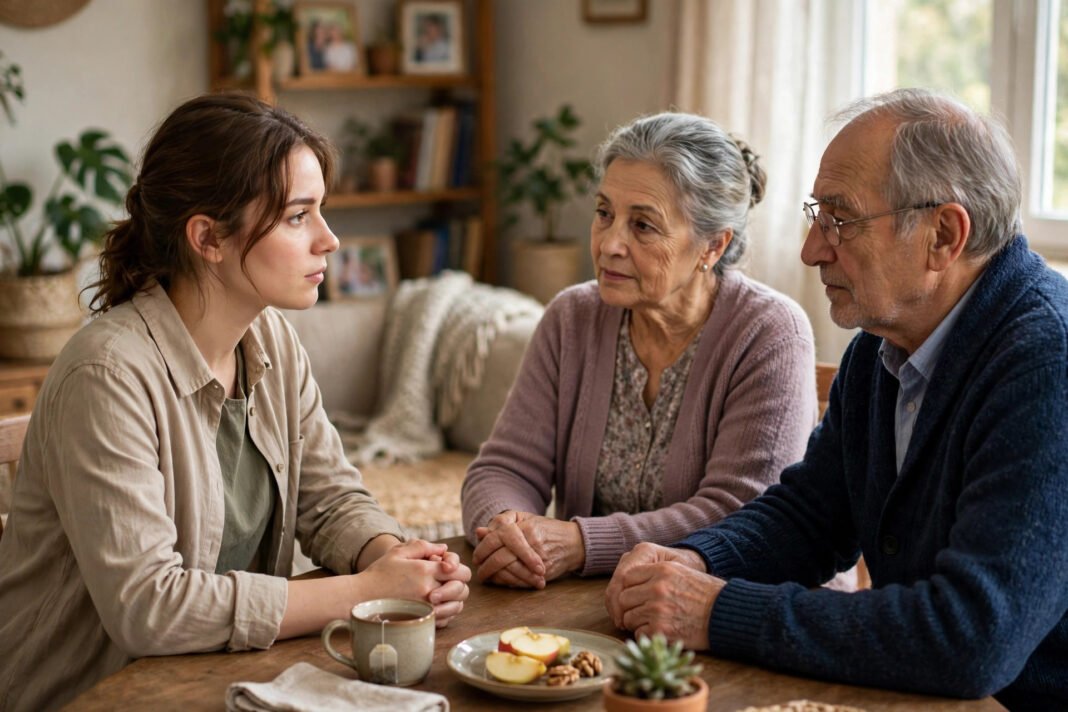
When a daughter says her marriage is unhappy, she often hopes her parents will listen. Instead, she hears the same advice again and again: adjust, be patient, and stay. And so many women stay in unhappy marriages for years, not because they want to, but because the people they love most ask them to.
If this is your story, you are not alone. This article looks at why parents put on this pressure, what it costs a daughter, and what she can do about it, with kindness toward everyone involved. For a closer look at the marriage itself, you can also read our guide on unhappy marriages and the signs that something needs to change.
The Quiet Pressure Many Daughters Feel
The pressure rarely comes as one big argument. Instead, it arrives in small comments over many years. A mother says, “Every marriage has problems.” A father says, “Think of the children.” And a grandmother adds, “We had problems too, and we stayed.”
Each comment sounds small on its own. Together, however, they send a clear message: leaving is not an option. So the daughter stops talking about her pain. She smiles at family gatherings, and she keeps her sadness private.
Over time, this silence becomes heavy. She feels torn between loyalty to her parents and care for herself. She loves them, and yet their advice hurts her. That conflict is painful, and it is also very common.
Why Parents Ask Daughters to Stay in Unhappy Marriages
Most parents do not pressure a daughter because they are cruel. In fact, most of them act from fear, habit, and love. Understanding their reasons does not make the pressure right, but it can help a daughter respond with less anger and more clarity.
Firstly, many parents fear for her future. They worry she will be alone, or that life after divorce will be hard. They picture her struggling, and that picture frightens them.
Secondly, family reputation matters a great deal to them. They worry about what relatives, neighbours, and friends will say. In their minds, a daughter’s divorce can feel like a public failure.
Thirdly, their own upbringing shapes their view. Many parents grew up in a time when marriage was expected to last at any cost. Some of them stayed through hard years themselves, and so they believe their daughter should do the same.
Finally, money and safety worries play a part. Parents may fear that she cannot support herself or her children alone. They may not know what help is available, and so staying feels like the safer choice to them.
None of these reasons means a daughter must accept an unhappy life. But when she sees the fear behind her parents’ words, she can talk to them with more patience and more strength.
Fear, Tradition, and the Weight of “What Will People Say”
In many families, a daughter’s marriage is treated as a family matter, not only her own choice. Her parents may feel that her decisions reflect on the whole family. As a result, their fear of gossip can grow larger than her pain.
“What will people say?” is a powerful question. It can silence honest talk for years. Yet other people’s opinions are not a good guide for a person’s life. Neighbours move on, but a daughter lives with her marriage every single day.
Tradition also plays a strong role. In some families, daughters are raised to put everyone else first. They learn to adjust, to forgive, and to keep the peace. You can read more about how parents treat daughters differently after marriage and why those old patterns are so hard to break.
Traditions can hold families together, but they should not trap a woman in misery. A good tradition protects people. It does not ask them to suffer in silence.
What the Pressure Costs a Daughter
Living in an unhappy marriage takes a real toll. The stress rarely stays in one place. Instead, it spreads into her health, her confidence, and her daily life.
Her health often suffers first. Constant tension can bring poor sleep, headaches, and low energy. Over time, it can also feed anxiety and low mood. She may feel tired all the time, even after a full night’s sleep.
Her confidence suffers too. When the people she trusts most tell her to accept unhappiness, she starts to doubt her own judgement. She may wonder if she is asking for too much, or if she is the problem.
Her children feel it as well. Children notice tension, even when adults try to hide it. A home full of cold silence or daily conflict can leave them anxious and unsure. Staying “for the children” does not always protect them.
And her sense of self slowly fades. She may give up hobbies, friendships, and dreams. She becomes a person who survives each day instead of living it. That is a heavy price to pay for keeping up appearances.
Why the Stigma Makes Women Stay in Unhappy Marriages
Divorce still carries a stigma in many communities. A divorced woman may face pity, gossip, or unfair blame. People may ask what she did wrong, even when she did nothing wrong at all.
She may also fear losing support. Will her friends still invite her? Will her family still stand by her? These questions are frightening, and so many women choose the pain they know over the judgement they fear.
But stigma is a social fear, not a fact about her worth. A woman’s value does not depend on her marital status. And attitudes are slowly changing as more women speak honestly about their lives.
It helps to remember that public opinion shifts with time. What shocks people today may seem normal in a few years. A daughter’s wellbeing, however, matters right now, not only in the future.
What a Daughter Can Do When Parents Say Stay
A daughter does not have to choose between her parents and herself. She can love them and still make her own choices. The steps below are small, practical, and kind to everyone involved.
Start with a calm conversation. Choose a quiet moment, not a heated one. Use “I feel” words, such as “I feel sad most days” or “I feel afraid at home.” Clear, honest words are easier for parents to hear than blame or anger.
Build your own support circle. Find one trusted friend, sibling, or counsellor who listens without judging. You do not need a large group. One safe person can make a real difference.
Take small steps toward financial independence. Learn a skill, explore work from home, or save a little money when you can. Even a small income can give a woman choices she did not have before.
Learn about your options. Find out what support services exist near you, and what your rights are. Knowledge reduces fear. When you know your choices, you can decide with a clear mind instead of panic.
Set boundaries with love. You can say, “I hear your worry, and I need you to hear mine.” Loving your parents does not mean obeying every instruction. Adults can disagree and still respect each other.
When Staying Is Unsafe, Getting Help Comes First
Sometimes an unhappy marriage is also an unsafe one. If there is violence, threats, or constant fear at home, safety must come first. It comes before reputation, before family opinion, and before any advice to adjust.
If you feel unsafe, tell someone you trust as soon as you can. Reach out to a local support service or helpline in your area. You do not have to explain everything at once. A first small step is enough.
Remember that asking for help is not a betrayal of your family. It is an act of care for yourself and for your children. No tradition asks a woman to live in fear.
You Do Not Have to Stay in Unhappy Marriages to Honour Your Family
Many parents soften when they truly hear their daughter. At first, they may react with fear or anger. But when they see her pain clearly, love often wins over tradition. Honest talk can open a door that seemed shut for years.
Parents and daughters can understand each other better. A daughter can share her feelings without blame, and parents can listen without panic. That kind of talk takes time, and it is worth the effort.
Honouring your family does not mean giving up your health, your peace, or your future. A strong family is built on care and respect, not on silent suffering. If you are weighing your next step, our guide on unhappy marriages can help you think through what a healthier life could look like.
You deserve a life with peace in it. And you do not have to stay in unhappy marriages to prove your loyalty to anyone. What is one small step you could take this week toward a life that feels kinder to you?