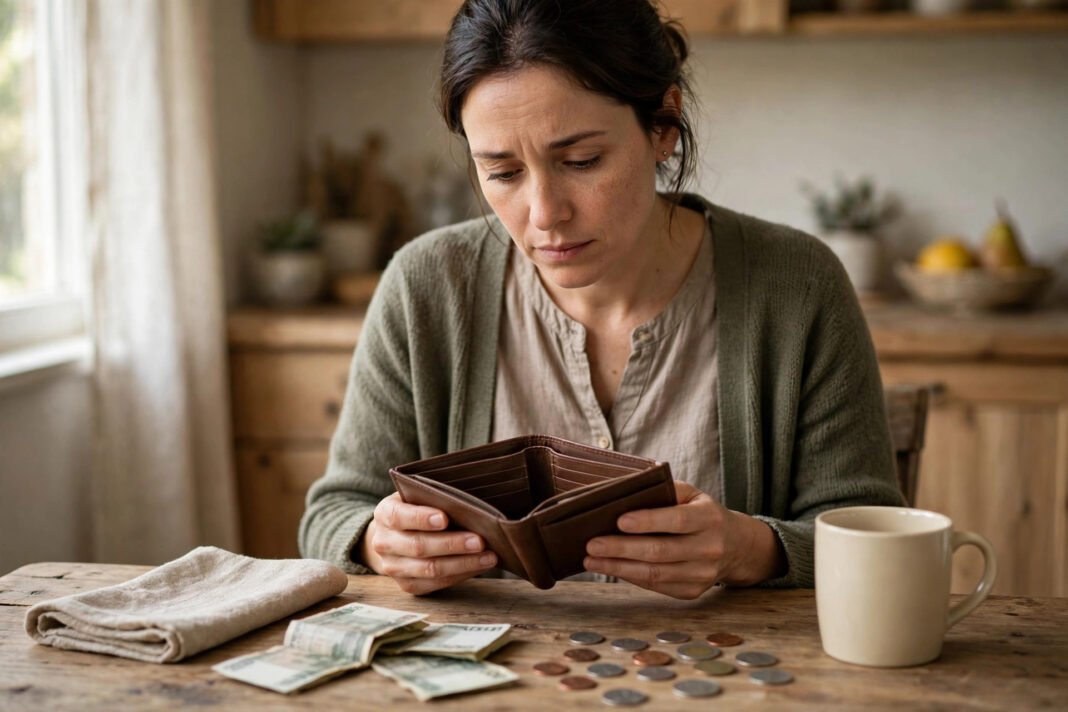
Money should give a woman freedom. It pays for food, rent, medicine, and school books. It also gives her choices. But in some marriages, money becomes a tool of control. One partner controls every coin, and the other is left with nothing of her own. This is financial abuse in marriage, and it is far more common than most people think.
Financial abuse in marriage leaves no bruises, so it is easy to miss. Friends and family may see a happy couple, while behind closed doors a woman cannot buy milk without asking for permission. If you feel trapped in your marriage, our article on unhappy marriages may help you name the quiet pain many women carry. This article explains what financial abuse looks like, why it stays hidden, and what steps can help.
What Is Financial Abuse in Marriage?
Financial abuse in marriage is control through money. One partner uses money to limit the other’s freedom. The controlling partner may hold all the income, all the bank cards, and all the decisions. The other partner is then left to ask, wait, and hope. This is not about being careful with money. It is about power.
Healthy couples talk about money together. They may disagree at times, but both voices count. In an abusive pattern, only one voice counts. A woman may work full time, yet she never sees her own pay. She may run the home, yet she has no say in how money is spent. Over time, this control can feel normal, and that is what makes it so dangerous.
Money control can also grow slowly. At first, it may look like help. A partner takes over the bills because the other is busy. Then that partner takes over the bank account because he is “better with numbers.” Then he decides what she can and cannot buy. Each step seems small, but together they build a cage.
The Signs of Financial Abuse in Marriage
The signs are often easy to spot once you know what to look for. Here are the most common ones.
- You have no access to the family money or bank accounts.
- Every purchase needs permission, and you must account for each coin you spend.
- A partner stops you from working, studying, or earning your own income.
- Your pay goes straight to someone else, and you never see it.
- Loans or debts appear in your name, but you never agreed to them.
- An allowance is used as a reward or a punishment, not as shared money.
One sign on its own may have a simple explanation. However, a pattern of signs tells a different story. If several of these signs sound familiar, trust what you feel. Your unease is not silly, and it is not a lack of gratitude.
Why Financial Abuse in Marriage Stays Hidden
Financial abuse in marriage stays hidden for many reasons. First, it leaves no marks, so friends and family often see nothing wrong. The couple may live in a nice home, and the woman may dress well. Yet she may have no money of her own at all.
Shame also keeps it hidden. A woman may feel embarrassed that she cannot manage money, even when the real problem is control, not her skills. She may also fear that no one will believe her. After all, how can money be abuse when there is food on the table?
Beliefs about “family money” can hide it too. In some homes, one person has always handled the money, and no one questions it. A woman may grow up hearing that a good wife does not ask about money. As a result, she may stay quiet for years, even while she feels trapped.
Fear plays a part as well. A woman may worry that speaking up will lead to anger, threats, or being cut off completely. So she stays silent, and the silence makes the control even stronger.
How It Affects a Woman’s Life
Money control reaches into every part of a woman’s life. Without money of her own, she cannot make simple choices. She cannot visit a friend, buy medicine, or plan for her children’s needs without asking first. Over time, this dependence can wear down her confidence.
The stress also affects her health. Worry about money can steal sleep, bring constant headaches, and leave her feeling anxious or low. She may feel alone, even in a full house. And when she has no one to talk to, the loneliness grows heavier.
Children feel it too. They notice the tension at home, and they may go without things they need. A mother who cannot spend money on her children often carries deep guilt, even though the fault is not hers. When money is tight and controlled, everyday family life grows harder. Our article on daughter-in-law struggles looks at how family pressure can add to a woman’s burden.
Practical Steps to Protect Yourself and Your Money
Safety comes first. Every step below is only worth taking if it is safe for you. If an action could put you in danger, do not take it. Wait, and talk to a support service first.
Start by keeping records. Write down dates, amounts, and what happened, in a notebook or a phone note. Keep copies of important papers, such as your ID, bank letters, and marriage certificate. If it is safe, leave these copies with a trusted person outside the home.
A separate bank account can help, but only if it is safe to do so. If your partner checks your post or your phone, a new account could put you at risk. In that case, skip this step for now. Your safety matters more than any plan.
Talk to one trusted person. A friend, a sister, or a colleague can be a lifeline. You do not need to tell the whole story at once. Even a short talk can break the silence, and it can remind you that you are not alone.
Learn about local support services quietly. Many domestic abuse services offer free advice, and they will not push you to act before you are ready. You can also ask a doctor or a health worker for a private referral. Small, careful steps are still steps forward.
Legal Protection: What the Law Says
In some countries, the law now recognises financial control as a form of domestic abuse. This is a hopeful change, because it means the law sees what many women have lived through for years. The exact rules differ from place to place, so local advice matters.
In the United Kingdom, for example, the Domestic Abuse Act 2021 names economic abuse as a form of domestic abuse. It describes economic abuse as behaviour that limits a person’s ability to get, use, or keep money or property. It also covers buying goods or services. This law shows that money control is serious, not a private family matter.
Protection orders also exist in many countries, under different names. They can order a partner to stay away or to stop certain behaviour. Legal aid may be available too, for people who cannot afford a lawyer. A local domestic abuse service or a lawyer can explain the options where you live.
Keep records, because they can help if you ever seek legal help. Dates, messages, and bank papers all tell a story. And remember, you do not need to have all the answers before you ask for help.
Where to Get Help
You do not have to face this alone. Trained advisers listen without judgement, and they will not tell you what to do. They can help you think through your options, step by step.
- In the United States, call the National Domestic Violence Hotline on 1-800-799-7233, or text START to 88788. It is free, confidential, and open 24 hours a day.
- The United Kingdom has the National Domestic Abuse Helpline, run by Refuge, on 0808 2000 247. It is free, confidential, and open 24 hours a day.
- In Australia, call 1800RESPECT on 1800 737 732, or text 0458 737 732. It is free, confidential, and open 24 hours a day.
- In Punjab, Pakistan, call the Punjab Women Helpline on 1043. It is free, confidential, and open 24 hours a day. It helps with domestic violence, workplace harassment, and property and inheritance disputes.
If you are in immediate danger, call your local emergency number. If you live in another country, search for your national domestic abuse helpline, or ask a health worker for help. And if it is not safe to call from home, call from a place where you feel safe.
Your Future Can Look Different
Financial abuse in marriage can make a woman feel small, but it does not define her. Many women rebuild their confidence, their money skills, and their freedom, one small step at a time. Help is real, and it is closer than it may seem.
If your marriage feels lonely as well as controlled, our article on unhappy marriages may help you name what you feel. You deserve kindness, respect, and a say in your own life. And the first step, however small, is yours to take.
What do you think is the most important first step for a woman who wants to take back control of her money?
This article is for general information only. It is not legal or financial advice.