Turkiye Publishes Makkah Defence Pact Ratification Law
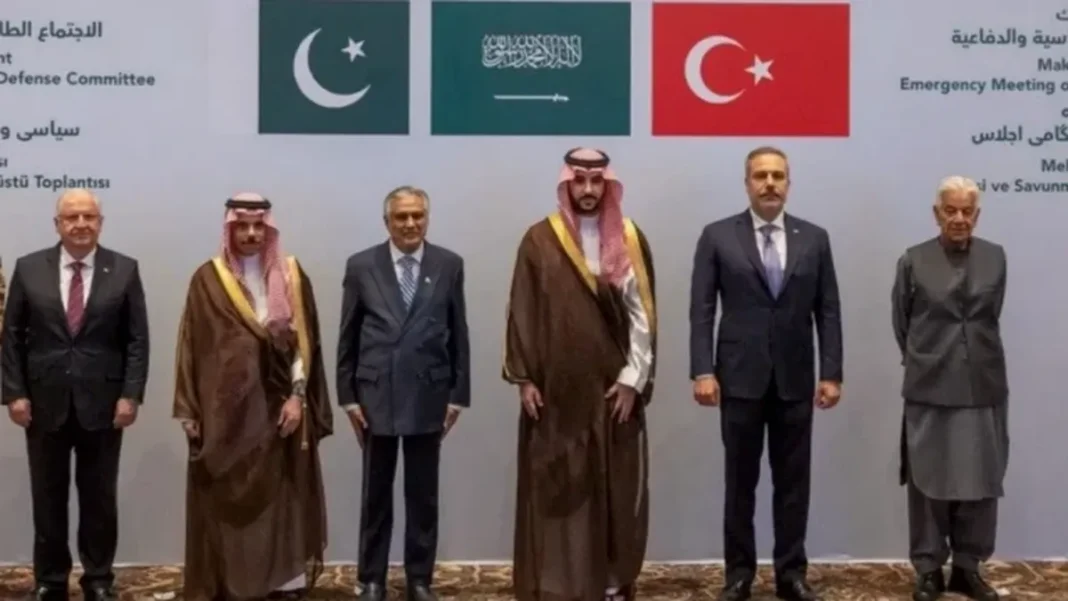
Turkiye has published the law ratifying the Makkah defence pact with Pakistan and Saudi Arabia, completing its domestic approval of the three-nation agreement under which an armed attack on one country counts as an attack on all three.
The law, No. 7597, appeared in Turkiye’s Official Gazette on Saturday, November 14, and took effect on publication, Yeni Safak reported. President Recep Tayyip Erdogan signed it a day earlier, on November 13.
Turkiye’s parliament approved the ratification bill on November 5 by 279 votes to 119, with 398 of its 592 members taking part. The Foreign Affairs Committee of the Grand National Assembly had cleared the bill on October 27.
What the Makkah defence pact says
The Mecca Agreement for Joint Defense, as it is formally titled, was signed in Makkah on August 7 by President Erdogan, Saudi Crown Prince Mohammed bin Salman and Prime Minister Shehbaz Sharif. It runs to 16 articles.
Its core clause, Article 2, treats an externally originating armed attack on any one of the three countries as an attack on all of them. The provision mirrors NATO’s Article 5, though it does not activate NATO’s collective defence clause and does not replace Turkiye’s obligations under the North Atlantic Treaty.
The full text of the agreement, published last month, remains in force indefinitely, though no party may withdraw during its first ten years. It puts a Pakistani first in line to run its secretariat.
Why ratification matters now
The agreement enters into force only when the last instrument of ratification is deposited with the secretariat of the Strategic Political and Defense Committee, which is based in Saudi Arabia. Turkiye’s publication of the law completes its parliamentary and promulgation process. The remaining step is the deposit of Turkiye’s ratification instrument.
Pakistan and Saudi Arabia had already completed their domestic approval procedures and formally notified the other parties, Deputy Foreign Minister Levent Gumrukcu told a parliamentary committee on October 27.
The pact was signed in August amid regional tensions, and it has moved through each parliament since. Erdogan said on Thursday, during a meeting with Shehbaz Sharif on the sidelines of the COP31 Leaders Summit, that the Makkah pact had strengthened solidarity with Pakistan.
Turkiye’s wider defence diplomacy
A day before the Makkah law took effect, Turkiye signed a separate mutual defence agreement with Qatar. Turkiye and Qatar agreed to consult on threats to security and on regional and global defence issues under that deal.
The Makkah pact also fits a wider pattern of middle-power cooperation. A German professor told a seminar in Karachi that Pakistan needs middle-power alliances to resist pressure to pick a side in the rivalry between the United States and China.
Pakistan and Turkiye have also set a joint trade target. The two countries aim to raise bilateral trade to $5 billion, with defence production and energy among the priority sectors.
At the United Nations, Pakistan has urged de-escalation in the Gulf as the United States and Iran trade accusations, a reminder of the tensions that shaped the pact’s signing in August.
Frequently asked questions
What did Turkiye ratify?
Turkiye published Law No. 7597, which approves ratification of the Mecca Agreement for Joint Defense between Turkiye, Pakistan and Saudi Arabia. The law appeared in the Official Gazette on November 14 and took effect on publication.
What does the Makkah defence pact require?
Under Article 2, an armed attack from outside on any one of the three countries is treated as an attack on all three. The agreement covers joint defence and security cooperation. It remains in force indefinitely, though no party may withdraw during its first ten years.
When was the pact signed?
President Recep Tayyip Erdogan, Saudi Crown Prince Mohammed bin Salman and Prime Minister Shehbaz Sharif signed the agreement in Makkah on August 7, 2026, at a trilateral summit.
Has the pact entered into force yet?
Not yet. It enters into force when the last instrument of ratification is deposited with the secretariat of the Strategic Political and Defense Committee in Saudi Arabia. Pakistan and Saudi Arabia have completed their domestic approvals. Turkiye’s deposit is the remaining step.
Does the pact replace Turkiye’s NATO membership?
No. The agreement does not activate NATO’s Article 5, and it does not replace Turkiye’s obligations under the North Atlantic Treaty. It is a separate trilateral arrangement.