Huawei Sense G1 Tracks Glucose for Up to 16 Days
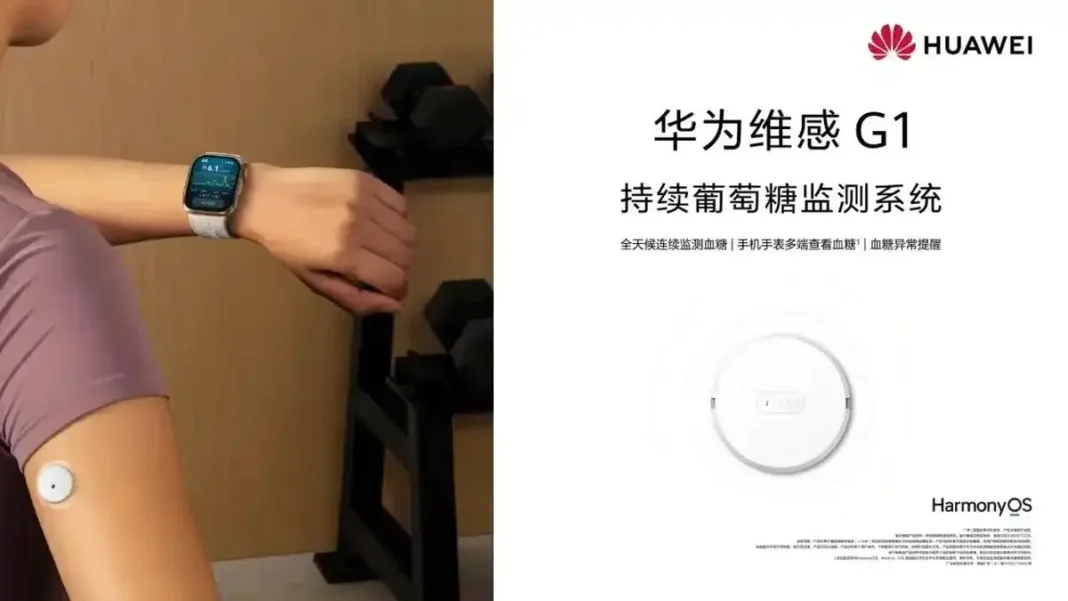
Huawei has unveiled its first continuous glucose monitor, the Huawei Sense G1, in China. The small sensor attaches to the upper arm and tracks glucose day and night for up to 16 days.
The device can send alerts when readings move outside the target range. Users can check their glucose levels on a compatible phone or smartwatch.
How the Huawei Sense G1 works
The small, round sensor resembles an Apple AirTag. It uses a flexible probe beneath the skin, an enzyme called glucose oxidase, and electrodes to measure glucose in the fluid around cells. That gives users a continuous record of glucose changes without a finger prick for each reading.
Huawei says each sensor is for one person only and needs no manual calibration. The company has not yet announced a price or a sale date.
How accurate is the sensor?
A tipster cited by Mydrivers put the Sense G1’s mean absolute relative difference, known as MARD, below 10 percent. MARD measures how closely a sensor’s readings match reference measurements. A lower figure means closer agreement.
The same tipster said readings could lag behind changes in blood glucose by about five to 15 minutes. Huawei has yet to confirm either figure, so both numbers should be treated as unconfirmed for now.
China clears the sensor as a medical device
China’s National Medical Products Administration registered the Sense G1 as a Class III medical device, the country’s highest risk category. The category also covers products such as cardiac stents and artificial joints.
It is the first Class III registration for Huawei’s consumer hardware business, according to IT Home. The clearance matters because it treats the sensor as a regulated medical product, not a lifestyle accessory.
Huawei consumer business chief technology officer Li Xiaolong told followers that the Sense G1 had the longest development cycle of any product his team had worked on. He first wore a test unit in December 2023, about 35 months before the unveiling.
Huawei introduced its TruSense health monitoring system in 2024. Some of its smartwatches can assess diabetes risk, while the Sense G1 provides continuous glucose readings through a dedicated arm sensor.
What it means for buyers
Huawei could share more details at a late-November event, ProPakistani reported, where it may also introduce the Mate X8 foldable phone and the MateBook Fold S, a follow-up to the MateBook Fold Ultimate Design.
For now, the company has said nothing about a launch outside China, including Pakistan. That leaves Pakistani buyers waiting, even as Huawei keeps expanding its device range. Huawei recently opened preorders for the Pura 90 Plus in China, and is also preparing a new sub-brand, Osta, for its O1 phones.
Health tech is moving fast in the same direction. Google’s Gemini can now read bank accounts through Google Wallet, and ChatGPT has a wallet that lets AI agents shop for users in the US, showing how phones and wearables are taking on more daily tasks.
Frequently asked questions
What is the Huawei Sense G1?
It is Huawei’s first continuous glucose monitor. The small round sensor sticks to the upper arm and tracks glucose levels day and night for up to 16 days, sending alerts when readings leave the target range.
How does it measure glucose?
It uses a flexible probe under the skin, the enzyme glucose oxidase, and electrodes to measure glucose in the fluid around cells. Users get a continuous record without a finger prick for each reading.
How accurate is the Sense G1?
A tipster cited by Mydrivers put its MARD below 10 percent, with readings lagging blood glucose changes by five to 15 minutes. Huawei has not confirmed either figure.
Is the Sense G1 a certified medical device?
Yes, in China. The National Medical Products Administration registered it as a Class III medical device, the highest risk category. It is the first such registration for Huawei’s consumer hardware business.
When will the Sense G1 go on sale, and at what price?
Huawei has not announced a price or a sale date. The company may share more at a late-November event, where it could also unveil the Mate X8 foldable phone and the MateBook Fold S.